
Referral marketing mistakes include weak incentives, complex processes, poor promotion, and a lack of tracking. Fixing these issues with automation, personalization, and clear rewards can turn referrals into a powerful, scalable growth strategy.
Referral marketing is a powerful growth strategy where businesses encourage existing customers to recommend their products or services to friends, family, or colleagues. Instead of relying only on ads, referral marketing leverages trust and personal relationships to attract new customers. Because people trust recommendations from real users more than brand messages, referrals often generate higher conversion rates and more loyal customers. However, many businesses struggle with referral marketing. Common challenges include weak incentives, low participation rates, complicated referral processes, lack of tracking, and poor promotion. Without a clear strategy, referral programs fail to deliver expected results.
This guide will explore the most common mistakes in referral marketing and how to fix them. You’ll learn proven strategies, best practices, tools, and metrics to build a successful referral program that drives sustainable and scalable business growth.
What Is Referral Marketing and Why Does It Matter
Definition of Referral Marketing
Referral marketing is a growth strategy where businesses encourage existing customers to recommend their products or services to others, usually in exchange for rewards or incentives. It is a structured form of word-of-mouth marketing, which relies on trust and personal relationships to influence buying decisions.
Word-of-mouth marketing explained
Word-of-mouth occurs when people naturally talk about brands they like. Referral marketing formalizes this process by providing tools, incentives, and tracking systems that motivate customers to actively share recommendations. Instead of hoping customers will talk about your brand, referral marketing creates a system that encourages and rewards sharing.
How referral programs work
A referral program typically gives customers a unique referral link or code. When a friend signs up or makes a purchase using that link, both the referrer and the new customer receive a reward such as a discount, cashback, points, or free products. This creates a win-win situation and encourages continuous sharing.
Benefits of Referral Marketing
Higher conversion rates
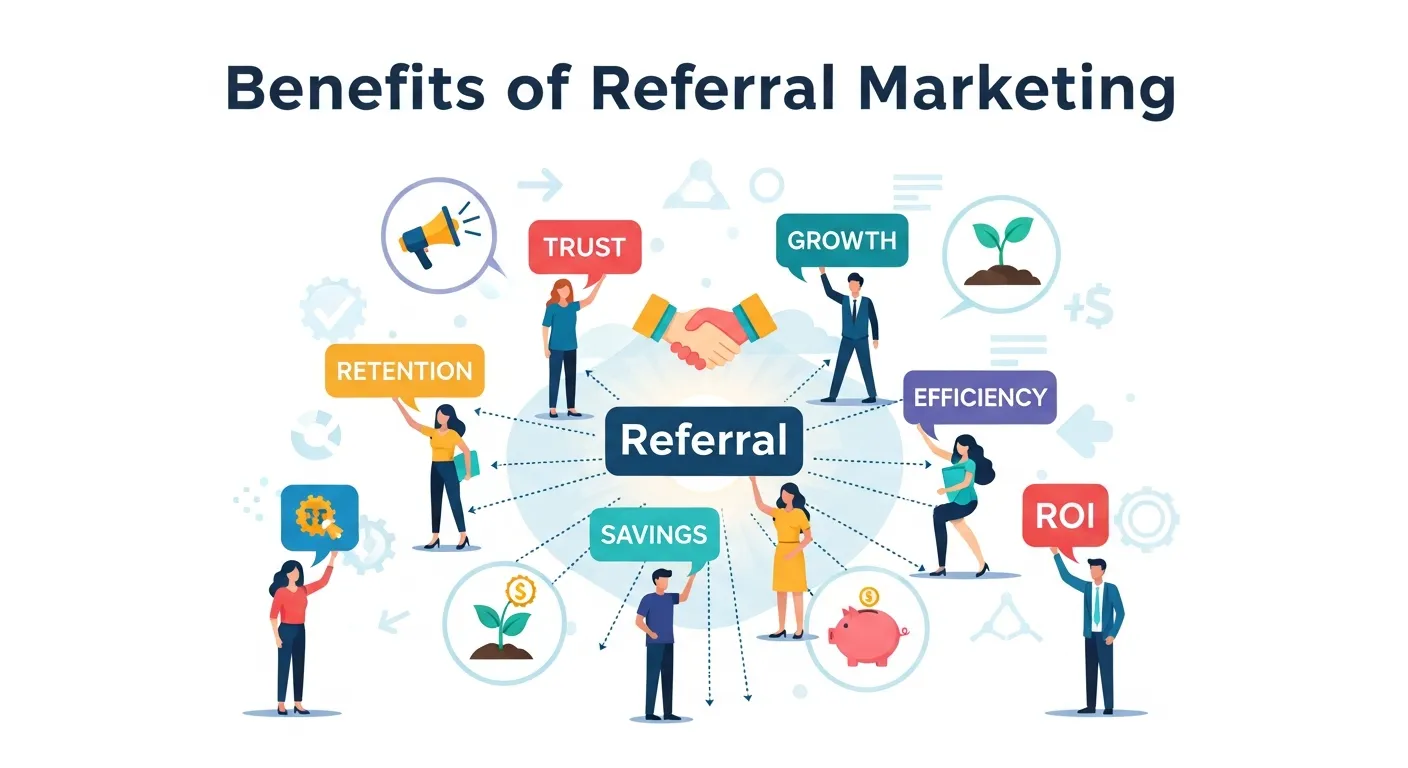
Referred customers convert at much higher rates than cold leads because they trust the recommendation from someone they know. Trust reduces hesitation and speeds up purchasing decisions.
Lower customer acquisition costs
Referral marketing is one of the most cost-effective acquisition channels. Instead of spending heavily on paid ads, businesses reward existing customers, which often costs far less than advertising campaigns.
Trust and credibility building
When real customers recommend a brand, it builds authenticity and credibility. Referral marketing acts as social proof, showing potential customers that others trust and use your product.
Viral growth potential
Referral programs can create exponential growth. When one customer refers multiple friends, and those friends refer others, the brand grows organically through a viral loop without increasing marketing spend proportionally.
Referral Marketing vs Traditional Advertising
Paid ads vs organic referrals
Traditional advertising relies on paid channels like Google Ads, social media ads, and display banners. These ads interrupt users and often face skepticism. Referral marketing, on the other hand, is based on personal recommendations, which feel natural and trustworthy.
Cost and ROI comparison:
Paid advertising costs continue to rise, with increasing competition and declining ad performance. Referral marketing usually delivers a higher ROI because the cost per acquisition is lower, and referred customers tend to have higher lifetime value and retention rates. While ads stop generating traffic once you stop paying, referral marketing can continue driving customers organically over time.
Common Mistakes in Referral Marketing
Referral marketing can be a powerful growth engine, but many businesses fail to get results because of strategic and execution errors. Below are the most common mistakes in referral marketing, along with explanations and practical insights to help you avoid them.
1. Offering Weak or Unattractive Incentives
Why rewards motivate referrals:
Incentives are the main psychological trigger behind referral marketing. Customers need a reason to share your brand with others. Rewards activate motivation, reciprocity, and a sense of benefit for both the referrer and the referred friend.
Examples of poor vs strong incentives:
- Poor incentives: $1 discount, unclear rewards, or irrelevant perks.
- Strong incentives: “Give $10, Get $10,” free premium access, cashback, gift cards, or exclusive features.
How to choose the right reward:
Select rewards based on customer preferences, profit margins, and perceived value. Double-sided rewards (benefiting both parties) usually perform better than single-sided incentives.
2. Making the Referral Process Too Complicated
Long signup forms:
If users must fill out long forms, verify multiple steps, or manually enter codes, they are less likely to participate.
Complex referral steps:
Too many instructions or unclear referral rules create friction and confusion.
How to simplify the referral flow:
Use one-click referral links, QR codes, auto-filled forms, and instant sharing buttons. The simpler the process, the higher the referral participation rate.
3. Not Promoting the Referral Program Properly
Assuming users will find it:
Many businesses launch a referral program but never promote it. Customers won’t refer if they don’t know the program exists.
Channels to promote referrals:
- Email campaigns
- In-app notifications
- Website banners and popups
- Social media posts
- Post-purchase messages
Frequency and timing strategies:
Promote referrals during onboarding, after successful purchases, and when customers show satisfaction. Continuous promotion is key to long-term success.
4. Ignoring Personalization
Generic referral messages:
Generic messages feel like advertisements and reduce trust and engagement.
Importance of personalized referral links and messages:
Personalized links, names, and tailored messages increase credibility and conversion rates.
AI personalization examples:
AI tools can personalize referral offers based on user behavior, location, purchase history, and preferences, making referral messages more relevant and effective.
5. Poor User Experience and Onboarding
Bad product experience reduces referrals:
Customers will not refer a product they dislike or find confusing.
Onboarding mistakes:
Complex onboarding, lack of guidance, or poor first-time experience kills referral potential.
Improving first-time user experience:
Provide tutorials, clear instructions, quick wins, and responsive support to increase satisfaction and referral willingness.
6. Delayed or Missing Rewards
How reward delays destroy trust:
If users don’t receive rewards on time, they lose trust and stop referring others.
Automation tools for reward delivery:
Use platforms like ReferralCandy, Friendbuy, and Yotpo to automate reward distribution.
Transparency in reward rules:
Clearly explain how and when rewards are delivered. Transparent policies build trust and long-term advocacy.
7. Targeting the Wrong Customers for Referrals
Loyal vs inactive customers:
Inactive or unhappy customers are unlikely to refer others.
Identifying brand advocates:
Focus on loyal users, repeat buyers, and high-engagement customers.
Segmenting customers for referrals:
Use CRM segmentation to target promoters, frequent buyers, and high NPS users for referral campaigns.
8. Not Tracking Referral Metrics
Key metrics:
- Referral rate
- Conversion rate
- Cost Per Referral Acquisition (CPRA)
- Customer Lifetime Value (CLV)
Tools for tracking referrals:
Google Analytics, UTM tracking, referral platforms, CRM dashboards.
Data-driven optimization:
Analyze data regularly and optimize incentives, messaging, and channels to improve referral performance.
9. One-Time Campaign Mentality
Treating referral marketing as short-term:
Many brands run referral campaigns for a limited time and then stop promoting them.
Building a continuous referral engine:
Referral marketing should be a permanent growth channel integrated into the customer lifecycle.
Lifecycle referral triggers:
Trigger referrals during onboarding, after purchase, during renewals, and after positive feedback events.
10. Ignoring Social Proof and Trust Signals
Reviews, testimonials, and case studies:
Social proof strengthens credibility and encourages referrals.
Using UGC in referral campaigns:
User-generated content, success stories, and testimonials increase trust and referral participation.
Influencer and brand credibility:
Partnering with influencers or highlighting certifications and awards boosts trust and referral conversions.
11. Lack of Gamification and Engagement
Why gamification increases referrals:
Gamification makes referrals fun and competitive, increasing participation.
Leaderboards, badges, and tiers:
Reward users with badges, ranking systems, and tier-based rewards to encourage repeated referrals.
Examples from top brands:
Brands like Dropbox and Uber used gamified referral rewards to achieve viral growth.
12. Fraud and Abuse in Referral Programs
Fake referrals and self-referrals:
Some users exploit referral programs with fake accounts or self-referrals.
Preventing referral fraud:
Use email verification, device tracking, and reward limits.
Anti-fraud tools and policies:
Referral platforms offer fraud detection systems, and clear terms and conditions help prevent abuse.
How to Fix Referral Marketing Mistakes
Fixing referral marketing mistakes requires a structured approach that focuses on simplicity, motivation, automation, optimization, and trust. Below are proven strategies to turn an underperforming referral program into a scalable growth engine.
Create a Clear and Simple Referral Process
A complicated referral process is one of the biggest barriers to participation. Customers should understand how to refer others within seconds.
One-click sharing:
Make it easy for users to share referrals with a single click. Add share buttons for email, WhatsApp, Messenger, and social media. The fewer steps involved, the higher the referral rate.
Referral links and QR codes:
Provide unique referral links and QR codes that users can share instantly. These tools eliminate manual steps and reduce friction. For offline marketing, QR codes are highly effective for events, stores, and print campaigns.
A simple referral process increases engagement and encourages more customers to participate.
Design High-Value and Balanced Incentives
Incentives are the core driver of referral marketing success. If rewards are weak, users won’t participate.
Double-sided vs single-sided rewards:
- Double-sided rewards: Both the referrer and the new customer receive benefits (e.g., “Give $10, Get $10”). This model typically drives higher conversions because both parties feel rewarded.
- Single-sided rewards: Only the referrer or the new user receives a reward. This model is simpler but may generate fewer referrals.
Monetary vs non-monetary rewards:
- Monetary rewards: Discounts, cashback, gift cards, or account credits. These are easy to understand and highly motivating.
- Non-monetary rewards: Free features, exclusive access, premium content, badges, or loyalty points. These work well for SaaS, gaming, and subscription platforms.
Choose incentives based on customer preferences, business margins, and perceived value to maximize participation.
Use Automation and Referral Tools
Manual referral management is inefficient and prone to errors. Automation tools simplify referral tracking and reward distribution.
Referral marketing platforms:
Tools like ReferralCandy, Friendbuy, and Yotpo provide end-to-end referral management. They generate referral links, track referrals, prevent fraud, and automate rewards.
CRM and email automation:
Integrate referral programs with HubSpot, Mailchimp, Klaviyo, or other CRM systems to send personalized referral emails and trigger campaigns based on customer behavior. Automation ensures consistent promotion and better engagement.
Using the right tools saves time, improves accuracy, and scales your referral marketing efforts.
Optimize Referral Messaging and Copy
Even a great referral program will fail without persuasive messaging. Copywriting plays a crucial role in driving referrals.
Benefit-driven copywriting:
Focus on what users and their friends will gain. Instead of saying, “Join our referral program,” say, “Invite a friend and both of you get $20 off.” Clear benefits increase motivation.
CTA optimization:
Use strong, action-oriented CTAs like “Refer a Friend,” “Claim Your Reward,” or “Share and Earn.” The CTA should be visible, simple, and compelling.
A/B testing:
Test different headlines, incentives, CTAs, and formats to find the best-performing referral message. A/B testing helps you continuously improve conversion rates and engagement.
Optimized messaging ensures your referral program gets maximum participation.
Build Trust Through Transparency
Trust is the foundation of referral marketing. If customers don’t trust the program, they won’t participate or recommend your brand.
Clear reward rules:
Explain how rewards work, when users will receive them, and any conditions involved. Avoid hidden terms or confusing policies. Transparency reduces frustration and builds confidence.
Honest communication:
Keep customers informed about referral status, rewards earned, and payout timelines. Send notifications when a referral is successful and when rewards are issued. Honest and timely communication strengthens brand credibility and encourages repeat referrals.
Referral Marketing Best Practices
To maximize the success of your referral marketing strategy, follow these proven best practices used by high-growth brands across industries.
Focus on Customer Experience First
A referral program cannot succeed if customers are unhappy. Product quality, customer support, and onboarding experience must be excellent. Satisfied customers naturally become advocates, while unhappy users will never refer others—no matter how attractive the reward is.
Encourage Advocacy, Not Just Referrals
Referral marketing should be part of a broader customer advocacy strategy. Build loyalty programs, communities, and feedback systems to strengthen relationships. When customers feel connected to your brand, they refer others voluntarily, not just for rewards.
Integrate Referral Marketing Across Channels
Promote your referral program through email campaigns, in-app notifications, social media, influencer partnerships, and website banners. Add referral prompts after purchases, during onboarding, and inside user dashboards. Multi-channel integration increases visibility and participation.
Make Sharing Effortless
Use one-click referral links, QR codes, and share buttons for WhatsApp, Messenger, and email. Pre-filled referral messages help users share without writing copy themselves. Reducing friction dramatically increases referral rates.
Continuously Test and Optimize
A/B test incentives, referral copy, CTA buttons, landing pages, and reward structures. Monitor referral metrics like conversion rate, CPRA, and CLV to refine your strategy. Continuous optimization ensures your referral program stays profitable and scalable.
Tools and Platforms for Referral Marketing
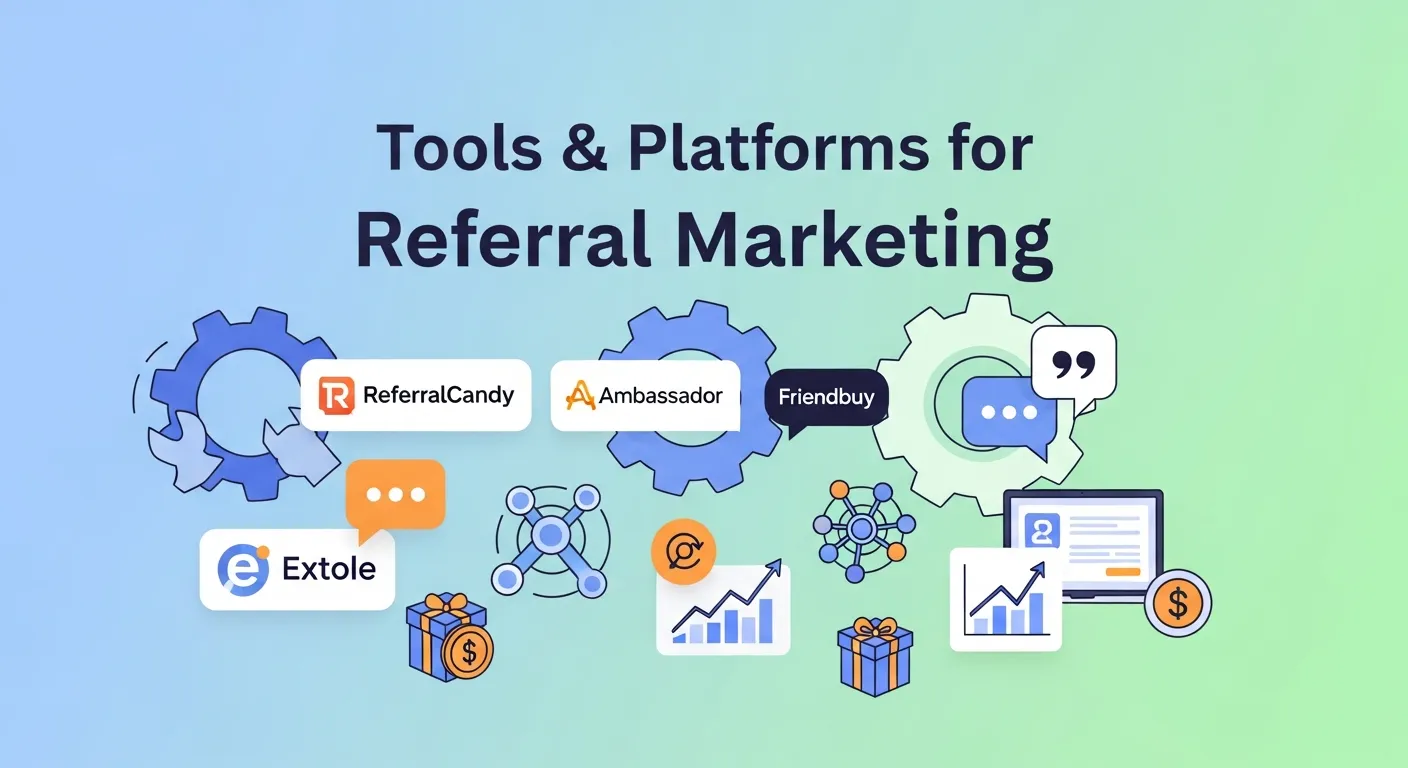
Using the right tools and platforms is essential for running a successful referral marketing program. These tools help automate referrals, manage customer data, track performance, and optimize campaigns for better results.
Referral Marketing Platforms
Dedicated referral marketing platforms make it easy to launch, manage, and scale referral programs without technical complexity.
ReferralCandy is a popular tool for eCommerce brands that want to automate referral tracking, reward distribution, and referral emails. It integrates with platforms like Shopify and WooCommerce and provides built-in analytics.
Friendbuy is widely used by enterprise and SaaS companies. It offers customizable referral flows, fraud prevention, and advanced segmentation, making it ideal for large-scale referral campaigns.
Yotpo combines referral marketing with loyalty programs and customer reviews. It helps brands build trust, encourage referrals, and reward loyal customers through a unified platform.
These platforms reduce manual work and ensure accurate tracking and reward delivery.
CRM and Automation Tools
CRM and automation tools help personalize and promote referral programs across multiple channels.
HubSpot allows businesses to segment customers, trigger referral emails, and automate referral campaigns based on user behavior. It is ideal for B2B and SaaS companies.
Mailchimp is widely used for email referral campaigns. It supports automation workflows, segmentation, and referral email templates.
Klaviyo is popular in e-commerce for behavior-based referral campaigns. It integrates with online stores and sends personalized referral messages based on customer actions such as purchases or cart abandonment.
Automation tools ensure consistent referral promotion and higher engagement rates.
Analytics and Tracking Tools
Tracking performance is critical for optimizing referral marketing.
Google Analytics helps track referral traffic, conversions, and user behavior on your website. You can analyze how referred users interact with your site and where they drop off.
UTM tracking and dashboards allow you to tag referral links and measure campaign performance across channels. By using UTM parameters, you can identify which referral messages, platforms, or influencers generate the most traffic and conversions. Custom dashboards provide real-time insights for data-driven optimization.
Common Mistakes in Referral Marketing
No Clear Referral Strategy
- Running referral programs without defined goals
- Lack of target audience segmentation
- Not aligning referral goals with overall marketing objectives
- Missing referral funnel mapping (awareness → sharing → conversion)
Complicated Referral Process
- Too many steps to refer friends
- Difficult sign-up or sharing process
- No mobile-friendly referral system
- Poor user experience leading to drop-offs
Weak or Unattractive Incentives
- Low-value rewards that don’t motivate users
- One-sided rewards that discourage referrers or referees
- Not matching rewards with customer motivation (cash vs discounts vs gifts)
- Ignoring gamification and tiered incentives
Not Promoting the Referral Program Properly
- Relying only on a referral page without marketing it
- Not using email, social media, SMS, and in-app prompts
- Lack of onboarding referral prompts for new users
- No reminder campaigns for inactive customers
Targeting the Wrong Audience
- Asking unhappy customers to refer others
- Not identifying brand advocates and loyal customers
- No segmentation based on engagement or purchase behavior
- Generic referral messaging instead of personalized outreach
Conclusion
Referral marketing can be a powerful growth engine, but only when executed correctly. Common mistakes like unclear strategies, weak incentives, poor tracking, and a lack of transparency can limit its impact and waste valuable resources. Businesses must simplify the referral process, reward customers effectively, leverage automation tools, and continuously optimize campaigns to maximize results. By focusing on customer trust, data-driven insights, and seamless integration with other marketing channels, brands can turn referrals into a scalable and cost-effective acquisition strategy that drives long-term growth and builds strong customer loyalty.
FAQ: Mistake in Referral Marketing
1. What is the most common mistake in referral marketing?
The most common mistake is offering weak or unattractive incentives that fail to motivate customers to refer others.
2. Why is a complicated referral process a problem?
A complex process discourages users from participating, reducing referral rates and engagement.
3. How does poor promotion affect referral programs?
If businesses don’t actively promote their referral program, customers may never know it exists, leading to low participation.
4. Why is personalization important in referral marketing?
Generic messages feel spammy, while personalized referral messages increase trust, clicks, and conversions.
5. How does bad user experience impact referrals?
If customers have a poor product or onboarding experience, they are less likely to recommend the brand to others.
6. Why are delayed rewards harmful?
Late or missing rewards destroy trust and can make customers stop referring altogether.
7. What happens when businesses target the wrong customers?
Inactive or unhappy customers rarely refer others; loyal customers and advocates should be targeted instead.
8. Why is not tracking referral metrics a mistake?
Without tracking metrics like referral rate and conversion rate, businesses can’t optimize or scale their referral strategy.
9. Why is treating referral marketing as a one-time campaign wrong?
Referral marketing should be continuous; one-time campaigns fail to build long-term viral growth.
10. How does ignoring social proof affect referral success?
Without reviews, testimonials, or trust signals, referred users may hesitate to convert, reducing program effectiveness.