
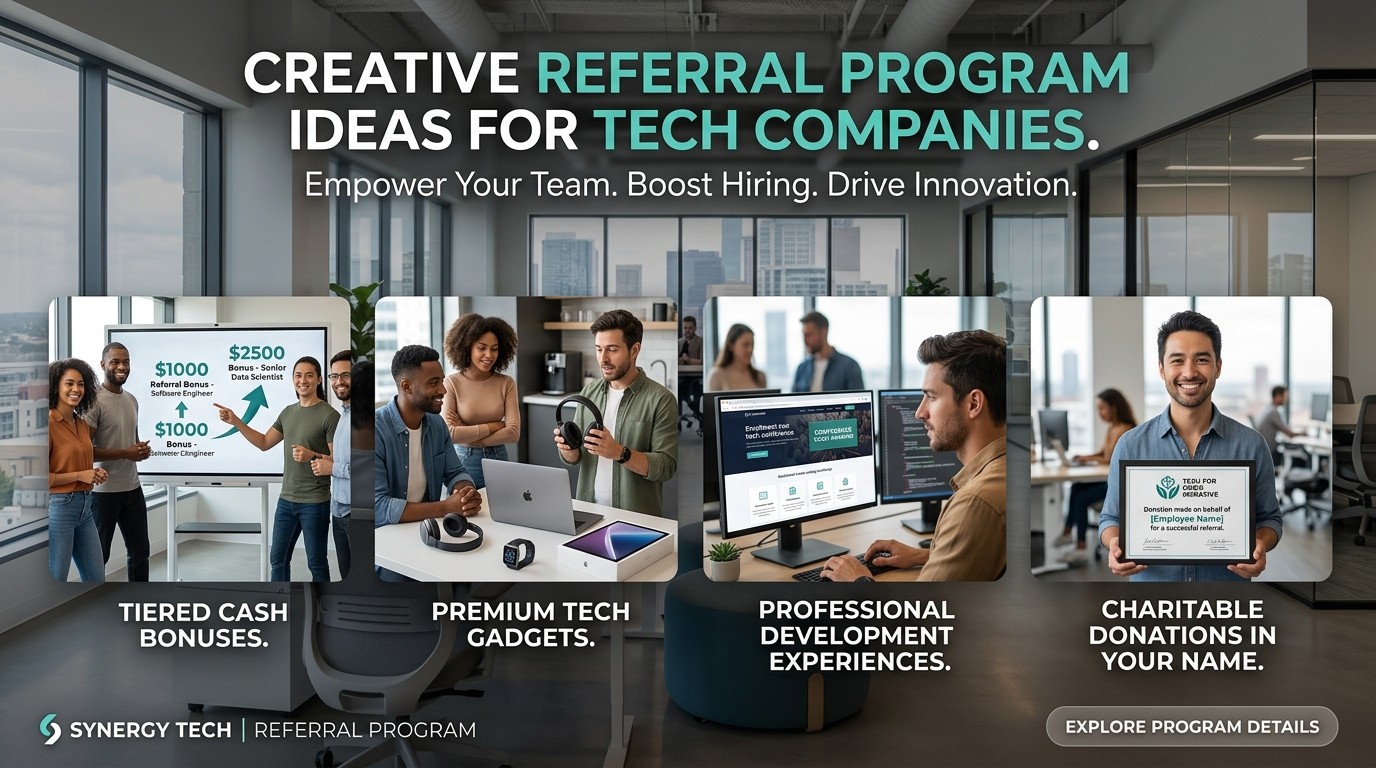
A Creative Referral Program works best when it feels useful, timely, and easy to share. Tech buyers respond to clear value, low-friction rewards, and trust signals that match how they already evaluate products.
A referral program in technology is not just a sales shortcut. It is a trust system built around credibility, timing, and social proof. People rarely recommend software unless they believe it will help their network, protect their reputation, and create a simple win for both sides. That is why a strong referral strategy must feel personal, not transactional.
At the center of a high-performing Creative Referral Program, you need three things: a valuable reason to refer, a reward that feels worth the effort, and a process so simple that people do not hesitate. When those three parts align, referrals become a repeatable growth channel instead of an occasional lucky break. The best programs understand buyer psychology. They reduce friction, create anticipation, and make the advocate feel smart for sharing.
Tech companies often have a special advantage because their users already think in systems. They know the value of automation, integrations, dashboards, and measurable results. A referral program that speaks their language can turn customers, employees, partners, and community members into a reliable distribution engine.
Why Tech Companies Need Referral Thinking
A Creative Referral Program matters because tech buying cycles are crowded with comparison pages, product demos, peer reviews, and internal approvals. That means the recommendation from a trusted contact can cut through hesitation faster than another ad impression ever could.
Modern buyers also compare hidden costs. They ask whether onboarding is painful, whether support is responsive, whether the product integrates with their stack, and whether the vendor will still be relevant next year. A referral from someone who already solved that problem lowers perceived risk before the first sales call even happens.
For startups, referrals can reduce acquisition costs and shorten the path to product-market fit. For enterprise vendors, referrals can warm up hard-to-reach accounts and open doors that cold outreach cannot. In both cases, the underlying psychology is the same: people trust a familiar voice more than a polished pitch.
That is why programs should reward both participation and outcome. When people feel appreciated for introducing a qualified lead, they are more likely to repeat the behavior. A one-time bonus may trigger a single share, but a well-designed referral experience can create a habit.
The Psychology Behind a Share

Any Creative Referral Program succeeds when it respects human motivation. People refer when they believe four things: the offer is worth sharing, the recipient will benefit, the process will not be awkward, and the outcome will reflect well on them.
This is why generic incentives often underperform. A large reward does not automatically create better referrals if the message feels clumsy or if the partner worries about quality. The share must feel like help, not spam.
Social identity also matters. People are more likely to recommend tools that make them look informed, helpful, and connected. If your program positions referrers as insiders with early access, exclusive advantages, or status-based benefits, engagement rises.
Another powerful trigger is reciprocity. When the referee receives a practical benefit and the referrer receives a meaningful thank-you, both sides feel that the exchange is fair. That sense of balance improves trust and can increase the likelihood that the referrer will participate again.
Finally, clarity reduces hesitation. The moment a prospect has to ask what happens next, how the reward works, or whether the referral is tracked correctly, drop-off begins. Every Creative Referral Program should therefore explain the value, the rules, and the timeline in plain language.
Creative Referral Program Ideas That Work in Tech
Below are several approaches that can make a Creative Referral Program feel more compelling without turning it into a coupon giveaway.
1. Tiered rewards that build momentum
A single reward can be effective, but tiered structures create progress. For example, the first referral may unlock a small gift, the third may unlock premium features, and the fifth may unlock a high-value benefit. This keeps people engaged over time and transforms one-off participation into a streak.
2. Dual-sided incentives
When both the referrer and the new customer gain something, the program feels fairer and easier to promote. Dual-sided offers reduce awkwardness because the advocate can say, in effect, “You benefit too.” That simple framing is especially effective in crowded software categories.
3. Experience-based rewards
Not every referral reward has to be cash. Early access to product roadmaps, VIP onboarding, private training sessions, and feature credits can feel more aligned with a technology audience. These rewards also keep the recipient closer to your product ecosystem.
4. Status and recognition
Many professionals are motivated by recognition as much as by money. Leaderboards, ambassador badges, public shoutouts, and invite-only communities can make participation feel prestigious. This works well when your audience values influence, expertise, or access.
5. Team-based referral challenges
If your product serves companies rather than individuals, team challenges can energize internal advocates. A department-based competition or account-based challenge creates social momentum and adds a little friendly pressure.
6. Milestone surprises
Unexpected bonuses can be more memorable than fixed rewards. A small surprise after a referral milestone reinforces positive emotion and encourages people to keep sharing. People remember being pleasantly surprised, and memory drives repeat behavior.
Designing Rewards That Feel Valuable
A Creative Referral Program should not reward activity for its own sake. It should reward quality, fit, and genuine value creation. If the reward is too small, people ignore it. If it is too large, it can attract low-quality leads.
The best reward design starts with the customer journey. Ask what a referrer would naturally care about. A developer may appreciate credits or API usage. A marketer may value campaign features or advanced reporting. A founder may respond to premium support or strategy time.
Matching the reward to the user profile increases relevance. It also improves the story they tell when they share the offer. A reward that feels connected to the product is easier to defend socially than a random gift card.
Consider timing as well. Some rewards should be delivered immediately after a referral is submitted. Others should be delayed until the lead becomes qualified or converts. Immediate rewards create excitement, while outcome-based rewards protect quality.
To keep the system fair, explain the rules upfront. People dislike uncertainty, especially when they invest effort. A trustworthy referral experience makes tracking visible and payment predictable. That transparency protects your brand and prevents support issues later.
Distribution Channels for Referral Growth
A strong Creative Referral Program is not only about the offer. It is also about where and how you promote it.
In-product prompts
If users already spend time inside your product, in-app prompts can be highly effective. The best prompts appear at moments of satisfaction, such as after a successful workflow, completed report, or solved problem. At those moments, the user is most likely to share enthusiasm.
Email campaigns
Email remains a reliable way to reintroduce the program. Short reminders, performance updates, and success stories can keep referrals top of mind without feeling aggressive. Segmenting emails by user behavior makes the message even more relevant.
Community and social channels
Communities are powerful because they combine trust with repetition. A referral program discussed inside a private group, Slack channel, or member forum can feel like a shared opportunity rather than a sales tactic.
Partner ecosystems
Resellers, consultants, agencies, and integrators already influence purchase decisions. Giving them a structured referral path makes it easier for them to advocate confidently and consistently.
Sales-assisted referrals
Sometimes the best referral source is a customer success manager, account executive, or support lead who already knows the user’s goals. A human reminder at the right time can outperform a generic automated message.
SaaS-Specific Referral Patterns
SaaS Referral Programs often succeed because the product experience itself creates natural talking points. When users solve a real problem quickly, they are more likely to tell others about it.
The strongest software referrals usually come from moments of visible value. That may be a faster workflow, a cleaner dashboard, a successful integration, or a measurable result. When the value is obvious, the user does not need a script to explain it.
For subscription products, recurring value is a major advantage. A referral can be framed not as a one-time promotion, but as a long-term improvement in the recipient’s workflow. That message is stronger when the product improves collaboration, automation, or visibility.
SaaS brands should also think about lifecycle triggers. A user who has reached a milestone, renewed a plan, or expanded their team may be more open to recommending the product. These are moments when confidence is high and friction is low.
Because software categories are competitive, the referral story should be specific. Generic claims are forgettable. Clear use cases, measurable outcomes, and easy sharing tools make a bigger difference.
Building Trust with B2B Buyers

High-value Creative Referral Program strategies are especially important in B2B environments, where buyers scrutinize risk, reputation, and implementation effort.
That is why Professional B2B Referral Deals often work best when the advocate is respected inside a niche. A consultant, analyst, operations leader, or peer founder can influence a deal in ways that traditional ads cannot.
B2B buyers want confidence before they commit. They ask who else uses the product, whether onboarding is manageable, how secure the platform is, and whether the support team understands their environment. A referral from a credible source answers some of those questions before the sales team even begins.
To support this, your program should include references, proof points, and simple sharing assets. A case study, short testimonial, or use-case summary helps the referrer make a stronger introduction. The easier you make it to explain value, the more likely people are to participate.
B2B referrals also benefit from alignment with account strategy. Instead of asking everyone to refer anyone, target the types of contacts that fit your ideal customer profile. Precision creates better conversion and reduces wasted outreach.
Automation, Tracking, and Operational Discipline
A Creative Referral Program is easier to scale when the back end is reliable. That is where CRM and Automation Tech becomes essential, because manual tracking breaks down as volume grows.
Automation can handle attribution, reminders, reward delivery, segmentation, and reporting. It can also reduce the gap between referral action and reward confirmation, which strengthens trust. When participants can see that the system works, they keep engaging.
A good Marketing Automation Platform can support referral workflows by syncing lead data, triggering alerts, and personalizing follow-up. That makes it easier to recognize active advocates and respond quickly to high-intent introductions.
Operational discipline matters here. If your program is hard to track internally, it will become hard to trust externally. Keep the rules clear, the dashboards visible, and the payout timeline consistent. Every small improvement in visibility lowers anxiety and boosts participation.
It also helps to monitor not only volume but quality. The most effective programs are measured by referral-to-opportunity rate, opportunity-to-close rate, and lifetime value, not only by raw submission counts.
Common Mistakes to Avoid
Many teams launch a Creative Referral Program and then wonder why it stalls. The problem is often not the idea itself, but the execution.
One common mistake is making the rules too complicated. If people need a manual to understand the offer, participation drops. Another mistake is rewarding quantity without quality, which can flood the funnel with weak leads.
Some programs also fail because the ask comes at the wrong time. A user who is frustrated, confused, or not yet convinced will not advocate for you. Timing should follow success moments, not interruptions.
Another issue is weak follow-up. If someone refers a contact and hears nothing for weeks, motivation evaporates. Fast confirmation and transparent updates are essential.
A final mistake is treating referral marketing as a side project. Programs perform better when sales, support, product, and marketing all understand their role. When the whole company supports the mechanism, the referral engine feels legitimate.
Measuring What Actually Matters
A Creative Referral Program should be evaluated like any serious growth channel. That means looking beyond vanity metrics and focusing on the behaviors that lead to revenue.
Track how many people join the program, how many share once, how many share repeatedly, and how many referrals become qualified opportunities. Then compare the cost of rewards to the value of the customers acquired.
It is also useful to compare referral performance by channel. In-product prompts may perform differently from email, partner outreach, or community posts. Once you understand which source produces the highest-quality introductions, you can invest more intelligently.
Customer feedback can reveal as much as the numbers. Ask participants whether the offer felt motivating, whether the steps were clear, and whether they would recommend the program to a colleague. Their answers often expose friction that dashboards miss.
The best optimization mindset is iterative. Change one variable at a time when possible, test the result, and keep the winning pattern. Over time, small improvements create large gains.
Long-Term Brand Effects
A well-run Creative Referral Program does more than generate leads. It strengthens reputation, increases loyalty, and gives customers a reason to feel like insiders.
When people recommend a product and the experience goes smoothly, their trust in the brand deepens. They feel validated for their choice and more connected to the company behind it. That emotional bond can improve retention and reduce churn.
Referrals also create a narrative effect. Instead of your brand being introduced only through advertising, it starts circulating through conversations. That shift matters because word-of-mouth feels earned, not imposed.
Over time, a strong referral culture can influence hiring, partnerships, and even investor perception. A company that generates enthusiastic advocacy is usually seen as more credible and more resilient.
This is why the best programs are not limited to one campaign. They become part of the brand system, supported by product experience, customer success, and company culture.
Practical implementation notes

A Creative Referral Program should always start with the user’s real motivation. A Creative Referral Program feels stronger when the reward matches the audience. A Creative Referral Program performs better when sharing takes only a few clicks. A Creative Referral Program should explain eligibility in plain, human language. A Creative Referral Program works best when the first reward arrives quickly. A Creative Referral Program becomes more memorable when it includes social recognition. A Creative Referral Program can use product credits to reinforce product love.
A Creative Referral Program improves when referrals are tracked without confusion. A Creative Referral Program benefits from a message that sounds like help, not hype. A Creative Referral Program should fit the buying stage of the recipient. A Creative Referral Program gains trust when the referrer can preview the offer easily. A Creative Referral Program should reward quality introductions, not random volume. A Creative Referral Program can be paired with customer success milestones. A Creative Referral Program becomes stronger when onboarding is part of the offer.
A Creative Referral Program should show progress so users feel momentum. A Creative Referral Program can turn happy customers into credible advocates. A Creative Referral Program works well with segmented messaging by persona. A Creative Referral Program should make the next step obvious at every stage. A Creative Referral Program can benefit from limited-time campaigns and seasonal boosts. A Creative Referral Program should support repeat sharing with tiered rewards. A Creative Referral Program feels fair when both sides gain something useful.
A Creative Referral Program should be reviewed regularly for conversion quality. A Creative Referral Program becomes more scalable with clear automation rules. A Creative Referral Program can strengthen retention by rewarding product loyalty. A Creative Referral Program should include anti-fraud checks where appropriate. A Creative Referral Program can work across customers, employees, and partners. A Creative Referral Program becomes easier to promote when the value is concrete. A Creative Referral Program should make advocates feel appreciated after every referral. A Creative Referral Program is strongest when the brand promise and reward align.
Conclusion
A strong Creative Referral Program is built on more than incentives. It depends on trust, timing, clarity, and a customer experience people genuinely want to share. For tech companies, that is a major advantage because the best products already solve visible problems and create natural conversations. When the referral journey is simple, the reward feels fair, and the message aligns with user psychology, participation rises without feeling forced. The most durable programs combine smart automation, targeted offers, and visible appreciation so advocates feel valued every time they share. It also keeps acquisition predictable and helps teams plan growth.
Frequently Asked Questions (FAQ)
What makes a referral program work in tech?
The best programs combine clear value, low friction, and rewards that fit the audience. Tech users respond well when the process is easy, the benefit is visible, and the timing matches a successful product experience.
Should referral rewards always be cash?
No. Cash can work, but many tech audiences prefer credits, upgrades, access, training, or status-based rewards. The right incentive depends on what your users value most and how they perceive the product.
How do you keep referrals high quality?
Set rules that encourage fit, not just volume. Use targeting, qualification checks, and outcome-based rewards when appropriate. Clear positioning also helps people refer contacts who actually match your ideal customer profile.
What is the best time to ask for a referral?
Ask after a positive moment: a win, a milestone, a renewal, or a clear success with the product. When users feel confident and satisfied, they are more likely to share naturally.
Can referral programs help B2B sales?
Yes. In B2B, trust and credibility matter a lot, so a warm introduction often outperforms cold outreach. A strong referral can shorten the sales cycle and improve conversation quality from the start.
How do you promote a referral program?
Use in-product prompts, email, community channels, partner networks, and sales-assisted reminders. The best programs meet users where they already engage, instead of relying on a single channel.
What should you track?
Track participation, repeat sharing, qualification rate, conversion rate, and revenue impact. Those metrics show whether the program is generating real business value or only surface-level activity.
Why do some referral programs fail?
They fail when the rules are confusing, the reward is weak, the timing is off, or the follow-up is slow. Many programs also fail because they are treated as a side project instead of a core growth system.
How does automation help?
Automation improves attribution, reminders, segmentation, and reward delivery. It reduces manual work and makes the experience more reliable, which increases trust and long-term participation.
What is the biggest advantage of referrals?
Referrals transfer trust. Instead of asking a buyer to believe your marketing alone, you let a credible person validate the product first. That trust often lowers resistance and improves conversion.