B2B SaaS Referral Programs turn satisfied users into trusted revenue drivers by aligning timing, incentives, and psychology. This guide shows how to build a referral motion that attracts qualified leads and compounds growth.
B2B SaaS Referral Programs work because trust travels faster than ads. Buyers in software are cautious, budgets are scrutinized, and every stakeholder wants proof before committing. A referral shortens the path from curiosity to confidence. It also creates a warmer first conversation, which increases the odds that a lead will answer, attend a demo, and stay engaged long enough to reach a sales decision.
B2B SaaS Referral Programs also fit the psychology of modern buyers. People prefer to act on social proof, especially when the recommendation comes from a peer who has already solved the same pain. That is why a referral often feels less like marketing and more like a useful introduction. The prospect does not feel pushed; they feel guided. This small emotional shift can dramatically improve conversion rates.
For founders and growth teams, the attraction is simple: B2B SaaS Referral Programs can lower customer acquisition cost while improving lead quality. Instead of paying to interrupt strangers, you mobilize advocates who already understand your value. That creates a channel that can compound over time if the experience is easy, the incentive is fair, and the referral journey feels natural.
SaaS Referral Programs are especially powerful in markets where product differentiation is subtle, buying cycles are longer, and peer validation matters. When a buyer hears a recommendation from someone in the same role, the sales process starts with borrowed credibility.
What makes a referral system actually scale
A lot of companies launch a referral widget, announce a reward, and then wait. That is not a strategy. B2B SaaS Referral Programs scale when they are built as an operating system, not a campaign. The program needs clear entry points, obvious triggers, fast tracking, and a reward structure that matches buyer motivation.
The best programs do not rely on one moment alone. They are connected to the customer lifecycle. New users receive a referral nudge after a meaningful win. Power users get invited to share when they demonstrate high satisfaction. Champions get special language, assets, and access that help them recommend the product without effort. B2B SaaS Referral Programs become scalable when they are tied to product value rather than random promotion.
You also need a simple rule: make the act of referring easier than ignoring the offer. If the process requires too many clicks, too many forms, or too much explanation, participation drops. If the message is clear, the reward is understandable, and the referred contact gets a respectful experience, more people will join.
Build the offer around motivation, not just money
In many cases, the strongest B2B SaaS Referral Programs are not the most generous. They are the most relevant. Some customers care about cash. Others care about account credits, feature upgrades, concierge support, or public recognition. Enterprise users may prefer exclusive access over direct payouts. The right reward depends on who your customer is, how they use the product, and what they value most.
Think in layers. First, give the referrer a reason to share. Second, give the referred prospect a reason to listen. Third, give both sides a reward that feels credible and timely. That three-part structure turns B2B SaaS Referral Programs into a mutual win instead of a one-sided promotion.
B2B Referral Marketing works best when the reward is not just a transaction, but a reflection of the customer’s identity. A referral should feel like a smart recommendation, not a desperate pitch.
Reduce friction everywhere
Referral programs fail when the operational work is hidden behind excitement. Users should not need to guess what to say, who qualifies, or how rewards are earned. Give them copy they can adapt, a clean sharing path, and a visible status page. B2B SaaS Referral Programs become easier to trust when they are transparent.
This is also where customer experience matters. If the referred lead is passed into a slow, confusing, or impersonal sales flow, the entire loop weakens. Fast response times, personalized follow-up, and context-aware outreach preserve the trust created by the referral itself.
The best B2B SaaS Referral Programs make the referral path feel as polished as the core product. That perceived quality signals seriousness and makes sharing feel safe.
The psychology behind high-performing referrals

B2B SaaS Referral Programs work because they tap into three strong behaviors: reciprocity, social proof, and commitment consistency. Reciprocity appears when people feel appreciated for helping. Social proof reduces uncertainty by showing that someone similar has already chosen the product. Commitment consistency enters when a satisfied customer sees referral sharing as a natural extension of the choice they already made.
The emotional side matters more than many teams admit. People rarely refer only for the incentive. They refer because they want to look helpful, smart, and connected. They want to recommend something that reflects well on their judgment. B2B SaaS Referral Programs perform best when they make the referrer feel competent rather than transactional.
There is also status. A customer who recommends a strong tool can appear informed inside their network. That means your referral request should not sound needy. It should sound like an opportunity to help peers discover something useful. B2B SaaS Referral Programs work better when the message frames the customer as an insider with valuable knowledge.
Designing the right program model
Not all referral structures behave the same. B2B SaaS Referral Programs may use one-sided rewards, two-sided rewards, tiered rewards, partner-style rewards, or product-led referral flows. The right model depends on your average contract value, sales cycle, and customer base.
A simple self-serve model works well when the product has a wide user base and shorter evaluation cycles. A partner-influenced model is better when deals are larger and trust matters more. A tiered structure can keep highly engaged customers involved by increasing the reward as volume grows. B2B SaaS Referral Programs are most effective when the structure matches the customer’s behavior rather than the marketing team’s preference.
Here is a practical view of the most common options:
| Model | Best for | Strength | Limitation |
|---|---|---|---|
| One-sided incentive | Low-friction sharing | Easy to launch | Lower motivation for the prospect |
| Two-sided incentive | Product-led teams | Feels fair and balanced | Can get expensive at scale |
| Tiered rewards | Power referrers | Encourages repeat sharing | Needs careful management |
| Account credit | Subscription software | Supports retention | May be less exciting than cash |
| Exclusive access | Enterprise or premium brands | Feels high status | Harder to explain quickly |
Whatever model you choose, B2B SaaS Referral Programs should create a clear line between effort and outcome. If people can tell exactly what happens after sharing, they are more likely to participate again.
SaaS Referral Programs often perform best when the structure is simple enough to explain in one sentence. Simplicity lowers hesitation and makes the offer easier to repeat.
Finding the right referral moment
Timing is one of the most underrated growth levers. B2B SaaS Referral Programs should not ask for action at random. They should appear when satisfaction is high and friction is low. That often happens after onboarding success, after a measurable result, after a positive support interaction, or after a milestone in usage.
Ask too early, and the user has not experienced enough value. Ask too late, and the moment has faded. The sweet spot is when the customer has just felt the product save time, reduce risk, or improve results. B2B SaaS Referral Programs should be triggered by these value moments because they align with genuine enthusiasm.
A useful rule is to request referrals when the customer would naturally say something positive in a call, chat, or review. In other words, capture the emotion while it is fresh. This is where automation helps. A smart system can identify usage patterns, support sentiment, and engagement signals to surface the right prompt at the right time.
How to measure referral quality, not just volume
Volume alone can deceive you. B2B SaaS Referral Programs need to be judged by downstream outcomes, not just raw submissions. Ten referrals that never respond are worth less than two that turn into qualified pipeline. Track the full path: invitation rate, share rate, lead-to-meeting rate, meeting-to-opportunity rate, and opportunity-to-close rate.
Behavioral Lead Scoring Drives Better Closings because it helps teams focus on the signals that actually predict revenue. When you score actions like demo attendance, pricing page views, stakeholder involvement, and reply speed, you can see which referred accounts are truly active. B2B SaaS Referral Programs become more efficient when scoring helps sales prioritize the best opportunities instead of chasing every name equally.
One more layer matters: customer quality. Not every happy user refers a buyer who fits your ideal profile. Segment by company size, use case, and expansion potential. B2B SaaS Referral Programs should reward not only activity, but relevance. A highly qualified referral is often worth more than multiple low-fit leads.
Predicting SaaS Customer Churn can also sharpen your referral strategy. If a customer is showing weak engagement, inconsistent adoption, or declining usage, they are less likely to advocate. Healthy customers are usually your strongest referral source.
Building advocacy before asking for referrals
The strongest referral systems do not begin with a request. They begin with customer success. When people feel supported, educated, and successful, they are more likely to advocate later. That means onboarding, support, product education, and account management all contribute to referral readiness.
B2B SaaS Referral Programs become easier to grow when advocacy is already present in the customer journey. Shareable moments include implementation wins, efficiency gains, team adoption, and saved budget. These wins should be visible. If a customer cannot clearly see the value they received, they may still like the product, but they may not feel compelled to recommend it.
You can also build soft advocacy channels. Invite users to case studies, testimonials, webinars, or community discussions. Those actions lower the psychological barrier to public support. Then, when the referral request arrives, it feels like the next step rather than an abrupt ask.
Personalization at scale
Generic referral requests sound like mass marketing. B2B SaaS Referral Programs work better when the language reflects the customer’s actual context. A finance leader, an operations director, and a founder may all use the same product, but they respond to different outcomes. Tailor the message to the value they experienced.
For example, a user who reduced manual reporting may respond to a prompt about helping another operations team. A user who increased pipeline visibility may be more open to introducing a peer in sales. B2B SaaS Referral Programs gain traction when the prompt mirrors the result the customer already values.
This does not require heavy manual work. Templates can be segmented by use case, role, company stage, or product plan. The key is relevance. When the copy sounds like it was written for a specific outcome, conversion rises.
Make the referral experience feel premium
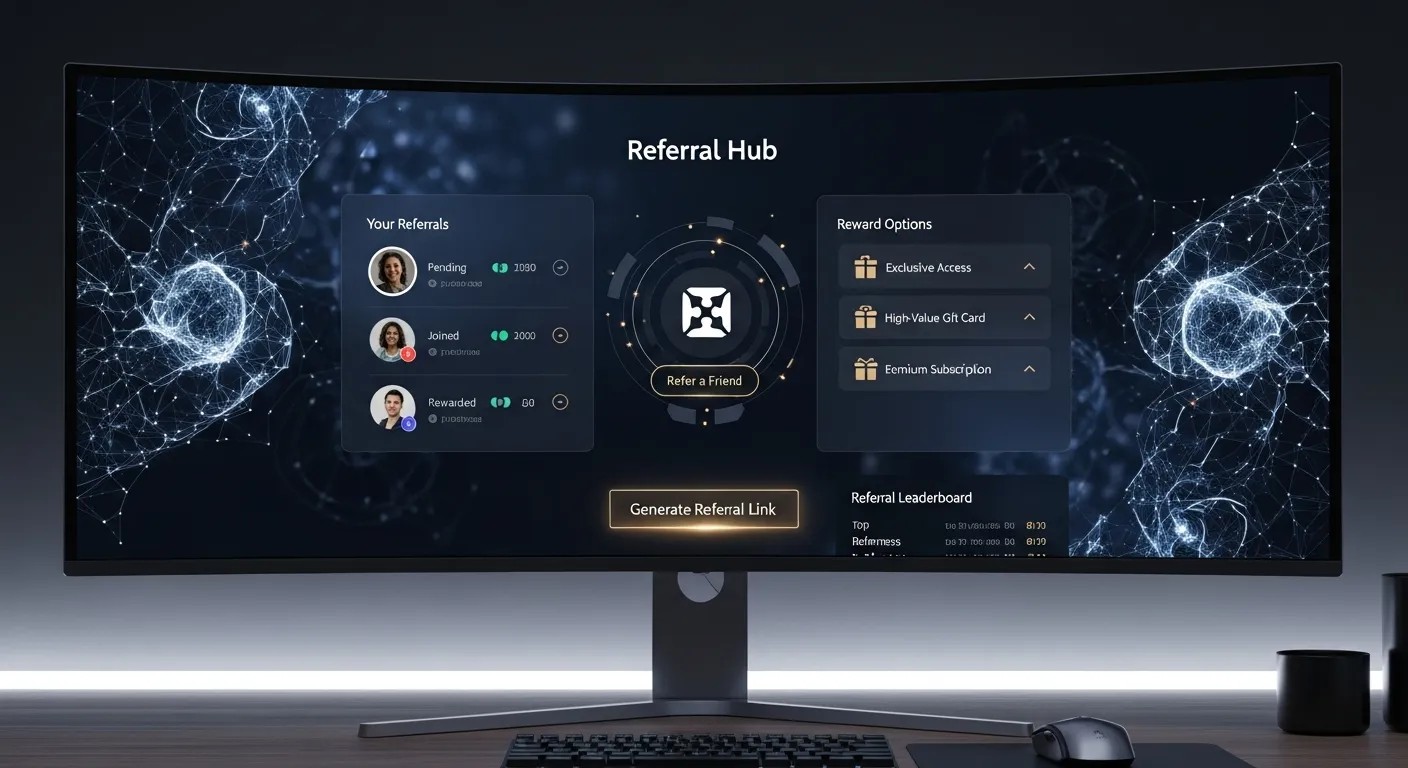
A referral should feel like an insider path, not a coupon grab. B2B SaaS Referral Programs can use better UX, better messaging, and better follow-up to create that feeling. A polished landing page, a clean share flow, and a branded confirmation experience all signal quality.
The referred lead should also be handled carefully. They should receive a relevant message, a quick response, and a clear next step. If they feel ambushed, the trust transfer breaks. If they feel welcomed, the recommendation becomes stronger. That is why B2B SaaS Referral Programs should align marketing and sales tightly.
A premium experience also reduces embarrassment for the referrer. People are more willing to make introductions when they know the recipient will be treated well. This is another reason your internal process matters so much.
B2B SaaS Referral Programs also benefit from simple status visibility. When advocates can see where a referral is in the pipeline, they stay engaged and feel respected.
Linking referrals with lifecycle marketing
B2B SaaS Referral Programs should not live in a separate silo. They should connect with onboarding emails, in-app prompts, milestone celebrations, NPS surveys, and customer success outreach. That integration increases visibility without making the program feel repetitive.
A lifecycle approach helps identify moments of delight. For example, after a user completes a major setup task, you can thank them, reinforce the win, and gently offer a way to share. After a positive NPS response, you can invite them to refer a peer. After renewal, you can ask because the purchase has been validated again. B2B SaaS Referral Programs become stronger when they appear where satisfaction is already proven.
The best companies treat advocacy as part of retention. Referring is not just acquisition; it is a sign that the customer believes in the product enough to attach their reputation to it.
Using data to improve conversion
Good referral growth is iterative. B2B SaaS Referral Programs should be tested like any other revenue channel. Try different rewards, prompts, timing windows, landing pages, and follow-up sequences. Measure not only clicks but close rates and lifetime value.
It is also useful to compare segments. Some customers may refer often but produce lower-quality leads. Others may refer less often but generate stronger opportunities. B2B SaaS Referral Programs become smarter when you identify the customer profiles that create the most valuable introductions.
You can even analyze support tickets, product usage, and account health to predict who is most likely to advocate. This is where data and psychology meet. A happy user is not automatically a referrer, but the combination of high satisfaction, strong usage, and visible success is a strong signal.
Predicting referral readiness
Referral readiness can often be inferred before a customer ever clicks a share link. Look for expansion behavior, repeated logins, team adoption, and positive support tone. These signals show that the user feels value in a measurable way. B2B SaaS Referral Programs that use these signals can prioritize their asks.
When the product is embedded in daily workflows, the user may naturally think of colleagues or peers who need the same solution. That is the ideal moment. The goal is not to pressure the customer. It is to catch the moment when advocacy is already forming inside their mind.
Turning referrals into a repeatable growth channel
To make referrals durable, you need process. B2B SaaS Referral Programs should have ownership, reporting, and optimization just like paid acquisition or content marketing. Someone needs to monitor performance, resolve reward issues, and refine the customer journey.
Document the mechanics clearly. What qualifies as a referral? When does the reward trigger? What happens if the lead is already in the pipeline? How is fraud handled? Clarity protects trust. B2B SaaS Referral Programs often succeed or fail based on operational reliability as much as on creativity.
The channel also benefits from internal advocacy. Sales teams should know how referrals are routed. Customer success teams should understand when and how to identify advocates. Product teams should help surface usage moments that may indicate referral potential. When the whole company sees the program as part of growth, it improves naturally.
Common mistakes that kill performance
The most common mistake is asking every customer the same way. B2B SaaS Referral Programs need segmentation. A second mistake is offering a reward that is too small to matter or too large to feel sustainable. A third is failing to communicate status, which makes users wonder whether they will ever be rewarded.
Another mistake is treating referral leads like cold leads. That loses the trust advantage immediately. B2B SaaS Referral Programs depend on a warm handoff, fast response, and respectful follow-up. If the system does not honor the referral, future participation drops.
A final mistake is ignoring customer fit. Some products invite broad sharing, but many B2B tools only fit a specific profile. The best programs help customers refer the right people, not just anyone. Precision is more valuable than noise.
A practical launch framework
Start with your happiest users. Segment by product success, engagement, and fit. Then design a reward that feels relevant and sustainable. Build a simple share flow, write clear messaging, and connect the program to lifecycle moments. B2B SaaS Referral Programs should be easy to explain in one sentence.
Next, define metrics. Decide what counts as a referral, what counts as a qualified lead, and what counts as a win. Set baseline targets before launch so you can compare performance honestly. Then iterate based on actual behavior, not assumptions.
Finally, promote the program in places where trust already exists: onboarding, success messages, email sequences, in-app dashboards, account reviews, and community spaces. B2B SaaS Referral Programs grow faster when customers are reminded in moments that already feel positive.
Strategic role in broader growth

Referrals should not replace every other channel. They should complement content, SEO, outbound, partner marketing, and paid campaigns. The difference is that B2B SaaS Referral Programs often create higher trust at lower friction. That makes them especially powerful for products with strong retention and visible results.
Over time, the goal is not just to collect names. The goal is to create a loop where success leads to advocacy, advocacy leads to qualified pipeline, and qualified pipeline leads to more success. That loop can become a major growth advantage when it is nurtured consistently.
B2B SaaS Referral Programs also create resilience. Paid channels can rise in cost, algorithms can shift, and outbound can fatigue. A healthy referral engine gives you a source of demand that is rooted in customer satisfaction rather than media spend. That is why it deserves serious strategic attention.
Conclusion
B2B SaaS Referral Programs work best when they are built around genuine customer success, clear incentives, and low-friction sharing. The winning formula is not hype; it is timing, trust, and operational discipline. When you align rewards with motivation, use data to find the right moment, and treat referred leads with care, the channel becomes easier to scale and harder to copy. Strong programs also strengthen retention, because customers who advocate are often customers who believe deeply in the product. In that sense, B2B SaaS Referral Programs are not just an acquisition tactic. They are a proof point that your product creates enough value for people to recommend it with confidence.
Frequently Asked Questions (FAQ)
1) What are B2B SaaS Referral Programs?
B2B SaaS Referral Programs are structured systems that encourage customers, users, or partners to recommend your software to qualified prospects in exchange for a reward or benefit.
2) Why do B2B SaaS Referral Programs convert well?
They convert well because the lead arrives with built-in trust, which reduces skepticism and shortens the path to a sales conversation.
3) What reward works best?
The best reward depends on your audience. Cash, credits, upgrades, exclusive access, and public recognition can all work when they match customer motivation.
4) When should I ask for referrals?
Ask after a customer has experienced clear value, such as a successful onboarding, a meaningful result, or a positive support interaction.
5) How do I measure performance?
Track referrals, qualified leads, meetings, pipeline created, closed revenue, and customer lifetime value from referred accounts.
6) Can referrals work for enterprise SaaS?
Yes. In enterprise environments, referrals often work especially well when they are framed as trusted introductions rather than casual sharing.
7) How do I avoid low-quality referrals?
Use segmentation, clear qualification rules, and smart lead scoring so the program rewards relevant introductions instead of raw volume.
8) Should referrals be automated?
Automation helps, but only when it supports timing and personalization. The best systems feel timely, not robotic.
9) What is the biggest mistake companies make?
They ask too early, make the process too hard, or fail to follow up properly with the referred lead.
10) How do I make the program sustainable?
Keep the reward economics balanced, maintain a premium user experience, and continue testing prompts, timing, and messaging.