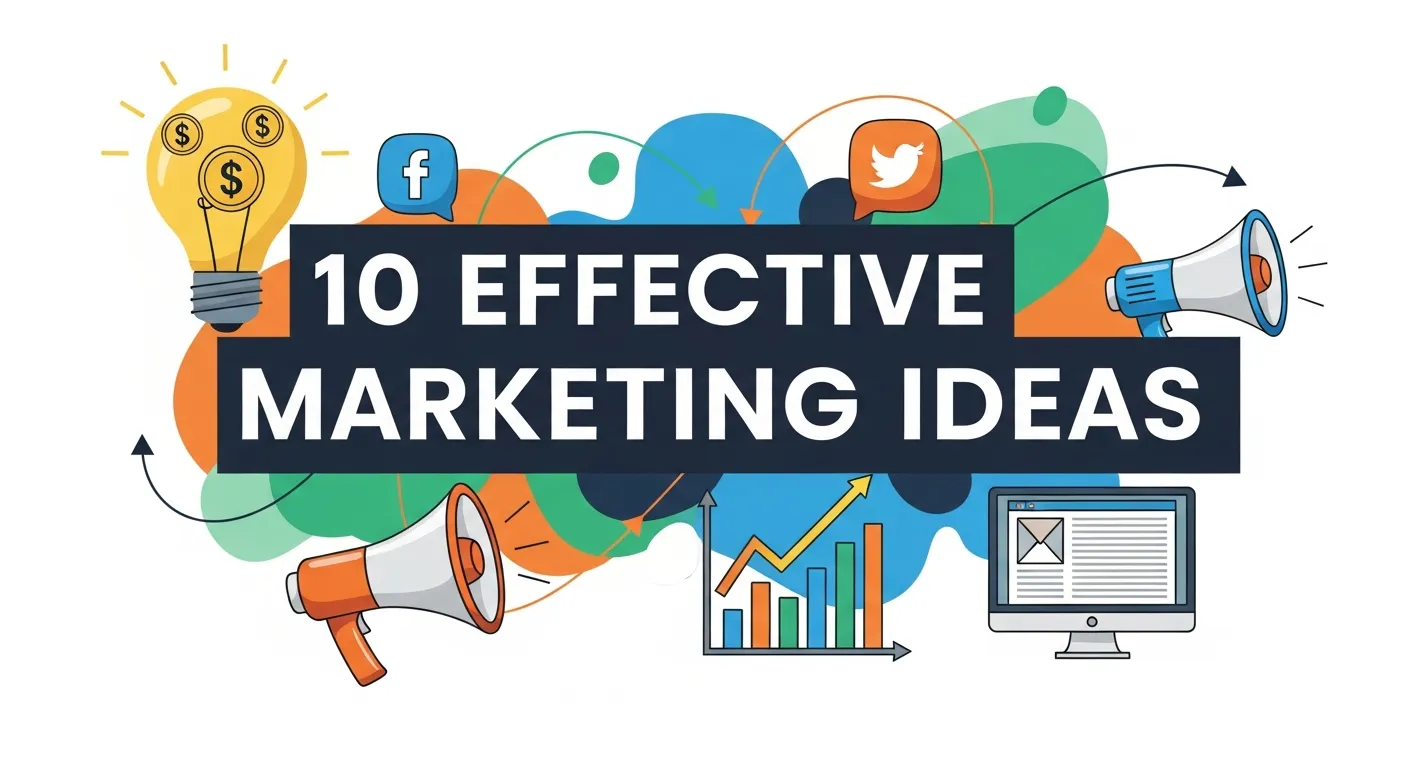
This guide explores effective marketing ideas, tools, trends, and strategies to attract customers, boost brand awareness, and increase sales through creative, data-driven, and scalable marketing approaches for businesses of all sizes.
Marketing is essential for business growth because it helps you reach the right audience, build brand awareness, and convert prospects into loyal customers. Without effective marketing, even the best products or services can remain unnoticed in a competitive market. Today, businesses need a mix of creative and data-driven ideas to stand out. Creative strategies capture attention and build emotional connections, while data-driven approaches ensure your campaigns are targeted, measurable, and profitable. Combining both helps you attract more customers, increase conversions, and maximize return on investment.
In this guide, you’ll discover 10 effective marketing ideas to attract more customers, along with practical tips, tools, and examples. You’ll learn how to choose the right channels, implement proven strategies, avoid common mistakes, and create a plan that drives sustainable business growth.
What Are Marketing Ideas and Why They Matter
Marketing ideas are creative and strategic approaches businesses use to promote their products or services, attract customers, and increase sales. These ideas can include campaigns, tactics, channels, messaging styles, and promotional techniques designed to influence customer behavior. Strong ideas help businesses stand out in crowded markets and create meaningful connections with their audience.
Definition of Marketing Ideas
Marketing ideas refer to actionable concepts or strategies used to communicate a brand’s value to potential customers. They can range from simple tactics like social media posts and email campaigns to complex strategies like multi-channel advertising, content, and customer loyalty programs. Effective ideas are customer-focused, data-driven, and aligned with business goals such as brand awareness, lead generation, and revenue growth.
Difference Between Traditional and Digital Marketing Ideas
Traditional ideas include offline methods such as print advertising, TV and radio commercials, billboards, direct mail, and event . These strategies are effective for broad reach and brand recognition, but are often expensive and harder to measure.
Digital marketing ideas, on the other hand, leverage online channels like social media, search engines, email, influencers, and content. Digital strategies offer precise targeting, real-time analytics, and lower costs compared to traditional methods. They allow businesses to personalize messages, track customer behavior, and optimize campaigns for better performance.
Benefits of Using Innovative Marketing Ideas to Attract Customers
Innovative ideas help businesses capture attention in competitive markets and differentiate themselves from competitors. They enable brands to engage customers creatively, build trust, and create memorable experiences. Data-driven ideas improve targeting accuracy, reduce wasted budget, and increase conversion rates. Additionally, creative campaigns can go viral, expanding reach organically and driving significant growth with minimal investment.
By combining traditional and digital ideas with innovation and data insights, businesses can attract more customers, increase brand loyalty, and achieve sustainable long-term growth.
Understanding Your Target Audience Before Applying Marketing Ideas

Before implementing any marketing ideas, it’s essential to understand who your customers are and what they need. Targeting the wrong audience can waste time, money, and effort, while a clear understanding of your audience ensures your ideas are relevant, personalized, and effective. By analyzing demographics, psychographics, and customer behavior, you can craft strategies that attract the right people and drive higher conversions.
Define Customer Demographics and Psychographics
Customer demographics include measurable characteristics such as age, gender, location, income level, education, and occupation. These factors help you identify who your customers are and where to reach them.
Psychographics go deeper into customer behavior, values, interests, lifestyle, motivations, and buying habits. Understanding psychographics helps you create emotional connections and tailor your ideas to match customer preferences and expectations.
Create Buyer Personas
Buyer personas are detailed profiles of your ideal customers based on real data and research. A buyer persona includes demographic details, goals, challenges, purchasing behavior, and preferred communication channels.
Creating buyer personas helps you visualize your customers and design marketing ideas that resonate with specific segments. For example, ideas for young professionals will differ from those targeting families or enterprise clients. Personas ensure your messaging, content, and campaigns are customer-centric and highly targeted.
Analyze Customer Pain Points and Needs
Understanding customer pain points is crucial for developing effective marketing ideas. Pain points are the problems, frustrations, or unmet needs your customers experience. These could include high costs, lack of convenience, poor customer service, or limited product features.
By identifying these challenges, you can position your product or service as the solution. Surveys, reviews, customer interviews, and analytics tools provide valuable insights into customer needs and expectations. Addressing pain points in your ideas increases relevance, builds trust, and improves conversion rates.
10 Effective Marketing Ideas to Attract More Customers

Implementing the right ideas can help businesses attract new customers, build brand awareness, and increase revenue. From digital channels to offline strategies, these ideas provide a comprehensive framework for sustainable growth.
1. Social Media Marketing Campaigns
Social media is one of the most powerful ideas for reaching modern customers. Platforms like Facebook, Instagram, TikTok, LinkedIn, and YouTube allow businesses to connect with audiences in real time and build strong brand relationships.
Organic posts, reels, and stories help businesses share updates, educational content, behind-the-scenes insights, and promotional offers. Consistency and creativity are key to building an engaged community.
Paid social ads and targeting enable precise audience segmentation based on demographics, interests, and behavior. Businesses can run campaigns for brand awareness, lead generation, or direct sales.
Viral content strategies focus on shareable and entertaining content, such as challenges, trends, and storytelling. Viral content can generate massive organic reach and attract new customers at a low cost.
2. Content Marketing and Blogging
Content marketing is one of the most effective ideas for building trust and authority. High-quality content attracts customers, improves SEO rankings, and drives long-term traffic.
SEO blogs, guides, and case studies help businesses rank on search engines and provide value to potential customers. Educational articles answer user questions and position your brand as an industry expert.
Video and podcast content are growing rapidly, allowing brands to connect with audiences through storytelling and in-depth discussions. These formats increase engagement and retention.
Educational and value-driven content, such as tutorials, eBooks, and webinars, helps nurture leads and guide them through the customer journey.
3. Email Marketing and Automation
Email remains one of the highest-ROI ideas for businesses. It helps nurture leads, promote offers, and retain customers.
Newsletters and drip campaigns keep subscribers informed and engaged with valuable content and updates. Drip campaigns automatically guide users through the sales funnel.
Personalized email marketing ideas use customer data to send tailored messages, improving open rates and conversions. Personalization includes product recommendations, behavior-based emails, and customized offers.
Lead magnets and segmentation help grow your email list and target specific audience segments. Lead magnets include free guides, templates, webinars, or discounts.
4. Influencer and Creator Marketing
Influencer is one of the fastest-growing market ideas for reaching niche audiences and building credibility.
Micro vs macro influencers: Micro-influencers have smaller but highly engaged audiences, while macro-influencers offer massive reach. Both can be effective depending on your goals and budget.
UGC marketing ideas (user-generated content) encourage customers to share reviews, testimonials, and social posts. UGC builds trust and social proof.
Collaboration strategies include sponsored posts, product reviews, giveaways, and long-term partnerships. Influencer collaborations increase brand awareness and drive conversions.
5. Search Engine Optimization (SEO)
SEO Services is one of the most sustainable ideas for long-term growth. It drives organic traffic and improves brand visibility.
Keyword research and on-page SEO involve optimizing titles, meta descriptions, headings, and content with relevant keywords. This helps search engines understand and rank your content.
Technical SEO basics include website speed, mobile optimization, site structure, and indexing. A technically optimized site improves user experience and search rankings.
Backlink-building ideas involve earning links from reputable websites through guest blogging, PR, partnerships, and high-quality content. Backlinks increase domain authority and organic traffic.
6.Paid Advertising (PPC & Social Ads)
Paid advertising is one of the fastest ways to generate traffic and sales.
Google Ads and social ads allow businesses to target customers searching for specific products or browsing social platforms. These ads can drive immediate results.
Retargeting campaigns target users who previously visited your website or interacted with your content. Retargeting significantly increases conversion rates.
Budget optimization tips include A/B testing ad creatives, targeting, and landing pages to maximize return on ad spend (ROAS).
7. Referral and Loyalty Programs
Referral programs and loyalty programs are powerful ideas that leverage existing customers to attract new ones.
Customer referral ideas reward customers for referring friends and family. Referral programs generate high-quality leads and increase trust.
Reward and loyalty strategies include points, discounts, exclusive offers, and VIP programs. Loyalty programs encourage repeat purchases and long-term retention.
Word-of-mouth marketing is one of the most trusted forms of marketing and can significantly increase conversions.
8. Local Marketing and Community Engagement
Local marketing is essential for businesses targeting specific geographic areas.
Google Business Profile optimization helps businesses appear in local search results and maps. Reviews, photos, and accurate information increase visibility and credibility.
Local events and partnerships, such as sponsorships, workshops, and collaborations with local businesses, increase brand awareness and community trust.
Offline marketing ideas include flyers, posters, local ads, and in-store promotions. Combining offline and online ideas strengthens brand presence.
9. Video Marketing and Live Streaming
Video is one of the most engaging ideas for modern audiences.
YouTube, TikTok, and Instagram Reels are powerful platforms for short-form and long-form video content. Videos improve engagement and reach.
Live demos and webinars allow businesses to showcase products, educate customers, and answer questions in real time.
Storytelling through video builds emotional connections and increases brand recall. Customer testimonials, behind-the-scenes content, and brand stories are highly effective.
10. Personalization and Customer Experience Marketing
Personalization is one of the most advanced ideas for improving conversions and customer loyalty.
AI personalization uses data and AI tools to deliver personalized content, recommendations, and offers.
Custom offers and recommendations increase relevance and customer satisfaction, leading to higher sales.
Omnichannel customer experience ideas ensure consistent messaging across websites, social media, email, and offline channels. A seamless experience builds trust and long-term loyalty.
Low-Budget Marketing Ideas for Small Businesses
Small businesses often operate with limited budgets, but that doesn’t mean they can’t compete with larger brands. With the right low-cost ideas, small businesses can attract customers, build brand awareness, and drive sales without spending heavily. Creativity, consistency, and smart use of free tools can deliver impressive results even on a tight budget.
Free Digital Marketing Ideas
Free digital marketing ideas are ideal for small businesses looking to grow online visibility. Social media is one of the most cost-effective strategies—posting regularly on platforms like Instagram, Facebook, LinkedIn, and TikTok helps build an audience and engage customers. Using hashtags, trending topics, and interactive content such as polls and stories can increase reach without paid ads.
SEO (Search Engine Optimization) is another powerful free idea. By optimizing your website with relevant keywords, creating valuable blog content, and improving site performance, you can attract organic traffic from search engines without paying for ads.
Email is also a low-cost strategy with high ROI. Collect email subscribers through lead magnets like free guides or discounts and send newsletters, promotions, and updates to nurture leads and retain customers.
Guerrilla Marketing Ideas
Guerrilla marketing ideas focus on creative, unconventional offline promotions that grab attention without large budgets. Examples include eye-catching street art, branded stickers, creative signage, flash events, or interactive public displays. These ideas are designed to surprise and delight customers, making your brand memorable and shareable on social media.
Local businesses can also use creative flyers, QR codes on posters, and pop-up promotions in high-traffic areas to drive awareness and foot traffic. Guerrilla marketing relies on creativity rather than expensive media buys, making it ideal for startups and small brands.
Partnership and Cross-Promotion Ideas
Partnership and cross-promotion ideas help businesses expand reach by collaborating with complementary brands. For example, a café can partner with a local gym, or an online store can collaborate with influencers or bloggers in the same niche.
Cross-promotions such as joint giveaways, bundle offers, or co-branded content allow both businesses to share audiences and reduce costs. Strategic partnerships build credibility, increase exposure, and generate new customers without significant financial investment.
Tools and Platforms to Implement Marketing Ideas
To execute ideas effectively, businesses need the right tools and platforms. These tools help streamline tasks, improve productivity, analyze performance, and automate campaigns. By leveraging digital marketing tools, businesses can save time, reduce costs, and scale their ideas efficiently.
Social Media Tools (Hootsuite, Buffer, Canva)
Social media tools are essential for managing and executing ideas across multiple platforms. Hootsuite and Buffer allow businesses to schedule posts, manage multiple social accounts, and monitor engagement from a single dashboard. These tools help maintain consistent posting, which is crucial for building brand awareness and audience trust.
Canva is a powerful design tool for creating social media graphics, ads, presentations, and materials without design experience. With customizable templates and drag-and-drop features, Canva makes it easy to create visually appealing content that supports your ideas.
Using these tools together helps businesses plan, design, and publish content efficiently, ensuring consistent branding and engagement.
SEO and Analytics Tools (Google Analytics, Search Console)
SEO and analytics tools are critical for tracking the success of ideas and improving online visibility. Google Analytics provides insights into website traffic, user behavior, conversions, and campaign performance. It helps businesses understand which ideas drive the most results and where improvements are needed.
Google Search Console helps monitor website performance in search results, track keyword rankings, and identify technical SEO issues. It also provides data on impressions, clicks, and indexing status, making it an essential tool for optimizing SEO-based ideas.
By analyzing data from these tools, businesses can make data-driven decisions and continuously optimize their strategies.
Automation and AI Marketing Tools
Automation and AI tools are transforming modern ideas by reducing manual work and increasing efficiency. Email automation tools like Mailchimp and HubSpot help businesses send personalized campaigns, nurture leads, and segment audiences automatically.AI tools such as ChatGPT and Jasper assist with content creation, ad copy, and strategy ideas. Marketing automation platforms can trigger workflows, personalize customer journeys, and optimize campaigns in real time.
By using automation and AI, businesses can scale their ideas, improve targeting, and deliver personalized experiences without increasing workload.
Common Marketing Mistakes to Avoid
Even the best ideas can fail if common mistakes are not addressed. Avoiding these errors can save time, reduce wasted budget, and improve overall campaign performance.
No clear strategy: One of the biggest mistakes is launching campaigns without a defined plan. Without clear goals, target audience insights, and KPIs, marketing efforts become scattered and ineffective. A documented strategy ensures consistency and measurable results.
Targeting the wrong audience: Marketing to everyone often results in low engagement and poor conversions. Understanding your ideal customers and creating buyer personas ensures your ideas reach people who are most likely to buy your products or services.
Ignoring analytics: Data is essential for optimizing ideas. Businesses that ignore analytics miss opportunities to improve performance. Tracking metrics like traffic, conversion rates, and engagement helps refine campaigns and maximize results.
Inconsistent branding: Using different logos, colors, tones, and messages across platforms confuses customers and weakens brand identity. Consistent branding builds trust, recognition, and professionalism.
Not tracking ROI: Many businesses fail to measure the return on investment from their ideas. Without tracking ROI, you can’t identify profitable channels or optimize budgets. Regular reporting and analysis ensure your budget is spent effectively.
Future Trends in Marketing Ideas (2026 and Beyond)
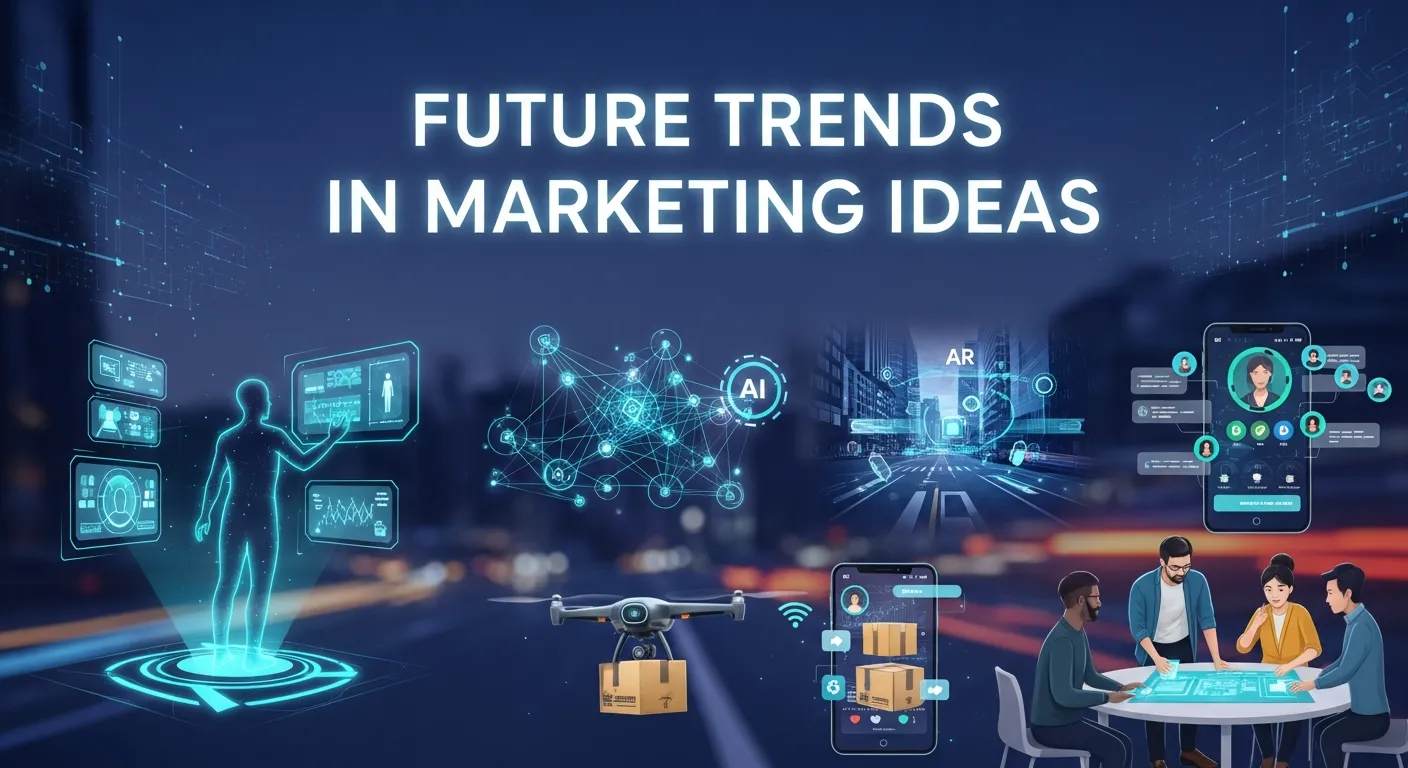
Marketing continues to evolve rapidly as technology and consumer behavior change. Businesses that adopt emerging ideas will gain a competitive advantage and attract more customers in the future.
AI-Driven Marketing Ideas
AI-driven ideas will dominate the future of digital marketing. Artificial intelligence enables automated content creation, predictive analytics, chatbots, and real-time campaign optimization. AI tools help businesses personalizeat scale, reduce manual workload, and improve targeting accuracy. Predictive models will help marketers forecast customer behavior and optimize campaigns before launch.
Social Commerce and Creator Economy
Social commerce is transforming social media platforms into direct sales channels. Features like in-app checkout, live shopping, and influencer storefronts are making it easier for customers to purchase without leaving social apps. The creator economy will continue to grow, with influencers and content creators driving brand awareness and sales through authentic content and community trust.
Hyper-Personalization
Hyper-personalization will become a standard idea. Businesses will use data, AI, and machine learning to deliver personalized content, offers, and experiences across multiple channels. Personalized emails, product recommendations, and website experiences will increase engagement, conversions, and customer loyalty.
AR/VR and Interactive Marketing
Augmented reality (AR) and virtual reality (VR) will create immersive experiences. Virtual product try-ons, 3D product demos, and interactive brand experiences will reduce purchase uncertainty and increase customer engagement. Interactive ideas will make brands more memorable and drive higher conversion rates.
Case Studies and Real-Life Marketing Success Examples
Real-world examples show how effective ideas can drive measurable business growth. These case studies highlight how different businesses used strategic marketing to increase visibility, attract customers, and boost revenue.
Small Business Growth Example
A local café implemented simple digital ideas like Instagram posts, Google Business Profile optimization, and customer reviews. They shared daily menus, behind-the-scenes content, and special offers on social media, encouraging customers to tag the brand and leave reviews. The café also ran small-budget Facebook ads targeting nearby users. Within six months, they increased foot traffic by 40% and grew online orders significantly. This shows how consistent, low-cost ideas can deliver strong results for small businesses.
E-commerce Success Story
An online fashion store used influencers, TikTok videos, and user-generated content as core ideas. They partnered with micro-influencers to create authentic product reviews and styling videos. Viral TikTok content drove massive website traffic, while retargeting ads converted visitors into customers. The brand also used email automation to recover abandoned carts. As a result, they achieved a 3x increase in sales and improved brand awareness globally.
B2B Strategy Example
A Software as a Service (SaaS) company focused on content and LinkedIn campaigns to generate high-quality leads. They published SEO-optimized blogs, case studies, and whitepapers targeting industry keywords. LinkedIn ads promoted gated content, capturing leads for the sales team. By nurturing leads with email campaigns and webinars, the company reduced customer acquisition costs and increased enterprise contracts. This demonstrates how strategic planning can drive sustainable B2B growth.
How to Create a Marketing Plan Using These Marketing Ideas
Creating a structured marketing plan ensures your marketing ideas deliver consistent and measurable results.
Step-by-step plan: Start by defining your target audience, selecting marketing channels, creating a content calendar, and allocating a budget. Outline timelines and responsibilities to keep campaigns organized.
Goal setting: Set clear marketing goals such as increasing website traffic, generating leads, or boosting sales. Use SMART goals (Specific, Measurable, Achievable, Relevant, Time-bound) to guide your strategy.
KPI tracking: Track key performance indicators like website traffic, conversion rate, click-through rate, email open rate, and ROI. Use analytics tools to monitor progress and optimize campaigns.
Scaling strategies: Once you identify successful strategies, scale them by increasing budget, expanding to new channels, automating workflows, and targeting new markets. Continuous testing and optimization help you grow efficiently and sustainably.
Conclusion
Effective marketing ideas are essential for attracting customers, building brand awareness, and driving sustainable business growth. By combining digital strategies like social media, SEO, content, and email with offline and partnership-based approaches, businesses can reach the right audience and increase conversions. The key is to understand your target audience, set clear goals, track performance, and continuously optimize campaigns. Whether you’re a small business or an established brand, applying creative and data-driven ideas will help you stay competitive, improve customer engagement, and maximize your ROI.
FAQ: Marketing Ideas
1. What are marketing ideas?
Answer: Marketing ideas are strategies and creative concepts businesses use to promote products or services, attract customers, and increase sales through online and offline channels.
2. Why are marketing ideas important for businesses?
Answer: Marketing ideas help businesses build brand awareness, reach target audiences, generate leads, and grow revenue in a competitive market.
3. What are the best marketing ideas for small businesses?
Answer: The best marketing ideas for small businesses include social media marketing, SEO, email marketing, referral programs, local marketing, and content marketing.
4. Which marketing ideas work best online?
Answer: Online marketing ideas like social media ads, SEO, content marketing, influencer marketing, and email campaigns are highly effective for reaching digital audiences.
5. How can low-budget marketing ideas attract customers?
Answer: Low-budget marketing ideas such as organic social media posts, local SEO, partnerships, email newsletters, and word-of-mouth marketing can attract customers without high costs.
6. What are creative marketing ideas to stand out?
Answer: Creative ideas include viral social media challenges, storytelling videos, guerrilla marketing, interactive content, and personalized customer experiences.
7. How do marketing ideas help increase sales?
Answer: Marketing ideas attract potential customers, build trust, and guide them through the sales funnel, ultimately increasing conversions and revenue.
8. What tools can help implement marketing ideas?
Answer: Tools like Hootsuite, Canva, Google Analytics, Search Console, email automation platforms, and AI tools help businesses execute and track effectively.
9. How can businesses measure the success of marketing ideas?
Answer: Businesses can measure success using metrics like website traffic, engagement, leads, conversion rates, and return on investment (ROI).
10. What are future trends in marketing ideas?
Answer: Future marketing ideas include AI-driven marketing, social commerce, hyper-personalization, influencer-driven sales, and AR/VR interactive marketing experiences.
Learn more: Building a Successful Referral Marketing Website