Digital referral marketing boosts growth by turning customers into brand advocates. With clear rewards, seamless sharing, and effective tracking, it enhances conversions, loyalty, and brand awareness, while AI, social commerce, and blockchain drive future innovation.
Digital referral marketing is a strategy where businesses encourage existing customers to recommend products or services to their friends, family, or online networks through digital channels like social media, email, apps, and websites. Unlike traditional word-of-mouth, digital referral marketing uses technology and incentives to track, reward, and scale referrals efficiently.
In the digital era, referral marketing matters more than ever because consumers trust recommendations from people they know far more than paid advertisements. With social media and messaging platforms, a single referral can reach hundreds or thousands of potential customers instantly, making it a powerful growth engine.
Referrals drive business growth by increasing customer acquisition, improving conversion rates, and boosting customer lifetime value. Referred customers are often more loyal, spend more, and are more likely to refer others, creating a sustainable cycle of organic growth.
What Is Digital Referral Marketing?
Definition and Concept
Digital referral marketing is a marketing strategy where businesses encourage customers, affiliates, influencers, or partners to recommend their products or services through digital platforms in exchange for rewards or incentives. It leverages online tools like referral links, tracking software, apps, and social media to automate and scale word-of-mouth marketing.
Word-of-mouth marketing vs digital referral marketing
Traditional word-of-mouth marketing happens organically when people talk about a brand in person or casually online. Digital referral marketing, however, is structured, measurable, and incentive-driven. Businesses provide unique referral links or codes, track referrals, and reward participants with discounts, cash, points, or gifts. This makes it easier to monitor performance and optimize campaigns.
How referral systems work online
Online referral systems use tracking technology to identify who referred a new customer. When a user signs up or makes a purchase through a referral link or code, the system records the action and automatically rewards the referrer and sometimes the new customer. This automation makes digital referral marketing highly effective.
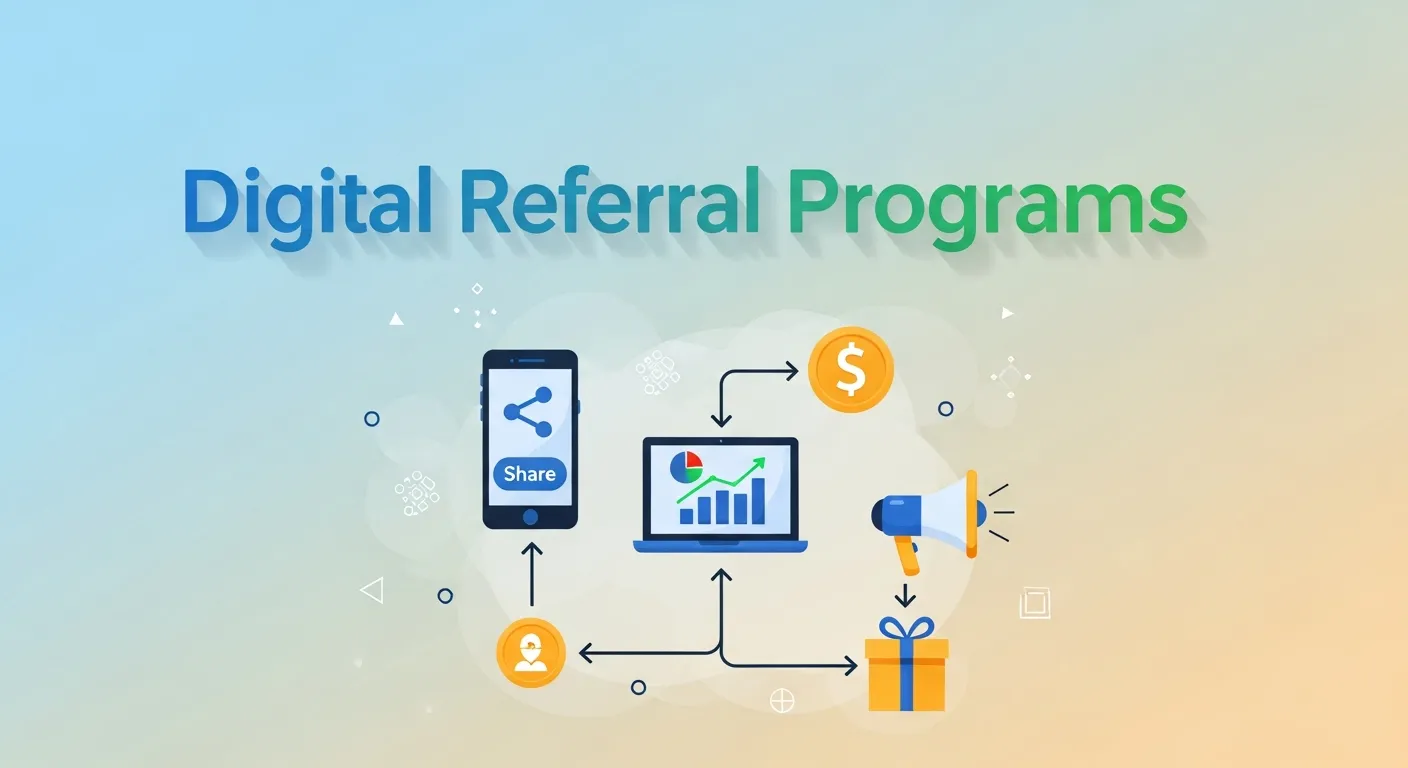
Types of Digital Referral Programs
Customer referral programs
These programs encourage existing customers to refer friends and family. Rewards may include discounts, store credits, or free products. Customer referral programs are widely used in e-commerce, SaaS, and subscription-based businesses.
Affiliate referral programs
Affiliate programs allow bloggers, content creators, and marketers to earn commissions by promoting products through unique tracking links. Affiliates are paid per sale, lead, or click, making this a performance-based marketing model.
Influencer-based referral marketing
Influencers share referral links or promo codes with their followers on platforms like Instagram, YouTube, TikTok, and blogs. Their audience trusts their recommendations, making influencer referral marketing highly effective for brand awareness and conversions.
Partner and B2B referral programs
In B2B referral programs, companies partner with other businesses, agencies, or consultants to refer clients. Partners earn commissions or revenue sharing for successful referrals, helping companies expand their market reach through trusted professional networks.
Why Digital Referral Marketing Is Important for Business Growth
High Trust and Conversion Rates
One of the biggest reasons referral marketing is so powerful is trust. People naturally trust recommendations from friends, family, colleagues, and influencers they follow. This is rooted in human psychology—when someone we know recommends a product or service, we assume it is reliable, safe, and valuable. This social proof reduces hesitation and speeds up the buying decision.
Compared to traditional advertisements, referrals feel more authentic and less sales-driven. Consumers often ignore or distrust ads due to overexposure, but a personal recommendation cuts through skepticism. Studies consistently show that referred customers convert at a much higher rate than those acquired through paid campaigns, email blasts, or cold outreach. This makes referrals one of the most effective methods for turning prospects into customers.
Cost-Effective Customer Acquisition
Referral marketing is also highly cost-effective compared to paid advertising channels like Google Ads, Facebook Ads, or influencer sponsorships. Paid ads require continuous spending to generate traffic and leads, and costs often increase as competition grows. In contrast, referrals rely on existing customers and networks to bring in new users organically, reducing marketing expenses.
Customer acquisition costs (CAC) through referrals are typically lower because businesses only reward successful referrals rather than paying for impressions or clicks. Many companies offer discounts, credits, or small incentives, which are often cheaper than running large ad campaigns. As a result, referral-driven growth can deliver a strong return on investment and help businesses scale sustainably without overspending on marketing.
Boosting Customer Lifetime Value (CLV)
Referred customers tend to be more loyal and valuable over time. Since they join through a trusted recommendation, they often have a stronger connection to the brand and higher satisfaction levels. This leads to more repeat purchases, longer subscription periods, and higher overall lifetime value.
Additionally, customers who participate in referral programs are more engaged with the brand. They feel rewarded and appreciated, which increases retention and encourages ongoing advocacy. Loyal customers are also more likely to refer others, creating a continuous growth loop where satisfied users bring in new users, who then become repeat customers themselves.
Overall, referral marketing not only helps acquire customers efficiently but also strengthens long-term relationships and drives sustainable business growth.
How Digital Referral Marketing Works
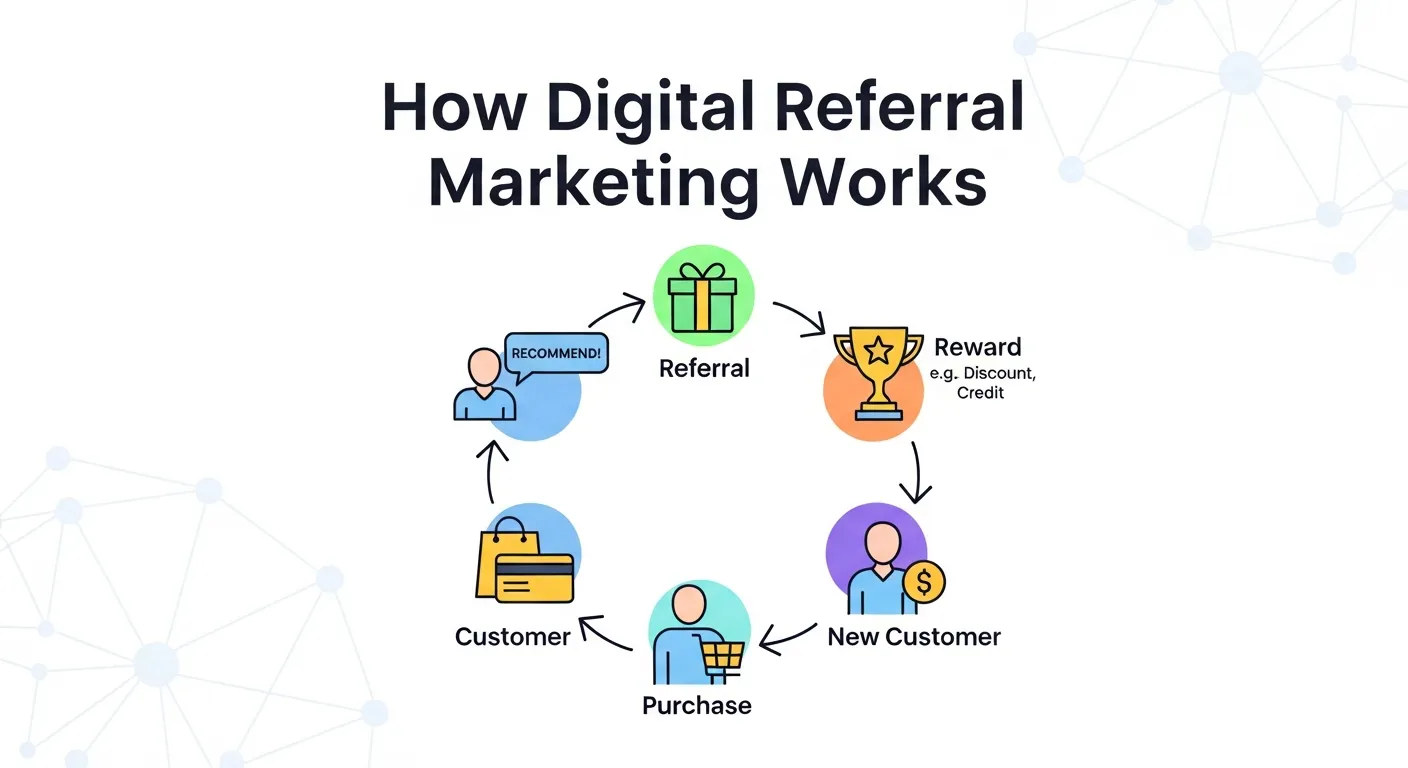
Step-by-Step Referral Process
Referral link creation:
The referral process usually starts with a unique referral link or code generated for each customer, affiliate, or partner. This link contains tracking parameters that identify who made the referral. Businesses use referral software or built-in CRM tools to create these personalized links automatically. When a new user clicks the link and completes a signup or purchase, the system attributes that action to the referrer.
Sharing channels (email, social media, messaging apps):
Once the referral link is created, users can share it across multiple digital channels. Common platforms include email, Facebook, Instagram, WhatsApp, Telegram, LinkedIn, and even SMS. Many companies make sharing easy by adding “Share” buttons directly in their app or website. This multi-channel approach increases visibility and makes it simple for customers to recommend products to their networks.
Tracking and rewarding referrals:
After someone uses a referral link, the system tracks their activity—such as signing up, making a purchase, or completing a specific action. When the referral meets predefined conditions, the referrer receives a reward. Rewards can be discounts, cashback, loyalty points, free products, or commissions. Automation ensures accurate tracking and timely payouts, which helps maintain trust and participation in the program.
Key Elements of a Successful Referral Program
Referral tracking software:
Reliable tracking technology is the backbone of any referral program. Referral tracking software records clicks, conversions, and rewards, ensuring that every referral is properly credited. It also provides analytics dashboards to measure performance, identify top referrers, and optimize campaigns. Without accurate tracking, referral programs can lose credibility and effectiveness.
Reward structure:
A strong reward system motivates people to participate. Businesses often use double-sided rewards, where both the referrer and the new customer receive a benefit. The reward should be valuable, easy to understand, and aligned with the brand’s pricing model. For example, subscription businesses may offer free months, while eCommerce brands may provide discounts or store credits.
User-friendly interface:
Simplicity is crucial for success. A user-friendly interface makes it easy for customers to find their referral link, understand how the program works, and share it with others. Clear instructions, intuitive design, and mobile-friendly layouts increase participation rates. If the referral process is complicated, users are less likely to engage, reducing the program’s overall impact.
By combining seamless tracking, attractive rewards, and a simple sharing experience, businesses can build an effective referral system that drives consistent and scalable growth.
Benefits of Digital Referral Marketing
Faster Business Growth
Digital referral marketing can accelerate business growth through the viral loop concept, where existing customers continuously bring in new customers. When a user refers a friend, and that friend later refers others, the growth becomes self-sustaining. This creates a compounding effect that can significantly increase user acquisition without heavy marketing spend.
The exponential referral growth model explains how each customer can generate multiple new customers over time. For example, if one customer refers two new users, and each of them refers two more, the customer base grows exponentially. This network effect is especially powerful for SaaS platforms, apps, and subscription-based businesses, where referrals can quickly scale user adoption and revenue.
Higher Customer Retention
Referral programs also improve customer retention by creating an emotional and psychological connection with the brand. When customers receive rewards for referring others, they feel valued and recognized, which strengthens their relationship with the company. This sense of appreciation encourages them to continue using the product or service.
Integrating referral programs with loyalty programs further increases retention. For example, businesses can offer loyalty points, exclusive perks, or tiered rewards for frequent referrals and repeat purchases. This combination motivates customers to stay engaged, make repeat purchases, and actively promote the brand, resulting in higher lifetime value and reduced churn rates.
Brand Awareness and Social Proof
Digital referral marketing naturally boosts brand awareness by encouraging users to share the brand with their networks. Every referral link, social media post, or message acts as a mini advertisement, reaching new audiences organically. This organic exposure is often more credible and impactful than traditional ads.
User-generated content (UGC) plays a major role in building trust and visibility. When customers share their experiences, referral links, or success stories on social media, it creates authentic content that influences others. Additionally, online reviews and testimonials from referred customers provide strong social proof, helping potential buyers feel confident in their purchasing decisions.
Digital Referral Marketing Strategies for Growth
Offer Double-Sided Incentives
One of the most effective strategies for maximizing referral participation is offering double-sided incentives. This means that both the referrer and the referred customer receive a reward, creating a win-win situation that motivates more people to share.
Referrer rewards can include discounts, cashback, loyalty points, or free products for every successful referral. These rewards encourage customers to actively promote your brand because they see tangible benefits for their efforts.
Referred customer rewards are equally important. Offering a welcome discount, free trial, or exclusive perk to new customers makes them more likely to take action and complete a purchase. By rewarding both parties, businesses increase conversion rates, accelerate program growth, and create a positive cycle of participation.
Personalize Referral Campaigns
Personalization is key to making referral campaigns feel relevant and engaging. Businesses can leverage AI-driven personalization to recommend specific products, tailor messaging, and identify the right moment to prompt a referral. Personalized emails, app notifications, and in-platform prompts increase the likelihood that customers will share links.
Behavior-based referral triggers further enhance personalization. For example, prompting users to refer a friend after completing a purchase, reaching a milestone, or achieving a loyalty level can dramatically improve engagement. By aligning referral prompts with user behavior, businesses make the process feel natural rather than intrusive.
Use Social Media and Messaging Apps
Social media platforms and messaging apps are powerful tools for amplifying referral campaigns. Platforms like WhatsApp, Instagram, Facebook, and TikTok allow users to easily share referral links with friends and followers. Since people trust recommendations from their personal networks, social sharing often drives higher-quality leads.
Referral sharing buttons embedded directly in emails, apps, or websites make the process seamless. A single click lets users share a link across multiple channels, reducing friction and boosting participation. Encouraging social sharing also increases brand visibility and engagement organically, often reaching audiences far beyond the original customer base.
Gamification Techniques
Gamification can turn referral programs into fun, competitive experiences that drive more participation. Leaderboards showcase top referrers, motivating users to compete for recognition and rewards. This social comparison encourages ongoing engagement and generates excitement around the program.
Referral contests and milestones are another effective approach. Businesses can set goals, such as “Refer 5 friends to unlock a bonus reward” or run limited-time referral competitions with prizes for the top referrers. Gamification not only increases participation rates but also strengthens emotional engagement with the brand, turning referrals into a game that users want to play repeatedly.
Best Tools and Software for Digital Referral Marketing
Referral Marketing Platforms
Several specialized platforms make it easy to set up, manage, and scale referral programs.
- ReferralCandy: Designed for eCommerce businesses, ReferralCandy automates referral campaigns, tracks referrals, and provides customizable reward structures. It’s simple to integrate with online stores and offers detailed analytics to optimize performance.
- InviteReferrals: This platform allows businesses to create multi-channel referral campaigns with minimal setup. Users can share referral links via email, social media, or messaging apps, and the platform tracks referrals and rewards automatically.
- Yotpo: Yotpo combines referral marketing with user-generated content and reviews. It encourages loyal customers to share products with friends while generating social proof to enhance credibility and conversions.
- Ambassador: Suitable for both B2C and B2B, Ambassador helps businesses manage affiliate, partner, and customer referral programs. It provides robust tracking, analytics, and flexible reward structures to support complex campaigns.
CRM and Automation Tools
Integrating referral programs with CRM and automation tools streamlines processes and ensures seamless customer experiences.
- HubSpot: HubSpot allows businesses to manage referral campaigns alongside their broader marketing, sales, and customer service workflows. Automated email sequences can prompt referrals based on user behavior and engagement.
- ActiveCampaign: Known for email marketing automation, ActiveCampaign can trigger referral prompts, send reward notifications, and track conversions, ensuring every referral is captured accurately.
- Zapier integration: Zapier connects referral programs with hundreds of other apps, automating workflows like adding referred users to a CRM, triggering notifications, or updating reward statuses without manual effort.
Analytics and Tracking Tools
Measuring the effectiveness of a referral program is critical for optimization.
- Google Analytics: By setting up goals and conversion tracking, Google Analytics can monitor referral traffic, measure conversions, and assess overall campaign performance.
- UTM tracking: Adding UTM parameters to referral links helps track which channels or campaigns generate the most referrals, allowing businesses to optimize their strategies.
- Referral dashboards: Most referral software includes built-in dashboards that show real-time metrics, including top referrers, conversion rates, reward status, and ROI, giving marketers a clear view of program performance.
Common Mistakes in Digital Referral Marketing
Digital referral marketing can be highly effective, but many businesses fail to maximize its potential due to common mistakes. Addressing these pitfalls is crucial to ensuring your referral campaigns drive growth, engagement, and long-term customer loyalty.
Poor Incentive Structure
One of the most frequent mistakes in digital referral marketing is offering low-value rewards or creating a confusing reward system. If incentives are not attractive enough, customers are unlikely to participate in the program. Similarly, complicated reward redemption processes can frustrate users, leading to abandoned referrals. A successful referral program needs clear, compelling, and easily redeemable incentives that motivate both the referrer and the referred customer. Businesses should consider double-sided rewards to maximize engagement and ensure every participant sees tangible benefits.
Complex Referral Process
A complex referral process is another major barrier to success. If users struggle to find their referral link, share it, or complete required steps, participation rates drop dramatically. Poor user experience (UX), confusing instructions, or mobile-unfriendly interfaces can discourage referrals. Digital referral marketing thrives on simplicity, so streamlining the process is essential. Easy sharing options through email, social media, and messaging apps, combined with intuitive dashboards, encourage users to refer frequently.
Not Tracking Referral Data
Failing to track referral data is a critical oversight in digital referral marketing. Without tracking KPIs, businesses cannot measure program performance or identify which strategies are working. Metrics like referral clicks, conversions, top referrers, and ROI are essential for optimization. Lack of analytics insights prevents marketers from improving campaigns, adjusting rewards, or targeting high-performing channels. Using referral tracking software, UTM codes, and analytics dashboards ensures every referral is captured and analyzed, enabling data-driven decisions to scale growth effectively.
Case Studies of Successful Digital Referral Marketing
Dropbox Referral Program
Dropbox is one of the most cited examples of successful digital referral marketing. The platform implemented a double-sided incentive model, where both the referrer and the referred user received additional free storage space for each successful referral. This simple yet effective strategy encouraged users to invite friends actively, creating a network effect that rapidly expanded Dropbox’s user base.
The growth results were remarkable: Dropbox reportedly increased sign-ups by over 60% within a few months of launching the referral program. By integrating digital referral marketing directly into the user experience, Dropbox turned its existing customers into brand advocates, accelerating adoption without relying heavily on traditional advertising.
Uber Referral Marketing Strategy
Uber’s digital referral marketing program leveraged ride credits as incentives. Both the referrer and the referred user received free ride credits when a new rider signed up and completed their first trip. This created immediate value for participants and encouraged frequent sharing.
The referral program helped Uber achieve global scaling impact, rapidly expanding its user base across multiple countries. By combining technology, incentives, and a seamless referral process, Uber demonstrated how digital referral marketing can drive rapid adoption in a competitive, fast-growing market.
E-commerce Brand Referral Success Story
Many e-commerce brands have leveraged digital referral marketing to boost sales and customer loyalty. For example, an online fashion retailer offered referral discounts for both existing and new customers. Users shared links via email, WhatsApp, and social media, generating consistent traffic and sales growth.
Over time, this referral program significantly increased repeat purchases and customer retention. By integrating digital referral marketing into their e-commerce platform, the brand turned satisfied customers into active promoters, generating measurable revenue without increasing paid advertising costs.
Future Trends in Digital Referral Marketing
AI and Automation in Referral Programs
The future of digital referral marketing increasingly involves AI and automation. Predictive algorithms can identify customers most likely to refer friends and trigger referral campaigns at optimal moments. AI can also personalize rewards based on user behavior, preferences, and purchase history, improving engagement and program effectiveness.
Social Commerce and Influencer Referrals
Platforms like TikTok and Instagram are driving new trends in digital referral marketing through social commerce. Influencers can share referral links and codes directly with their followers, combining authentic recommendations with viral reach. This integration of social media and referrals enables brands to tap into highly engaged audiences while generating measurable conversions.
Blockchain and Decentralized Referral Tracking
Emerging technologies like blockchain offer the potential to revolutionize digital referral marketing by enabling transparent, tamper-proof reward systems. Smart contracts can automatically distribute rewards when referral conditions are met, increasing trust and accountability. This decentralized approach ensures all participants can verify transactions, making referral programs more reliable and appealing to tech-savvy customers.
Conclusion
Digital referral marketing has proven to be one of the most powerful strategies for driving business growth, customer acquisition, and brand loyalty. By leveraging satisfied customers, affiliates, and influencers, businesses can create a self-sustaining cycle of referrals that amplifies reach organically. Successful programs combine clear rewards, seamless user experiences, and effective tracking to maximize engagement and conversion rates. With emerging trends like AI personalization, social commerce, and blockchain-based referral tracking, the potential of digital referral marketing continues to expand. Companies that implement these strategies can achieve faster growth, higher retention, and stronger brand credibility in today’s competitive digital landscape.
FAQ: Digital Referral Marketing
1. What is Digital Referral Marketing?
Answer: Digital Referral Marketing is a strategy where businesses encourage existing customers to promote their products or services online through digital channels like social media, email, or referral links. It leverages technology to track, reward, and optimize referrals efficiently.
2. How does Digital Referral Marketing work?
Answer: In digital referral marketing, a customer shares a unique referral link or code with friends or followers. When the referred person completes a desired action, both parties receive rewards. Platforms automate tracking and reward distribution, making the process seamless.
3. Why is Digital Referral Marketing important for businesses?
Answer: Digital referral marketing drives cost-effective customer acquisition, increases trust through word-of-mouth, improves conversion rates, and strengthens customer loyalty. It allows businesses to scale growth online without heavy advertising budgets.
4. Which industries benefit most from Digital Referral Marketing?
Answer: E-commerce, SaaS, fintech, online education, and ride-sharing industries gain the most from digital referral marketing. These sectors rely on trust and peer recommendations, making digital referrals highly effective for conversions and engagement.
5. What types of incentives are used in Digital Referral Marketing?
Answer:Popular incentives include discounts, cashback, loyalty points, free trials, and exclusive offers. Double-sided rewards—benefiting both referrer and referred—are proven to increase engagement and encourage more referrals.
6. How can businesses track Digital Referral Marketing performance?
Answer:Businesses track key metrics like referral rate, conversion rate, cost per acquisition, and customer lifetime value. Using platforms like ReferralCandy, Friendbuy, or Yotpo automates tracking and provides actionable insights to optimize campaigns.
7. What role do social media platforms play in Digital Referral Marketing?
Answer:Social media channels like Instagram, TikTok, WhatsApp, and Facebook amplify referrals by enabling viral sharing. Visual proof, peer validation, and easy sharing options increase engagement and drive more referral traffic online.
8. How does mobile-first strategy impact Digital Referral Marketing?
Answer:With over 70% of referrals occurring on mobile, mobile-optimized referral programs are critical. Apps with in-built referral systems, push notifications, and one-click sharing improve participation and make digital referral marketing more effective.
9. What are common challenges in Digital Referral Marketing?
Answer:Low participation, complicated referral processes, and irrelevant incentives are common hurdles. Simplifying the referral flow, offering meaningful rewards, and clear promotion can help businesses overcome these challenges.
10. How can businesses maximize ROI from Digital Referral Marketing?
Answer:To maximize ROI, businesses should design engaging programs, personalize referral prompts, leverage AI for predictive insights, use social and mobile channels effectively, and continuously track and optimize performance.