
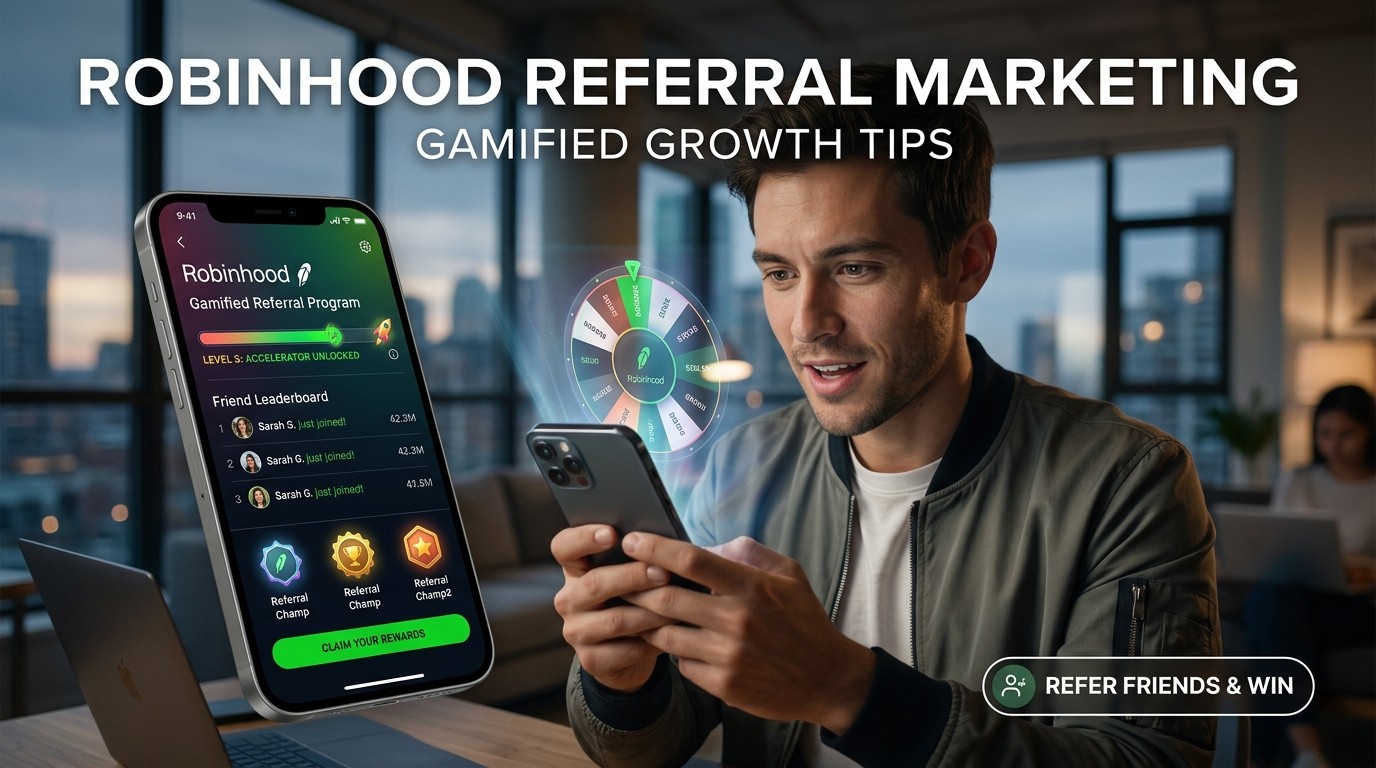
Robinhood Referral Marketing shows how gamification, urgency, and social proof can make a simple invite loop feel exciting, rewarding, and easy to share.
Robinhood Referral Marketing is a useful case study because it blends finance, psychology, and product design in a way that feels simple to the user but strategic to the company. In a category where trust is essential and friction can kill momentum, a referral program has to do more than offer a prize. It has to make participation feel easy, timely, and emotionally satisfying. That is where Robinhood stands out. The referral experience is not only about acquisition. It is also about making the product feel lively, social, and worth talking about.
Robinhood Referral Marketing matters because financial products are often perceived as serious, intimidating, or slow-moving. Referral design helps soften that image by adding a sense of movement and reward. When users feel like they are getting something immediate and understandable, they are more likely to engage. That is the real power of a good referral system. It turns a quiet finance product into a more active growth engine.
Why Referral Marketing Works in Finance
Robinhood Referral Marketing works because finance products usually require more trust than ordinary consumer apps. People do not casually open brokerage accounts unless they believe the platform is useful, secure, and easy enough to use. A referral program helps by lowering social and psychological barriers. If a friend recommends the app, the product feels less abstract and more credible. That social proof is especially powerful in finance because the decision carries emotional weight.
The other reason referral marketing works in this category is that finance products can feel repetitive or difficult to explain. A referral incentive gives users a simple reason to tell others about the app. Robinhood Referral Marketing therefore functions as both an acquisition tool and a conversation starter. The user is not just clicking a link; they are participating in a shared moment of value.
The Psychology Behind Gamified Growth

Robinhood Referral Marketing is effective because it uses gamified behavior without making the product feel childish. The idea of earning a reward, claiming it, and watching the result appear in the account creates a sense of progress. That small feeling of progress matters more than many teams realize. People like systems that give them a clear action and a visible outcome. When a referral program does that well, it becomes more engaging than a plain discount or generic bonus.
Gamification also works because it gives the user a reason to return. Robinhood Referral Marketing is not just about one invite. It creates a loop in which the user checks the reward, claims it, and continues interacting with the app. That repeated engagement is valuable because the more often a user visits, the more likely they are to explore the product further.
Why the Offer Feels Meaningful
Robinhood Referral Marketing is stronger when the reward feels tied to the product category. In Robinhood’s current referral setup, users can earn stock rewards that they can claim through the app or web, and in the UK the reward can be used to pick a stock from a list of top traded companies. That structure matters because the reward is not random. It reinforces the product’s identity as an investing platform.
The value of the reward also matters psychologically. If the incentive is too small or too confusing, users will ignore it. If it feels relevant and easy to understand, it becomes part of the app experience. Robinhood Referral Marketing succeeds when the reward feels like an extension of investing rather than a separate promo with no connection to the core service.
Simplicity Beats Complexity
Robinhood Referral Marketing works because the flow is straightforward. The user invites a friend, the friend signs up and completes the required steps, and the reward becomes available. The process is not built around a long chain of conditions that require constant explanation. That simplicity lowers abandonment and makes the program easier to describe to others.
A referral system becomes much stronger when users can explain it in a sentence. That is why clutter is dangerous. If the rules are too long, people stop sharing. Robinhood Referral Marketing benefits from the fact that the basic idea is easy to understand and easy to repeat. Simplicity also helps the brand feel more approachable, which is important in a sector that can otherwise feel technical and distant.
How the Current Program Is Structured
Robinhood Referral Marketing currently appears in Robinhood’s help content as a referral program that lets users invite friends and receive reward stock. Robinhood’s help pages state that users can claim the reward in the app or on the web, and that the reward must be claimed within 60 days before it expires. In the UK, the invitee must successfully sign up, get approved, link their bank account, and complete a deposit within 14 days for the reward to apply.
This structure is important because it keeps the program action-based rather than passive. Robinhood Referral Marketing does not reward only intent. It rewards completed steps. That distinction matters in finance because it encourages genuine account activation rather than shallow signups.
Why the Product Fit Matters
Robinhood Referral Marketing works well because the product itself already lends itself to social conversation. Investing is often discussed among friends, peers, and online communities. When a product sits inside a social behavior pattern that already exists, referrals are easier to trigger. Users are more willing to share something that feels practical, modern, and relevant to their financial life.
That product fit is even more important when the brand is still shaping its reputation. Robinhood has often been associated with accessibility and simplicity, and the referral system reinforces that image. Robinhood Referral Marketing therefore becomes part of the broader brand story, not just a campaign.
Audience Segmentation and Better Message Fit
Robinhood Referral Marketing becomes more effective when the message is tuned to the right user type. Not every user is motivated by the same thing. Some care about investing education, some care about convenience, and others are motivated by the reward itself. Audience Segmentation helps the team think about those differences instead of sending one generic message to everyone.
This is where Data Signals for Precise Message Tailoring matter. If a user is highly engaged, already exploring features, or showing repeated interest in investing content, the referral prompt can be framed differently than it would be for a casual visitor. Better targeting does not have to be complicated. It just has to feel relevant. Robinhood Referral Marketing benefits when the user sees a message that fits their stage in the journey.
The Role of Momentum and Visibility
Robinhood Referral Marketing needs visibility to work. If the program is hidden too deeply, users will forget it exists. If it appears in the right place at the right time, it can become part of the normal user journey. That is important because referral campaigns depend on momentum. Once users start sharing, the program gains emotional and social energy.
Visibility also helps reduce hesitation. When the reward and steps are easy to see, users feel more confident about participating. They do not have to guess whether the invite is worth sending. Robinhood Referral Marketing is strongest when the invite feels like a natural next action, not a chore.
Why Trust and Timing Work Together
Robinhood Referral Marketing succeeds when trust and timing align. The trust comes from the product experience, the brand promise, and the reward structure. The timing comes from showing the referral offer when the user is most likely to appreciate it. If the user has already experienced some value in the app, they are more likely to invite someone else.
This principle is true in many products, but finance makes it especially visible. People are cautious about recommending financial services too early. Robinhood Referral Marketing works best after the user has enough confidence to feel comfortable sharing. That confidence is part of the growth engine.
Comparing with Other Referral Models

Robinhood Referral Marketing can be compared with other referral systems that rely on brand enthusiasm or social identity. A Rivian Referral Program may attract users through brand loyalty and lifestyle association, while a Polymarket Referral Program may depend on active interest in the platform and its community dynamics. Robinhood’s referral approach is different because it combines financial utility with reward-based engagement.
That comparison matters because not every referral engine should be copied exactly. Different products require different triggers. Robinhood Referral Marketing is most effective when the reward and the user action fit the behavior of the product category. The lesson is not to imitate the mechanics blindly, but to understand why users are willing to share in the first place.
How the Reward Mechanism Shapes Behavior
Robinhood Referral Marketing uses a reward mechanism that creates anticipation. People are often motivated by the possibility of getting something useful, especially when the process feels transparent. Reward stock also creates a sense of ownership, which makes the referral feel more concrete than a vague credit or points balance.
That matters because concrete rewards are easier to appreciate. Users do not have to imagine what the benefit means. They can see it, claim it, and interact with it. Robinhood Referral Marketing therefore turns participation into a small event, and that event-like quality is one reason gamified growth can be powerful.
Social Proof and Everyday Conversation
Robinhood Referral Marketing also benefits from the fact that social proof spreads through ordinary conversation. Users talk about apps that help them feel smarter, more informed, or more in control of their money. If a referral reward feels aligned with that conversation, it becomes easier to share. A user can recommend the app without sounding like a salesperson.
That social comfort matters. Referral programs often fail when they make people feel awkward about sharing. Robinhood Referral Marketing works better when the user can casually say the app has a useful reward and a simple sign-up flow. That makes the social handoff smoother and more believable.
Onboarding and the First Action
Robinhood Referral Marketing is stronger when the first action is easy. Once a user sees the invite path, they should be able to move quickly toward sharing or claiming a reward. If onboarding creates too much friction, the user may postpone the referral and never return to it. Early clarity is one of the easiest ways to improve participation.
That first action matters because the brain tends to value immediate completion. The easier it is to start, the more likely the user is to continue. Robinhood Referral Marketing therefore benefits from a clean in-app flow, clear instructions, and a reward that feels worth the effort.
What Modern Marketers Can Learn
Robinhood Referral Marketing teaches a broader lesson about growth: the best referral systems feel like a natural extension of the product. They do not look like marketing pasted onto the side of the app. They feel embedded in the experience. That makes them easier to trust and easier to use.
Modern marketers should also note that gamification does not have to be loud to work. Robinhood Referral Marketing shows that a clean reward path, a clear progression, and a sense of personal benefit can create strong engagement without overwhelming the user.
Why Financial Apps Need Careful Design
Robinhood Referral Marketing must balance excitement with credibility. In finance, overly flashy promises can damage trust. A good referral system has to feel rewarding while still respecting the seriousness of the product. That is why the offer should remain simple, transparent, and aligned with the user’s real expectations.
This balance is especially important because users are not just clicking for fun. They are associating their money and identity with the product. Robinhood Referral Marketing works when it feels responsible as well as motivating.
Making the Referral Feel Personal

Robinhood Referral Marketing becomes more persuasive when the message feels personal. Users are more likely to invite friends when the program feels like it could help someone they know rather than a generic marketing trick. Personal relevance changes the emotional tone of the share.
That is why segmentation and behavioral signals matter so much. If the platform knows who is likely to care about a referral offer, it can tailor the timing and wording more effectively. Robinhood Referral Marketing becomes stronger when the invitation seems like it was made for that user, not just for everyone.
What Keeps the Loop Alive
Robinhood Referral Marketing remains effective when the product continues to create moments of value after the invite. If the new user finds the app useful, the loop can continue. If the existing user keeps checking the app, the referral reward stays part of the relationship. That continued engagement is what turns a one-time invite into a repeatable growth pattern.
The loop also stays alive when the product remains easy to talk about. If users can describe the value quickly, the referral can keep spreading through everyday conversation. Robinhood Referral Marketing depends on that kind of shareability.
Practical Table Referral Growth Lessons
| Growth Principle | Why It Matters | Robinhood Example |
|---|---|---|
| Simplicity | Reduces friction | Easy invite-and-reward flow |
| Trust | Increases willingness to share | Finance users need confidence |
| Reward relevance | Makes the incentive meaningful | Reward stock fits investing |
| Visibility | Improves participation | Referral must be easy to find |
| Segmentation | Improves message fit | Different users respond differently |
Conclusion
Robinhood Referral Marketing shows that gamified growth works best when the reward, the product, and the user journey all point in the same direction. A referral program in finance cannot rely on hype alone. It needs trust, clarity, and a reward that feels relevant to the product itself. Robinhood’s approach works because it turns inviting a friend into a simple, visible, and worthwhile action. The program also shows how psychology matters in growth: people are more likely to participate when the process feels fair, the reward feels concrete, and the product already has social credibility. That is why the referral loop can become a real growth lever instead of a forgettable promo. For marketers, the lesson is not just to add a referral button. The lesson is to design a system that fits how people actually behave, what they already value, and when they are most likely to act. When those elements come together, referral marketing stops feeling like a side feature and starts functioning like a meaningful part of the product experience itself.
Frequently Asked Questions (FAQ)
What is Robinhood Referral Marketing?
It is Robinhood’s invite-and-reward system that encourages users to bring in friends by offering reward stock and a simple sharing flow.
Why is it called gamified growth?
Because it uses rewards, progression, and visible actions to make participation feel engaging and rewarding rather than passive.
How does the current referral program work?
Robinhood’s help pages say users can invite friends and claim reward stock in the app or web, with reward stock needing to be claimed within 60 days.
What happens in the UK program?
Robinhood UK says both the inviter and invitee must be UK residents, and the invitee must sign up, get approved, link a bank account, and deposit within 14 days.
Why does the reward matter so much?
Because reward stock feels relevant to the product and makes the referral more meaningful than a generic bonus.
How can segmentation improve referrals?
Audience Segmentation helps tailor the message so different users receive the referral prompt in a way that feels relevant to them.
What role do data signals play?
Data Signals for Precise Message Tailoring help identify which users are more likely to respond to a referral prompt and when to show it.
Why is simplicity so important?
Simple referral flows are easier to understand, easier to share, and less likely to create drop-off.
Can other industries copy this model?
They can borrow the principles, but the reward and flow must fit the product and the user’s real motivation.
What is the biggest lesson from Robinhood Referral Marketing?
The biggest lesson is that growth works best when the referral feels like a natural extension of the product, not a separate campaign.