
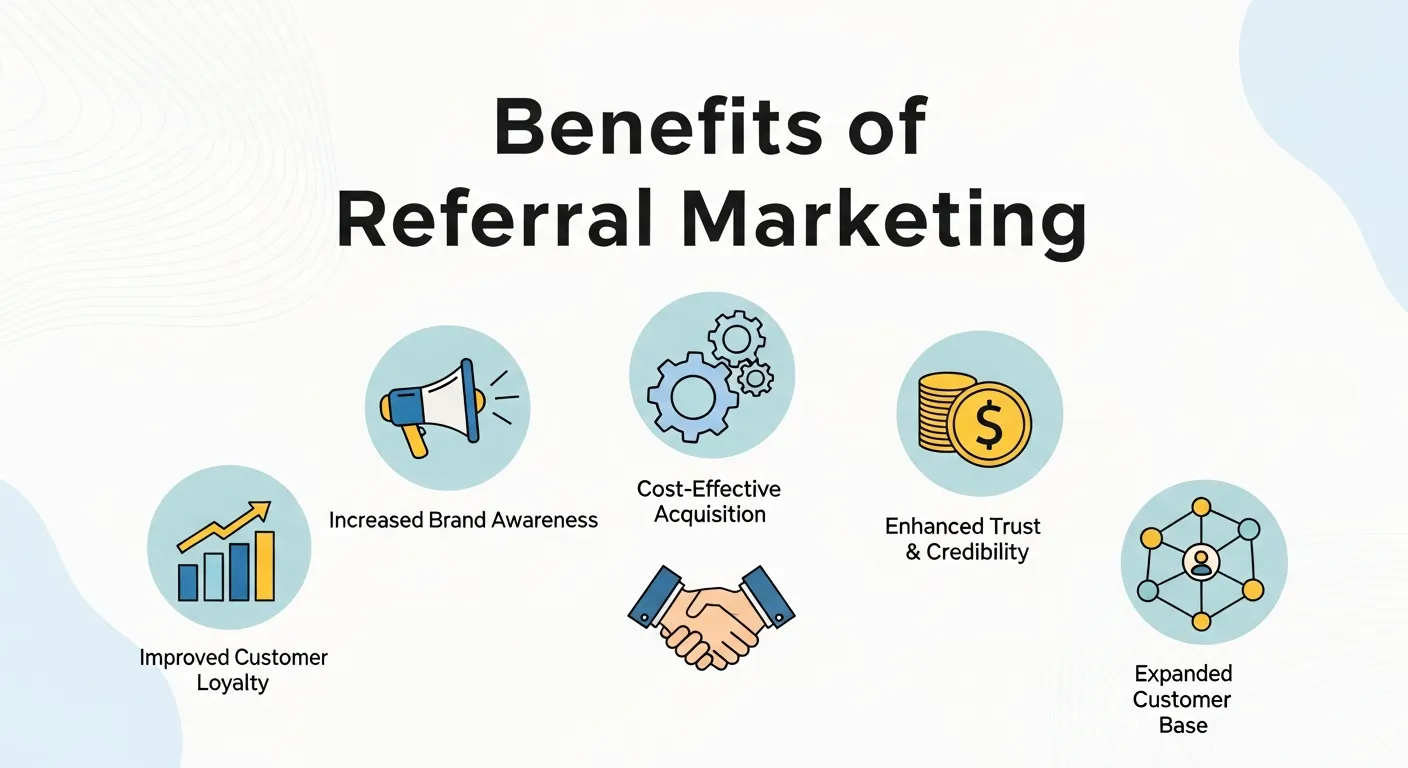
Referral marketing helps businesses grow by leveraging loyal customers to generate high-quality leads. Its benefits include increased acquisition, retention, trust, cost-effectiveness, and long-term growth, making it a powerful strategy for sustainable success.
Did you know that referral leads convert 3x better than leads from other marketing channels? That’s not just a lucky coincidence—it’s the power of trust at work. When someone recommends your business to a friend, they’re essentially vouching for your brand with their own reputation on the line. That kind of endorsement is worth its weight in gold.
Referral marketing taps into this powerful dynamic by turning your satisfied customers into brand advocates. Instead of spending thousands on paid ads that people scroll past, you’re leveraging genuine recommendations from real people. The benefits of referral marketing go far beyond just acquiring new customers. It builds loyalty, reduces costs, and creates a sustainable growth engine that compounds over time.
In this post, we’ll explore what makes referral marketing so effective and break down ten proven benefits that can transform how your business grows. We’ll also cover practical implementation steps and real-world examples to help you launch or optimize your own referral program.
What is Referral Marketing?
Definition and Key Concept
Referral marketing is a strategic approach that encourages your existing customers to recommend your products or services to their friends, family, and colleagues. Rather than relying solely on traditional advertising, you’re activating your customer base to become promoters of your brand.
At its core, referral marketing leverages word-of-mouth—one of the oldest and most trusted forms of marketing. When a happy customer shares their positive experience with others, it carries more weight than any ad campaign could achieve. People naturally trust recommendations from those they know, making referred prospects more receptive to your message from the start. For more examples of leveraging networks, see how to work B2B referral marketing.
The beauty of this approach is that it creates a win-win situation. Customers get rewarded for sharing something they already love, while businesses gain high-quality leads who are more likely to convert and stick around.
How Referral Marketing Works
The mechanics of a referral program are straightforward:
Step 1: Incentivize – You create compelling rewards for customers who refer others. These could be discounts, cash bonuses, points, exclusive perks, or access to premium features.
Step 2: Share – Customers receive unique referral links or codes they can easily share via email, social media, text message, or word of mouth. The simpler the sharing process, the more referrals you’ll generate.
Step 3: Reward – Reward – When someone signs up or purchases via a referral, both parties receive rewards. This dual incentive system drives participation, as highlighted in referral programs that work.
Modern referral programs often use software platforms that automate tracking, reward distribution, and performance analytics, making it easy for businesses of any size to run effective campaigns.
Why Referral Marketing Matters for Businesses
Referral marketing has become essential for businesses looking to grow sustainably without depleting their marketing budgets. Unlike paid advertising, where costs can spiral quickly, referral programs offer a more predictable and cost-effective way to acquire customers.
The numbers tell a compelling story. According to industry research, referred customers have a 16% higher lifetime value than non-referred customers. They also tend to have better retention rates—studies show they’re 18% more likely to stay with a company over time. These aren’t marginal improvements; they represent significant competitive advantages.
What makes referral marketing particularly powerful is its foundation in trust. Traditional advertising has become less effective as consumers grow increasingly skeptical of branded messages. But a recommendation from a friend or family member? That carries genuine credibility. When your customers advocate for your brand, they’re lending you their trust, which opens doors that no amount of advertising spend can.
10 Proven Benefits of Referral Marketing
1. Increases Customer Acquisition
One of the most immediate benefits of referral marketing is its ability to drive new customer acquisition efficiently. Referred leads come pre-qualified because they’ve already heard positive things about your business from someone they trust. This head start dramatically improves conversion rates.
Research consistently shows that referred customers convert at significantly higher rates than those acquired through other channels. They arrive with built-in confidence in your brand, having already overcome the initial skepticism that often delays purchase decisions. This means your sales team spends less time convincing and more time closing.
Dropbox famously used this benefit to fuel explosive growth. Their referral program, which rewarded both referrer and referee with additional storage space, helped them grow from 100,000 to 4 million users in just 15 months. That’s the power of turning customers into acquisition engines.
2. Boosts Customer Retention
Referred customers don’t just convert better—they stick around longer. Studies indicate that customers acquired through referrals have a 37% higher retention rate compared to those from other sources. This loyalty dividend translates directly into increased lifetime value and more stable revenue.
Why do referred customers stay longer? The relationship starts with trust and social connection. When someone joins your business because a friend recommended it, there’s an implicit social contract at play. They’re more invested in making the relationship work because it validates their friend’s judgment.
Additionally, referred customers often have more realistic expectations. They’ve heard authentic stories about your product or service, including both strengths and limitations. This transparency creates a stronger foundation than polished marketing messages that sometimes overpromise and underdeliver.
3. Builds Brand Trust and Credibility
Trust is the currency of modern business, and referral marketing is one of the most effective ways to earn it. Nielsen research shows that 88% of consumers trust word-of-mouth recommendations from people they know above all other forms of advertising. That’s an overwhelming mandate for building referral marketing into your growth strategy.
When customers recommend your business, they’re essentially putting their own reputation on the line. This social proof carries enormous weight with potential customers who are evaluating their options. They know that their friend, colleague, or family member has no financial incentive to mislead them.
Airbnb built much of its early growth on this principle. By encouraging hosts and guests to refer others, they created a network effect where trust compounded. Each successful referral strengthened the overall perception of the platform as a safe and reliable way to travel or earn income.
4. Cost-Effective Marketing Strategy
From a pure ROI perspective, referral marketing often outperforms traditional advertising by a significant margin. While paid ads require continuous investment to maintain results, a well-designed referral program creates a self-sustaining acquisition channel that becomes more efficient over time.
Consider the math: a customer acquisition cost through paid search or social media advertising might range from $50 to $200, depending on your industry. With referral marketing, you’re typically only paying when you get results—a completed sale or sign-up. Even with generous incentives, your cost per acquisition is usually lower and more predictable.
PayPal’s early referral program demonstrates this efficiency brilliantly. They offered $10 to both referrers and new users, which sounds expensive until you consider they gained millions of users through this strategy. The lifetime value of those customers far exceeded the acquisition cost, making it one of the most profitable marketing investments in tech history.
5. Encourages Customer Engagement
Referral programs do more than just acquire new customers—they actively engage your existing customer base in meaningful ways. When customers participate in your referral program, they’re interacting with your brand beyond the typical purchase cycle. This increased engagement strengthens their connection to your business.
The act of referring creates a psychological investment. Customers who recommend your business naturally become more attentive to your products, services, and brand messaging. They want to stay informed so they can continue making authentic recommendations. This heightened awareness often leads to increased purchases and deeper brand loyalty.
Many businesses gamify their referral programs to boost engagement even further. Tiered rewards, leaderboards, and milestone achievements turn referring into an enjoyable activity rather than a transactional task. This approach has proven particularly effective for fitness apps, subscription services, and online communities where engagement directly correlates with customer success.
6. Expands Brand Reach Organically
One of the most valuable benefits of referral marketing is its ability to extend your brand’s reach into networks and communities you couldn’t access through traditional marketing. Each customer connects you to their unique social and professional circles, creating exponential growth potential.
This organic expansion is particularly powerful because it crosses demographic and geographic boundaries naturally. A customer in one city might refer someone in another region. A user in one industry might introduce your business to an entirely different sector. These cross-pollination effects create diversity in your customer base that paid targeting often misses.
The viral potential of referral marketing shouldn’t be underestimated. When you create a remarkable customer experience and make sharing easy, some customers will refer dozens of people. These super-referrers become force multipliers for your brand, generating awareness and acquisition at a scale that would be prohibitively expensive through paid channels.
7. Enhances Customer Loyalty
Referral programs don’t just reward customers for bringing in new business—they fundamentally strengthen the relationship between your brand and your advocates. When customers feel valued and appreciated for their recommendations, their emotional connection to your business deepens.
The reward mechanism creates a sense of partnership. Customers transition from passive consumers to active stakeholders in your success. This shift in perspective often leads to increased loyalty, higher purchase frequency, and greater willingness to try new products or services you introduce.
Gamification elements can amplify this loyalty effect. Points systems, status tiers, and exclusive benefits for top referrers create ongoing engagement beyond single transactions. Customers work toward goals and milestones, which keeps your brand top-of-mind and encourages continued advocacy.
8. Provides Valuable Customer Insights
A well-structured referral program generates data that offers deep insights into your customer behavior, preferences, and network effects. By tracking who refers, how they share, and which incentives drive the most action, you gain intelligence that can inform broader marketing strategies.
You’ll discover which customer segments are most likely to become advocates. This information helps you identify your ideal customer profile and refine your acquisition targeting. If certain demographics or use cases generate significantly more referrals, you can prioritize attracting similar customers.
The tracking of referral sources provides visibility into how your brand message spreads through different networks. You might discover that LinkedIn generates more qualified B2B referrals, while Instagram performs better for consumer-facing programs. This intelligence allows you to focus your efforts where they’ll have the greatest impact.
9. Generates High-Quality Leads
Not all leads are created equal, and referred leads consistently rank among the highest quality you can acquire. Because they come through trusted recommendations, these prospects arrive with stronger purchase intent and better alignment with your ideal customer profile.
Referred leads typically require less nurturing than cold leads. They’ve already heard about the benefits of your product or service from someone whose judgment they trust. This means your sales team can move them through the funnel faster, reducing sales cycle length and improving conversion efficiency.
HubSpot has publicly shared that their referred customers have a higher likelihood of upgrading to premium tiers and expanding their usage over time. These customers aren’t just higher quality at acquisition—they become more valuable throughout the entire customer lifecycle.
10. Supports Long-Term Business Growth
Perhaps the most significant benefit of referral marketing is its compounding effect on long-term growth. Unlike campaign-based marketing that starts and stops, a referral program creates a perpetual growth engine that becomes more powerful as your customer base expands.
Each new customer you acquire becomes a potential source of future referrals. This creates exponential rather than linear growth potential. The larger your satisfied customer base grows, the more referrals it can generate, which in turn grows your customer base further. This virtuous cycle is the foundation of sustainable business growth.
Amazon Prime’s referral success illustrates this long-term value. By consistently rewarding members for bringing in new subscribers, they’ve built a massive base of loyal advocates who actively recruit others. This self-sustaining growth mechanism has been crucial to their dominance in e-commerce and their expansion into new markets and product categories.
How to Implement an Effective Referral Marketing Program
 Step 1 – Choose the Right Incentive
The success of your referral program hinges significantly on offering incentives that motivate action. You have several options to consider, each with different advantages.
Monetary rewards like cash, credits, or discounts provide clear, tangible value. They’re easy to understand and broadly appealing. Many successful programs offer $10-$50 per referral, or percentage discounts on future purchases. The key is ensuring the reward feels generous enough to prompt action without eroding your margins.
Non-monetary incentives can be equally or more effective depending on your audience. Exclusive access to new features, premium content, VIP status, or charitable donations in the customer’s name can create emotional connections that money alone doesn’t achieve. These rewards often cost less to fulfill while generating strong engagement.
Step 2 – Make Referring Easy
Friction is the enemy of referral marketing. Even highly motivated customers won’t refer others if the process is complicated or time-consuming. Your goal is to make sharing as effortless as possible across multiple channels.
Provide customers with unique referral links they can share with a single click. These links should work seamlessly across email, text messages, social media platforms, and messaging apps. Mobile optimization is critical since many referrals now happen on smartphones.
Integration with popular platforms simplifies sharing even further. Direct connections to Facebook, Instagram, WhatsApp, LinkedIn, and email make it possible for customers to refer others without leaving your platform. The fewer steps required, the more referrals you’ll generate.
Step 3 – Track and Optimize Performance
Implementing your referral program is just the beginning. Continuous monitoring and optimization are essential for maximizing results over time. Modern referral software provides analytics that reveal exactly how your program is performing.
Track key metrics including referral rate (what percentage of customers refer others), conversion rate (how many referred prospects become customers), average referrals per customer, and lifetime value of referred customers compared to other acquisition channels. These metrics help you understand ROI and identify opportunities for improvement.
A/B testing allows you to experiment with different incentive structures, messaging approaches, and design elements. You might test a $20 cash reward against a 20% discount, or compare different referral landing page designs. Small improvements in conversion rates can yield substantial increases in total referrals.
Common Mistakes to Avoid in Referral Marketing
Even well-intentioned referral programs can fail if they fall into common traps. Overcomplicating the process is perhaps the most frequent mistake. If customers need to jump through multiple hoops, fill out lengthy forms, or navigate confusing interfaces, most simply won’t bother. Simplicity should be your guiding principle.
Ignoring customer follow-ups damages both referral generation and overall satisfaction. When customers successfully refer someone, acknowledge and thank them promptly. When referrals convert, notify the referrer and deliver promised rewards quickly. These touchpoints reinforce the behavior you want to encourage and demonstrate that you value their advocacy.
Failing to promote your referral program means most customers won’t even know it exists. Don’t assume customers will discover it on their own. Feature it prominently on your website, mention it in email communications, and train your customer service team to bring it up during relevant interactions.
Case Studies & Success Stories
Real-world examples demonstrate just how powerful referral marketing can be when executed effectively. These success stories span industries and business models, proving that the fundamental principles work across contexts.
Dropbox grew from 100,000 to 4 million users in 15 months primarily through their referral program. By offering both referrers and new users additional storage space, they created a viral loop that eliminated the need for expensive advertising during their critical growth phase. This strategy was so successful that referrals accounted for 35% of their daily sign-ups.
Morning Brew, a business newsletter, built their subscriber base from 100,000 to over 1.5 million largely through referrals. Their tiered reward system offered increasingly valuable prizes (branded merchandise, exclusive content, paid subscriptions to partner services) as subscribers referred more friends. This gamification approach created a passionate community of advocates who actively recruited new readers.
Tesla has run multiple referral programs that reward customers with benefits ranging from exclusive vehicle accessories to chances to win new cars. These programs generate billions in free advertising value while strengthening customer loyalty. Tesla owners become brand ambassadors who actively promote the company to their networks, creating authentic endorsements more powerful than any traditional advertising campaign.
FAQ: Benefits of Referral Marketing
1. What is referral marketing?
Answer: Referral marketing is a strategy where businesses encourage their existing customers to refer friends, family, or colleagues in exchange for rewards or incentives. It leverages word-of-mouth to generate new leads and build trust.
2. What are the main benefits of referral marketing?
Answer: The benefits of referral marketing include increased customer acquisition, higher retention, improved brand trust, cost-effective lead generation, and long-term business growth. Referred customers are more likely to convert and stay loyal.
3. How does referral marketing improve customer acquisition?
Answer: Referral marketing brings pre-qualified leads who already trust the recommendations of friends or family, increasing conversion rates and reducing marketing costs compared to traditional advertising.
4. Can referral marketing boost customer loyalty?
Answer: Yes. Rewarding customers for referrals creates a sense of appreciation and engagement, encouraging repeat purchases and fostering long-term loyalty.
5. Is referral marketing cost-effective for small businesses?
Answer: Absolutely. Referral programs require minimal advertising spend while delivering high-quality leads, making it an affordable and scalable growth strategy for small businesses.
6. What types of incentives work best in referral marketing?
Answer: Effective incentives include discounts, gift cards, exclusive access, loyalty points, or cash rewards. Choosing the right incentive depends on your audience and business model.
7. How can businesses track referral marketing performance?
Answer: Businesses can track performance using referral software, unique referral links, or analytics tools to measure clicks, conversions, and the overall ROI of their referral program.
8. What are common mistakes in referral marketing?
Answer: Common mistakes include overcomplicating the referral process, offering irrelevant rewards, failing to follow up with referrers, and not tracking program performance.
9. How does referral marketing enhance brand trust?
Answer: People trust recommendations from friends or family more than ads. Referral marketing leverages this social proof, strengthening brand credibility and attracting more loyal customers.
10. Can referral marketing contribute to long-term business growth?
Answer: Yes. By continuously generating high-quality leads and creating brand advocates, referral marketing drives sustainable growth, reduces acquisition costs, and strengthens customer relationships over time.