
Referral program software automates referrals, tracks performance, and rewards customers. It boosts customer acquisition, reduces marketing costs, improves conversions, and scales word-of-mouth marketing, helping businesses grow faster and build loyal brand advocates.
Referral program software is a digital tool that helps businesses create, manage, and track referral marketing campaigns. It automates the process of inviting customers to refer friends, rewarding successful referrals, and monitoring performance metrics in real time. Instead of manual tracking, the software handles links, codes, rewards, and analytics seamlessly. Referral marketing is powerful because people trust recommendations from friends and family more than traditional ads. A referred customer is more likely to convert, spend more, and stay loyal, making referrals one of the highest-ROI marketing channels.
The benefits of referral program software include increased customer acquisition, lower marketing costs, higher conversion rates, automated reward management, detailed analytics, and scalable growth. It also strengthens customer loyalty by turning satisfied users into active brand advocates.
What Is Referral Program Software?
Definition and Concept
Referral program software is a specialized digital platform designed to help businesses create, manage, and scale referral marketing campaigns. It provides the infrastructure needed to encourage existing customers to recommend a product or service to others and rewards them for successful referrals. Instead of manually tracking who referred whom, the software automates the entire referral journey—from invitation to conversion and reward distribution. This makes referral marketing structured, measurable, and scalable for businesses of all sizes.
How It Automates Referral Marketing
Referral program software simplifies and automates every step of the referral process. Businesses can generate unique referral links or codes for each customer, customize referral messages, and integrate referral widgets into websites, apps, or email campaigns. When a referred user clicks a link or uses a referral code, the software automatically tracks the action and attributes it to the correct referrer. It also integrates with CRM systems, eCommerce platforms, and payment gateways to capture conversions without manual intervention. Automation reduces errors, saves time, and ensures that referral campaigns run continuously without constant supervision.
Referral Tracking and Reward Systems
One of the core features of referral program software is accurate referral tracking. It monitors clicks, sign-ups, purchases, and conversions in real time, providing detailed analytics on campaign performance. Businesses can set up different reward structures, such as cash incentives, discounts, loyalty points, free products, or tier-based rewards. The software automatically triggers rewards when referral conditions are met, ensuring fairness and transparency. Advanced systems also include fraud detection, multi-level referrals, and customizable dashboards to optimize performance.
Overall, referral program software turns word-of-mouth marketing into a data-driven growth channel, helping businesses acquire high-quality customers while building stronger relationships with their existing users.
How Referral Program Software Works
Referral program software streamlines the entire word-of-mouth marketing process by automating referrals, tracking performance, and managing rewards. It ensures businesses can scale referral campaigns efficiently while providing a seamless experience for both referrers and referred customers. Below is a detailed breakdown of how it works.
Customer Referral Process
The customer referral process starts when a business invites existing customers to participate in a referral program. Customers receive a unique referral link or code that they can share with friends, family, or colleagues via email, social media, messaging apps, or websites. Some platforms also provide referral widgets, share buttons, and pre-written messages to make sharing easier. When a referred person clicks the link or uses the code, they are directed to a landing page or signup form. This process is designed to be simple and frictionless to maximize conversions. Once the referred customer completes the desired action—such as signing up, making a purchase, or subscribing—the system records the referral and moves it to the reward stage.
This process helps businesses turn satisfied customers into brand ambassadors, leveraging trust and personal recommendations to acquire new users organically.
Tracking and Attribution System
Tracking and attribution are the backbone of referral program software. The system assigns a unique identifier to each referrer, ensuring every referral action is accurately recorded. It tracks multiple data points, including clicks, sign-ups, purchases, and conversions, to determine which referrer should receive credit.
Advanced referral software uses cookies, UTM parameters, and device tracking to attribute referrals even if the referred user does not convert immediately. Some platforms also support cross-device tracking and integration with CRM, analytics tools, and eCommerce platforms to provide a complete customer journey view. Real-time dashboards and analytics reports allow businesses to monitor referral performance, identify top advocates, measure conversion rates, and calculate ROI. This data-driven approach helps optimize referral campaigns and scale successful strategies.
Reward and Incentive Mechanisms
Reward and incentive mechanisms motivate customers to participate in referral programs. Referral software allows businesses to configure different reward structures, such as cash rewards, discounts, store credits, loyalty points, free products, or subscription upgrades. Some programs offer double-sided incentives, rewarding both the referrer and the referred customer to increase participation rates. The software automatically triggers rewards once predefined conditions are met, such as a completed purchase or successful subscription. This automation eliminates manual reward management and ensures fairness and transparency. Tiered rewards, gamification features, and referral leaderboards can also be implemented to encourage competition and repeat referrals.
Additionally, many platforms include fraud detection tools to prevent abuse, duplicate referrals, or fake accounts, protecting the integrity of the program.
Key Features of Referral Program Software
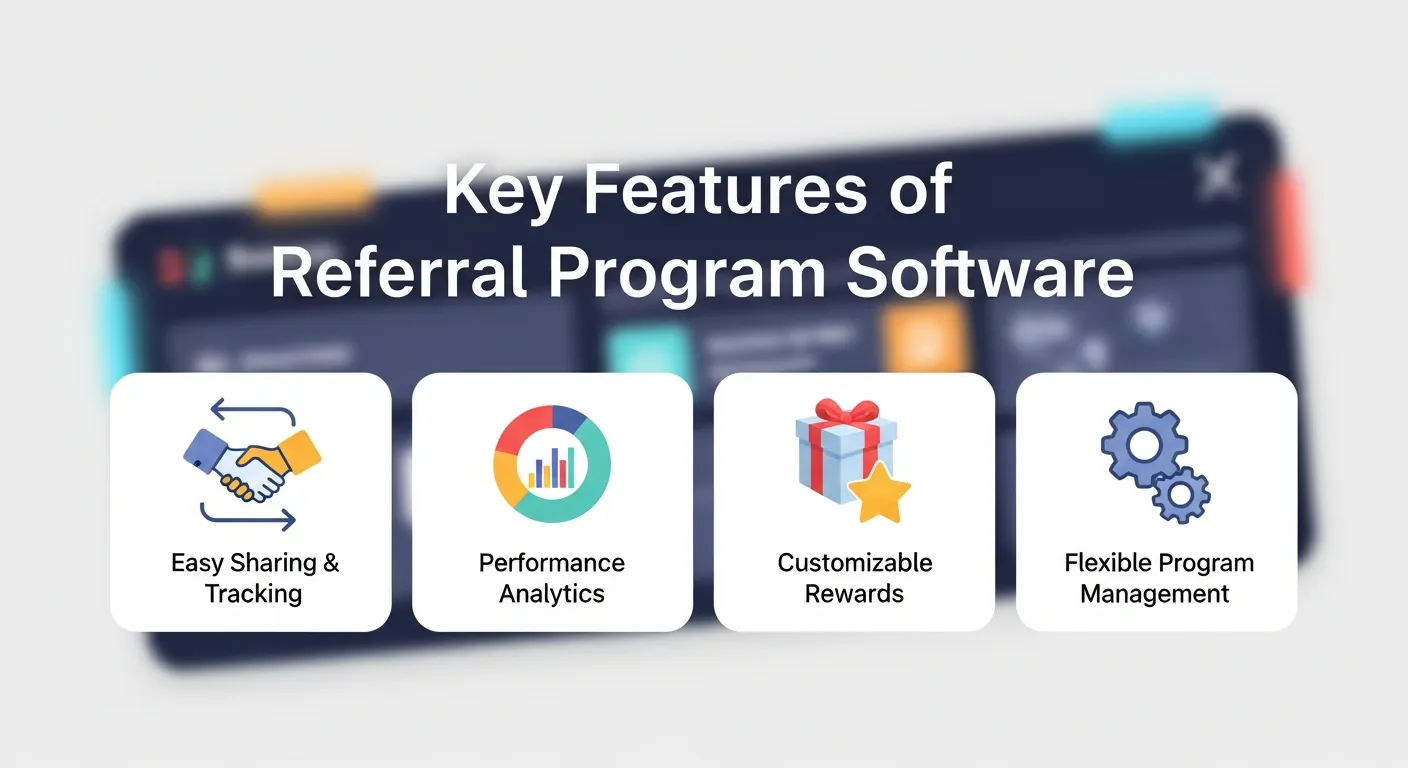
Referral program software comes with powerful features designed to automate referrals, improve tracking, and maximize customer-driven growth. Below are the key features that make referral tools essential for modern businesses.
Referral Tracking and Analytics
Referral tracking is one of the most important features of referral program software. It helps businesses monitor every referral action and measure campaign performance accurately.
Key capabilities include:
- Unique referral links and codes for each user
- Real-time tracking of clicks, sign-ups, and purchases
- Attribution tracking across multiple devices and channels
- Performance dashboards showing top referrers and conversion rates
- Detailed reports on referral traffic, revenue, and ROI
With advanced analytics, businesses can identify high-performing advocates, optimize campaigns, and scale referral strategies effectively.
Custom Rewards and Incentives
Referral software allows businesses to create flexible and customizable reward structures to motivate customers. Different industries and audiences respond to different incentives, so customization is crucial.
Popular reward options include:
- Cash rewards or PayPal payouts
- Discount coupons and promo codes
- Store credits or loyalty points
- Free products or trial upgrades
- Tier-based rewards for multiple referrals
Double-sided rewards (rewarding both referrer and referred user) significantly increase participation and conversion rates.
Integration with CRM, eCommerce, and Email Tools
Seamless integration is a core feature of modern referral program software. It connects with existing business tools to automate workflows and ensure accurate data synchronization.
Common integrations include:
- CRM platforms (HubSpot, Salesforce, Zoho)
- e-commerce platforms (Shopify, WooCommerce, Magento)
- Email marketing tools (Mailchimp, ActiveCampaign, Klaviyo)
- Payment gateways and subscription platforms
These integrations help businesses track referral conversions, automate follow-ups, and personalize marketing campaigns based on referral data.
Fraud Prevention and Automation
Fraud prevention ensures referral programs remain fair and secure. Referral software includes automated systems to detect suspicious activity and prevent abuse.
Key fraud protection features:
- Duplicate referral detection
- IP and device tracking
- Self-referral prevention
- Fake account and bot detection
- Manual approval workflows for rewards
Automation features reduce manual work by triggering rewards, sending notifications, and updating referral statuses automatically.
Custom Branding and Dashboards
Custom branding helps businesses maintain a consistent brand identity across referral campaigns. Referral program software allows customization of referral widgets, landing pages, and emails.
Branding and dashboard features include:
- White-label referral pages and widgets
- Custom logos, colors, and fonts
- Personalized referral emails and messages
- Branded customer portals for referrers
- Admin dashboards with real-time performance metrics
Custom dashboards provide insights into campaign success, customer engagement, and revenue growth, helping businesses make data-driven decisions.
Benefits of Using Referral Program Software
Referral program software offers powerful advantages for businesses looking to grow through word-of-mouth marketing. Automating referrals, tracking performance, and managing rewards, it helps companies acquire more customers while reducing marketing costs. Below are the key benefits explained in detail.
Increases Customer Acquisition
Referral program software significantly increases customer acquisition by leveraging existing customers to bring in new users. People are more likely to trust recommendations from friends, family, or colleagues than traditional advertisements. This trust-driven acquisition leads to higher-quality leads who are already interested in your product or service.
SEO-friendly points:
- Turns satisfied customers into brand promoters
- Expands reach through social sharing and personal networks
- Attracts high-intent, trust-based leads
- Drives organic growth without heavy ad spend
Reduces Marketing Costs
Traditional marketing channels like paid ads, influencer campaigns, and media buying can be expensive and unpredictable. Referral program software reduces marketing costs by shifting acquisition to customer-driven referrals, which are often more cost-effective and scalable.
Key cost-saving benefits:
- Lower cost per acquisition (CPA) compared to paid ads
- Automated referral tracking reduces manual labor
- Reward-based incentives cost less than advertising campaigns
- Sustainable long-term growth with minimal ongoing spend
Boosts Customer Loyalty and Retention
Referral programs encourage existing customers to stay engaged with your brand. When customers earn rewards for referrals, they feel valued and connected to your business, increasing loyalty and retention rates.
Retention-focused benefits:
- Strengthens emotional connection with the brand
- Encourages repeat purchases and ongoing engagement
- Builds a community of brand advocates
- Rewards loyal customers with incentives and recognition
Improves Conversion Rates
Referred customers convert at a higher rate because they already trust the brand before making a purchase. Referral program software optimizes the referral journey, making it easy for users to share and convert.
Conversion-related advantages:
- Higher sign-up and purchase conversion rates
- Personalized referral links and landing pages
- Double-sided rewards motivate faster action
- Data-driven optimization using referral analytics
Scales Word-of-Mouth Marketing
Word-of-mouth marketing is one of the most powerful growth channels, and referral program software makes it scalable. Instead of relying on random customer recommendations, businesses can systematically grow through structured referral campaigns.
Scalability benefits:
- Automated referral workflows and reward distribution
- Real-time analytics to scale high-performing campaigns
- Tiered and gamified referral programs for exponential growth
- Integration with CRM, email, and eCommerce platforms for automation
Referral Program Software vs Manual Referral Programs
Referral programs can be managed manually or through dedicated referral program software. While both approaches aim to generate word-of-mouth growth, they differ significantly in automation, scalability, cost, and efficiency. Understanding these differences helps businesses choose the right referral strategy for sustainable growth.
Automation vs Manual Tracking
Referral program software automates the entire referral process, while manual referral programs rely on spreadsheets, emails, and manual record-keeping. Automation eliminates human errors and ensures accurate tracking of referrals, conversions, and rewards.
Referral program software automation features:
- Unique referral links and codes generated automatically
- Real-time tracking of clicks, sign-ups, and purchases
- Automated reward distribution and notifications
- Integration with CRM, email, and eCommerce platforms
- Performance dashboards and analytics reports
Manual referral program limitations:
- Manual tracking using spreadsheets or CRM notes
- High risk of missed or incorrect referral attribution
- Delayed reward distribution
- Time-consuming administrative work
- Limited reporting and insights
Automation saves time, improves accuracy, and allows businesses to focus on growth rather than administrative tasks.
Scalability Comparison
Scalability is one of the biggest differences between referral program software and manual referral programs. Manual programs work only for small businesses or limited referral volumes, but they become difficult to manage as referrals grow.
Scalability advantages of referral software:
- Handles thousands or millions of referrals without manual effort
- Supports multi-level referral programs and tiered rewards
- Real-time data processing and analytics at scale
- Automated workflows for global referral campaigns
- Easy customization and expansion of referral rules
Manual program scalability challenges:
- Difficult to track large volumes of referrals
- Requires additional staff as referral volume increases
- Limited data insights for scaling campaigns
- High risk of operational bottlenecks
Referral program software enables exponential growth, while manual programs struggle beyond small-scale operations.
Cost and Efficiency Differences
At first glance, manual referral programs seem cheaper because they do not require software subscriptions. However, they often become more expensive in the long run due to labor costs, inefficiencies, and missed opportunities.
Cost and efficiency benefits of referral program software:
- Lower cost per acquisition (CPA) compared to paid ads
- Automated reward management reduces operational costs
- Higher conversion rates from optimized referral journeys
- Data-driven optimization improves marketing ROI
- Reduced staff workload and administrative expenses
Manual referral program cost drawbacks:
- Hidden costs from manual labor and administrative time
- Errors leading to incorrect rewards or lost referrals
- Limited optimization due to a lack of analytics
- Lower conversion rates due to poor user experience
Best Referral Program Software Tools
Referral program software tools help businesses automate referrals, track performance, and manage rewards efficiently. Below are some of the most popular referral program software examples widely used by e-commerce brands, SaaS companies, and digital businesses.
ReferralCandy
ReferralCandy is one of the most popular referral program software tools designed primarily for e-commerce businesses. It allows brands to launch referral and affiliate programs quickly with automated referral links, reward management, and real-time analytics. Businesses can offer cash rewards, discount codes, store credits, or custom incentives to motivate customers to share referrals. The platform integrates easily with major e-commerce platforms like Shopify, WooCommerce, BigCommerce, and Magento, making it ideal for online stores. It also includes customizable branding, fraud detection, and dashboards to monitor referral performance.
Friendbuy
Friendbuy is an enterprise-level referral marketing platform used by large brands to manage complex referral and loyalty programs. It supports automated referral tracking, multi-reward campaigns, and deep integrations with marketing tools and APIs. Friendbuy is highly customizable and scalable, making it suitable for businesses with large customer bases and development teams. Compared to simpler tools, it often requires technical integration but offers advanced control and flexibility for enterprise referral campaigns.
Yotpo
Yotpo is a comprehensive loyalty and referral platform that combines referrals, reviews, and loyalty programs in one system. It enables businesses to create customizable referral pop-ups, landing pages, and referral modules on websites. Yotpo tracks referrals through unique links and rewards both the referrer and the referred customer automatically. It also supports email personalization, referral widgets, and post-purchase referral prompts to increase participation and conversions.
Ambassador
Ambassador is a robust referral and affiliate marketing software designed for SaaS and B2B companies. It supports multi-level referral programs, affiliate management, and influencer tracking. Ambassador provides detailed analytics, automated reward payouts, and customizable workflows, making it ideal for companies running large-scale partner and referral campaigns. Its flexibility and enterprise-grade features make it suitable for subscription-based and software businesses.
Post Affiliate Pro
Post Affiliate Pro is a powerful affiliate and referral marketing software platform that helps businesses manage affiliate programs, referral tracking, and commission payouts. It offers features such as link tracking, coupon tracking, recurring commissions, and fraud prevention. The platform integrates with eCommerce systems, payment gateways, and CMS platforms, making it suitable for businesses that want to combine affiliate and referral marketing in one system.
How Referral Program Software Can Boost Your Business
Growth Case Studies
Referral program software has helped many companies achieve rapid growth. Dropbox increased its user base by offering free storage for referrals, while Airbnb and Uber expanded globally using referral incentives. These companies leveraged automated referral systems to reduce customer acquisition costs and scale faster than traditional marketing channels. Real-world case studies prove that referral-driven growth is highly effective, especially when supported by automated tracking and reward systems.
Viral Loop and Network Effect
Referral program software creates a viral loop, where existing customers refer new users, and those users continue referring others. This continuous cycle generates exponential growth through the network effect. Each new customer becomes a potential advocate, increasing reach without additional marketing spend. Automation ensures every referral is tracked and rewarded, making viral growth predictable and scalable.
Customer Advocacy Strategy
Referral software supports a strong customer advocacy strategy by turning loyal customers into brand ambassadors. By rewarding customers for sharing your brand, businesses build trust, strengthen loyalty, and increase lifetime value. Advocacy-driven marketing is powerful because people trust recommendations from friends more than advertisements.
How to Choose the Right Referral Program Software
Business Size and Industry
Your business size and industry determine the type of referral software you need. Small businesses may prefer simple, plug-and-play tools, while enterprise companies require advanced customization, APIs, and scalability. eCommerce brands should focus on Shopify or WooCommerce integrations, while SaaS companies need CRM and subscription billing integrations.
Budget Considerations
Referral program software pricing varies from affordable monthly plans to enterprise-level custom pricing. Consider setup fees, reward costs, and transaction charges. A cost-effective tool with automation features can significantly lower your customer acquisition cost over time.
Integration Requirements
Choose software that integrates with your existing tools, such as CRM systems, email marketing platforms, analytics tools, and payment gateways. Seamless integrations ensure accurate referral tracking, personalized campaigns, and automated workflows.
Ease of Use and Scalability
Ease of use and scalability are critical for long-term success. Select software with an intuitive dashboard, automated workflows, and scalable infrastructure. A user-friendly platform increases participation, while scalable systems support future business growth.
Common Mistakes in Referral Software Campaigns
Poor Incentives
One of the biggest mistakes in referral software campaigns is offering weak or unattractive incentives. If rewards are not valuable or relevant to customers, they will not feel motivated to share referrals. Businesses should offer compelling incentives such as discounts, cash rewards, store credits, or exclusive perks to encourage participation. Double-sided rewards, where both the referrer and referred user benefit, often perform best.
Weak Promotion
Many businesses launch referral programs but fail to promote them effectively. Without visibility, customers may not even know the program exists. Referral campaigns should be promoted through email marketing, social media, website banners, post-purchase pages, and in-app notifications. Continuous promotion ensures maximum participation and consistent referral growth.
Not Tracking ROI
Failing to track return on investment (ROI) is another common mistake. Without analytics, businesses cannot measure referral conversions, customer lifetime value, or acquisition costs. Referral software provides dashboards and reports to track performance, and ignoring this data leads to missed optimization opportunities and wasted marketing potential.
Complex User Experience
A complicated referral process discourages users from participating. Long forms, unclear instructions, or technical issues reduce referral rates. Businesses should simplify referral sharing with one-click links, social sharing buttons, and clear messaging to improve user experience and conversions.
Future Trends in Referral Program Software
AI-Powered Referral Automation
Artificial intelligence is transforming referral marketing by automating personalization, segmentation, and reward optimization. AI-powered referral software can predict the best advocates, recommend incentives, and personalize referral messages, increasing conversion rates and campaign performance.
Blockchain Tracking
Blockchain technology is emerging as a solution for transparent and secure referral tracking. It can prevent fraud, ensure accurate attribution, and provide tamper-proof reward distribution. Blockchain-based referral systems increase trust and transparency for both businesses and customers.
Gamification and Loyalty Integration
Gamification features such as leaderboards, badges, challenges, and tiered rewards are becoming popular in referral programs. Integration with loyalty programs allows customers to earn points, unlock levels, and receive exclusive rewards, increasing engagement and repeat referrals.
Conclusion
Referral program software is a powerful growth tool that transforms satisfied customers into active brand promoters. By automating referral tracking, reward distribution, and analytics, businesses can scale word-of-mouth marketing efficiently and reduce customer acquisition costs. It improves conversion rates, strengthens customer loyalty, and provides measurable insights to optimize campaigns. Compared to manual referral systems, referral software offers better accuracy, scalability, and operational efficiency. As technology advances with AI, blockchain, and gamification, referral programs will become even more effective. Implementing the right referral program software can drive sustainable growth, increase revenue, and build long-term customer relationships.
FAQ: Referral program Software
1. What is referral program software?
Referral program software is a digital tool that helps businesses create, manage, and automate customer referral campaigns. It tracks referrals, attributes conversions, and distributes rewards automatically.
2. How does referral program software work?
It generates unique referral links or codes for customers, tracks when new users sign up or purchase, and automatically rewards the referrer and/or referred customer based on predefined rules.
3. Why is referral program software important for businesses?
It helps businesses acquire new customers at a lower cost, increase conversions, and leverage word-of-mouth marketing in a scalable and measurable way.
4. What types of rewards can be offered in referral programs?
Common rewards include discounts, cash payouts, store credits, loyalty points, free products, subscription upgrades, and exclusive perks.
5. Is referral program software suitable for small businesses?
Yes, many referral tools offer affordable pricing and easy setup, making them ideal for startups, small businesses, and e-commerce stores.
6. How does referral tracking work?
Referral software uses unique links, codes, cookies, and attribution tracking to identify which customer referred a new user and to record conversions accurately.
7. Can referral program software integrate with other tools?
Yes, most platforms integrate with CRM systems, eCommerce platforms, email marketing tools, analytics tools, and payment gateways for automation and data syncing.
8. How do businesses measure the success of referral programs?
Key metrics include referral conversion rate, customer acquisition cost (CAC), lifetime value (LTV), referral revenue, and return on investment (ROI).
9. What are the benefits of using referral program software over manual programs?
Referral software automates tracking and rewards, reduces errors, improves scalability, provides analytics, and saves time compared to manual referral tracking.
10. What are some popular referral program software tools?
Popular tools include ReferralCandy, Friendbuy, Yotpo, Ambassador, and Post Affiliate Pro, which offer automated referral tracking, rewards, integrations, and analytics.
You can also learn: 10 Proven Marketing and Advertising Strategies to Grow Your Business