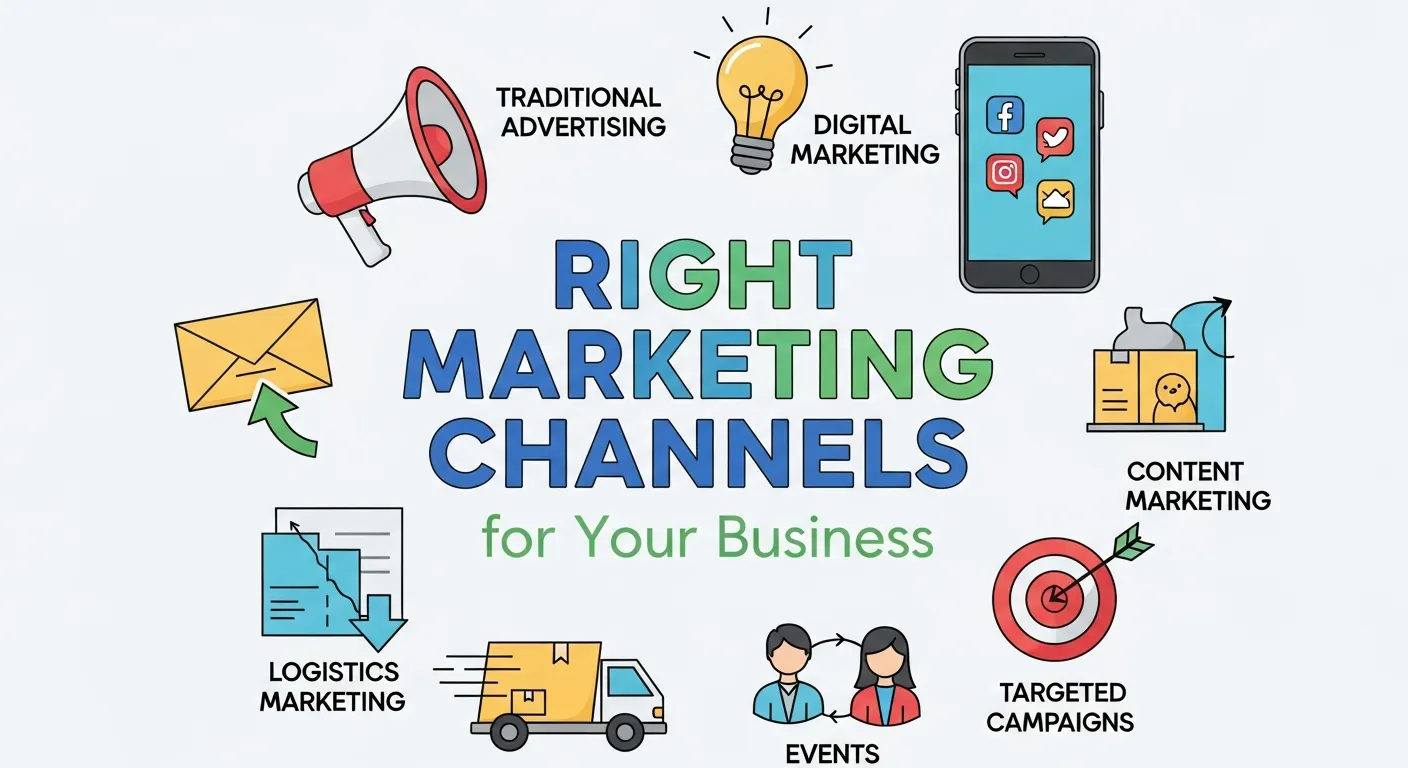
This guide explains marketing channels, online vs offline differences, types, selection factors, frameworks, mistakes, examples, and KPIs, helping businesses choose the right marketing channels to maximize reach, efficiency, engagement, ROI, and sustainable growth.
Choosing the right marketing channels is one of the most important decisions any business can make. With so many digital and offline platforms available today, it’s easy to feel overwhelmed or waste time and budget on channels that don’t deliver results. The right mix of marketing channels can help you reach your target audience, build brand awareness, generate qualified leads, and drive consistent sales growth.
In this guide, you’ll learn what marketing channels are, how online and offline channels differ, the types of marketing channels available, and a step-by-step framework to choose the right marketing channels for your business goals. Whether you’re a startup, local business, or established brand, this article will help you create a smarter, more effective marketing strategy.
What Are Marketing Channels?
Marketing channels are the platforms, mediums, or pathways businesses use to communicate with their target audience and deliver their products or services. These channels help brands reach potential customers, generate leads, build relationships, and drive conversions.
In simple terms, marketing channels are the ways you connect with your customers.
Difference Between Online and Offline Marketing Channels
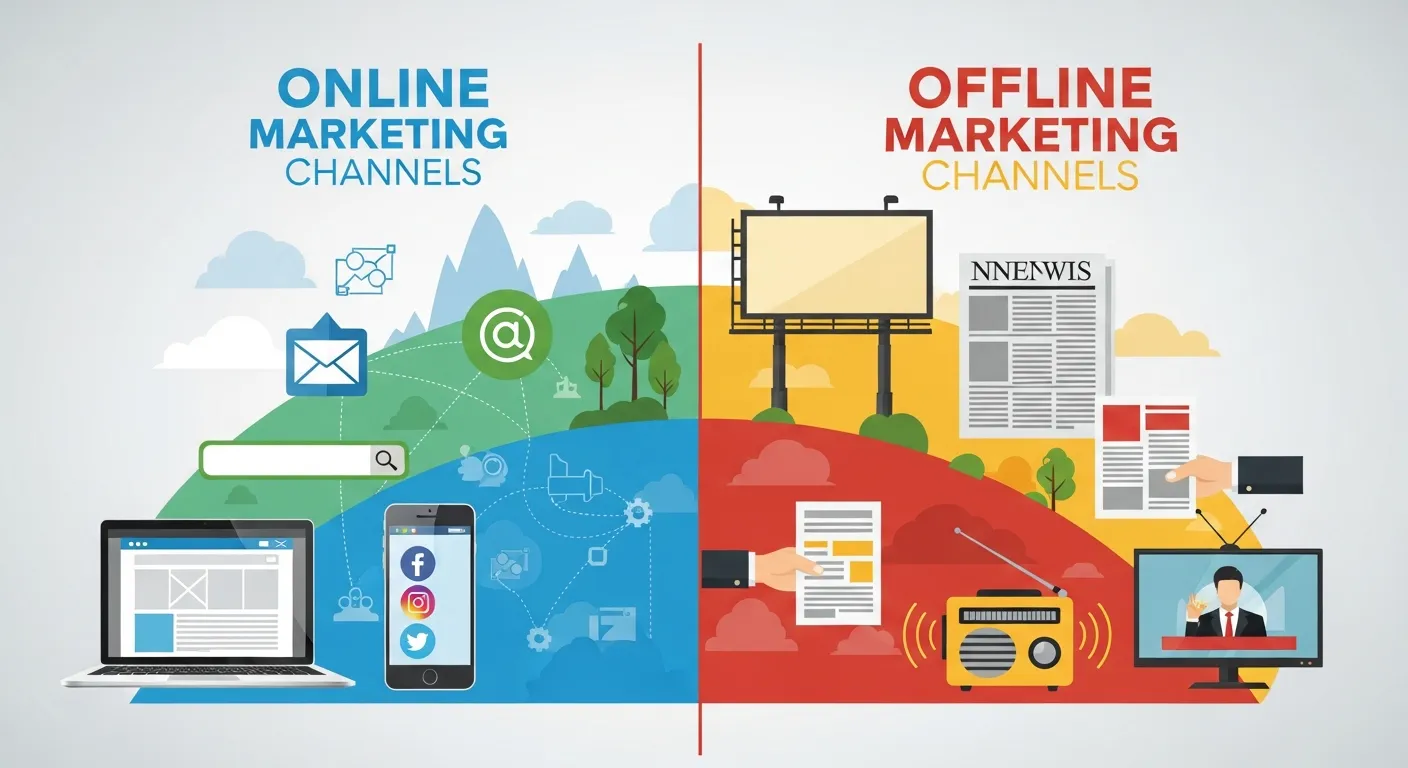
Online Marketing Channels
Online marketing channels operate through the internet and digital platforms. They allow businesses to reach global audiences, track performance in real time, and personalize marketing efforts.
Key features of online channels:
- Measurable and data-driven
- Cost-effective compared to traditional marketing
- Targeted audience segmentation
- Instant communication and automation
Offline Marketing Channels
Offline marketing channels are traditional, non-digital methods used to reach audiences in the physical world. These channels are effective for local markets and brand awareness.
Key features of offline channels:
- Tangible and physical presence
- Strong for local brand visibility
- Limited tracking and analytics
- Often higher cost compared to digital channels
Why Marketing Channels Matter
Choosing the right marketing channels helps businesses:
- Reach the right audience
- Improve brand visibility
- Generate qualified leads
- Increase sales and ROI
Why Choosing the Right Marketing Channels Matters
Before getting into “how,” it helps to clarify why this matters:
- Efficiency of Budget & Resources
Most businesses have limited marketing budgets and staff. If you spread efforts too thin across many channels, you won’t do any of them well. Choosing the right ones allows more impact per dollar or hour spent. - Better Reach & Engagement
Every audience has preferred platforms or ways of discovering brands. If you’re where your audience is—and in formats they like—you’ll get better reach, engagement, and ultimately conversions. - Consistency of Message & Brand
When you use channels aligned with your brand and audience, your messaging can stay consistent. Misaligned channels often force you to adapt tone or medium in ways that dilute your brand identity. - Faster Feedback & Optimization
Channels that provide rapid feedback (e.g., email, social, paid ads) allow quicker learning. If you choose channels wisely, you can test, iterate, and shift more responsively. - Maximizing Return on Investment (ROI)
Because every channel has costs (whether monetary, time, or effort), choosing the ones that deliver the best returns (in terms of leads, awareness, retention, etc.) ensures better business performance.
Key Factors to Consider When You Choose the Right Marketing Channels
Here are the main pillars to evaluate when selecting your marketing channels:
| Factor | Why It’s Important | Key Questions to Ask |
|---|---|---|
| Your Goals & Objectives | Different channels are good for different goals—awareness, lead generation, retention, sales, etc. If you’re unclear on what you need, you’ll pick channels that don’t move the needle. | What do we want? Brand awareness, sales, leads, retention, advocacy? Which is the highest priority? |
| Audience Behavior & Preferences | Your audience’s demographics, location, behavior, and online/offline habits dictate where and how they discover or engage with brands. | Where does our audience spend time? Which channels do they trust? What formats do they respond to—video, text, audio, visuals? |
| Your Offer & Product Type | The nature of what you sell affects channel suitability. B2B is very different from B2C, high‑price from low‑price, services vs products, etc. | Is the purchase decision long or short? Are visuals important? Is there a lot of trust or education needed? |
| Budget & Resources | It’s not just cash—it’s time, skills, and capacity. Some channels require more content, creative, ad spend, or technical skill. | How much can we spend? Do we have internal skills, or will we need external help? How much content (e.g., video, social posts) can we maintain? |
| Channel Reach & Saturation | Some channels are overcrowded; some have declining reach, high competition, or cost. Also, newer channels may have opportunities but risk. | How saturated is this channel in our industry? Are people paying a lot? Is the cost per engagement or cost per lead high? |
| Measurement & Attribution | If you can’t measure results well, you won’t know whether a channel is working or making adjustments. | What metrics will we use? How will we know what works? Do we have tools or analytics to track performance? |
| Alignment with Brand & Message | If the channel forces you into formats or messaging types that clash with your tone or identity, that weakens your brand. | Does this channel let us express our brand voice properly? Will creative or content required dilute our values or identity? |
| Longevity & Trends | Some channels may be trending now but will fade; others are stable. Understanding the future of a channel helps with strategic investment. | Is this channel growing? Are algorithm/consumer behavior trends supporting this channel? Are there risks (privacy changes, regulations)? |
Types of Marketing Channels & When They Work Best
Referral Marketing for Local Businesses is one of the most cost-effective ways to grow without relying heavily on paid advertising. Happy customers can become powerful advocates, helping you attract similar, high-intent customers. Whether through word-of-mouth, loyalty incentives, or simple referral programs, this channel often brings in leads with the highest trust and strongest conversion potential.
| Channel | Strengths | Good For | Considerations / Limitations |
|---|---|---|---|
| Content Marketing (Blogs, Articles, SEO) | Builds authority over time; good for organic discovery; sustainable traffic; supports other channels. | Businesses with educational/informational products; long‑term lead generation; when you have the capacity to produce good content. | Slow ramp‑up; requires consistent production; results take time; competition in SEO. |
| Email Marketing / Newsletters | Very high ROI; direct channel to nurture and retain; cheap relative to paid; good for repeat business. | E‑commerce, B2B, services; retention; upselling; nurturing leads. | Requires list building; potential deliverability issues; content must be relevant or risk unsubscribes. |
| Search Engine Optimization (SEO) | Great for capturing intent; when people are searching for solutions, sustainable traffic. | High‑intent buyer journeys; digital products, services; local businesses (local SEO). | Takes time; algorithm changes; needs ongoing consistency; high competition in popular keywords. |
| Paid Search / PPC (Google Ads, Bing Ads, etc.) | Quick visibility; targeting intent; measurable; scalable. | When you need faster lead generation, launching new offers, and competitive markets. | Cost can be high; requires a budget; risk of low ROI if not managed well; may be expensive per click in some niches. |
| Social Media (Organic & Paid) | Excellent for awareness, engagement, visual storytelling, community building, and reach. | B2C brands, local businesses, retail, lifestyle, fashion, F&B, etc. Also, B2B for visibility and branding. | Organic reach declining; paid costs rising; needs regular content; risk of low conversion if content/content‑to‑sale path unclear. |
| Video & Multimedia (YouTube, Reels, TikTok, Podcasts) | Highly engaging; good for storytelling; visual/aural; shareable; helps in awareness. | Brands selling visually appealing products, or wanting to educate/how‑to content, outreach, or thought leadership. | Needs higher investment in production or creativity; frequent uploads; attention competition; platform algorithm risk. |
| Influencer / Partner Marketing / Collaborations | Leverages existing audiences; can boost trust; reach niche or local communities. | Brands in lifestyle, fashion, beauty, travel; local businesses partnering with complementary businesses. | Vet partners carefully; authenticity matters; costs of influencers; sometimes hard to measure. |
| Offline Channels (Events, Print, Local Community, Direct Mail) | Tangible, personal; effective locally; less noise; may stand out. | Local businesses (shops, restaurants, service providers), B2B in some contexts, and brand building. | Physical costs; logistic effort; harder to scale; measurement harder than digital channels. |
| Referral Marketing & Word‑of‑Mouth | High trust; low cost; often high conversion; customers likely already pre‑sold by referrer. | Local businesses, services, high‑touch businesses (salon, repair shops, B2B services). | Needs satisfied customers; program design; sometimes slow scaling without incentives. |
Steps to Evaluate & Decide: How to Choose the Right Marketing Channels
Here’s a framework you can follow to make a well‑informed decision.
Step 1: Define Clear Objectives
- Determine your primary objective(s): Is it brand awareness, lead generation, direct sales, retention, upsells, etc.?
- Quantify them: e.g., increase leads by X per month; reduce customer acquisition cost; boost repeat purchases by Y%.
Step 2: Know Your Customer Deeply
- Build buyer personas: demographics, job roles, challenges, habits.
- Map their journey: where they learn about solutions, where they search, what media they consume.
Step 3: Audit Existing Channels
- List all current marketing channels you use.
- Evaluate performance: reach, engagement, cost per lead/sale, conversion rates. What’s working well? What’s underperforming?
- Step 4: Shortlist Potential Channels
- Based on objectives and audience, pick a few channels that align well. Use the “types of channels” table above to map possibilities.
- Consider both digital & offline depending on your business.
Step 4: Test Small / Pilot Campaigns
- Run small tests rather than full investments. For example, try organic social media posting + one email campaign + small PPC budget.
- Set key metrics for the test (e.g., cost per lead, conversion rate, engagement) so you can measure success.
- Step 6: Measure & Monitor
- Use analytics tools: Google Analytics, social media insights, email stats, etc. Track attribution, cost, and return.
- Keep an eye on lagging indicators: even if the channel doesn’t perform immediately (e.g., SEO), is it trending upward?
Step 5: Optimize & Reallocate
- Drop or reduce investment in channels that aren’t performing.
- Double down on those showing good ROI.
- Maintain some budget for experimentation with new or emerging channels.
- Step 8: Ensure Consistency & Integration
- Message, tone, visuals: ensure consistency across all chosen channels.
- Make sure channels reinforce each other (e.g., content on blog supports posts on social media; social media drives to email signups; email supports offers).
Common Mistakes When Choosing Marketing Channels
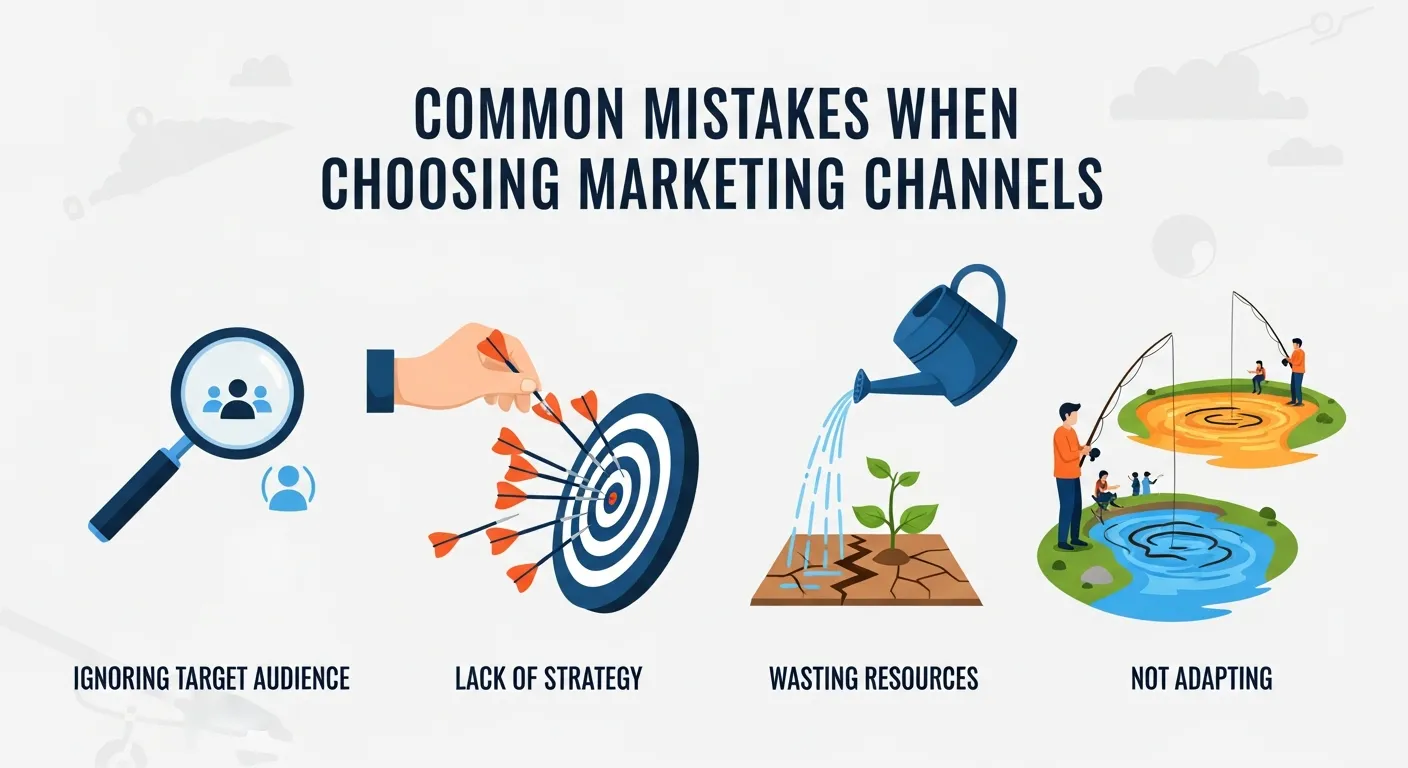
Knowing what to avoid is as important as knowing what to do.
- Trying to be everywhere before mastering a few channels → spreads resources too thin, inconsistent presence.
- Copying competitors blindly → what works for them might not for your audience or offering.
- Neglecting measurement → without tracking, you won’t know what works; you continue pouring effort into low performers.
- Ignoring your capacity → if you lack resources (time, skills, budget), picking channels you can’t sustain causes burnout or half‑done campaigns.
- Not adapting → consumer behavior, platform features, and algorithm changes happen; channels that worked may stop or decline.
Example Scenarios: Channel Choices Based on Business Types
To make this more concrete, here are some hypothetical examples of how different businesses might go through the selection process.
- Local Bakery / Café
Goals: foot traffic, loyal repeat customers, and brand awareness locally.
Likely channels: Instagram & Facebook for visuals & engagement; Google My Business & local SEO; email/SMS loyalty program; word‑of‑mouth & referral marketing; maybe local events or print flyers / local press. - B2B SaaS Company
Goals: lead generation, sales, and authority.
Likely channels: SEO & content marketing (blogs, case studies); email marketing; LinkedIn (ads or content); webinars; partnerships; possibly PPC search for intent keywords. - E‑commerce Fashion Brand
Goals: sales, brand awareness, repeat customers.
Likely channels: Instagram, TikTok & influencer collaborations; paid ads (social & search); email marketing (abandoned carts, promos); content/video to show product details; user‑generated content; occasional offline pop‑ups or events.
Case Study
Here’s a made‑up but realistic case:
“PureHome Decor” – a small home decor store selling online and via local pop‑ups.
- Objectives: Increase online sales by 20% in 6 months; grow email list; boost local brand recognition.
- Audience: Young professionals age 25‑40, mostly female, interested in interior design, local shopping, Instagram users, and interior blogs.
Channel evaluation:
- Instagram & Pinterest – very visual, aligns with audience; strong cost‑per‑engagement expected.
- Blog & SEO – to capture people searching for decor ideas (“how to choose minimalist decor”, “small apartment decorating tips”).
- Email newsletter – to nurture leads, announce new collections, and retain.
- Pop‑ups / local events – to build brand locally and connect offline.
- Paid ads – only if tests show high ROI, small budgets at first.
Pilot phase:
- Run 2 small Instagram influencer posts + regular organic posts for four weeks.
- Publish blog content twice a month; optimize for SEO.
- Send email campaigns to existing subscribers.
Measurement:
- Track Instagram engagement, clicks to site, blog traffic, and conversions; email open/click, and sales from email channel, and cost of influencer & content.
Result after 3 months:
- Instagram posts and influencer posts drove good traffic; blog SEO content is improving slowly; email is showing strong conversion among subscribers; and offline pop‑ups are delivering new local customers.
- Paid ads trial had low ROI given cost, so delayed till better creative & targeting available.
Action Plan / Roadmap: How to Choose & Implement Channels
Here’s a suggested plan you can follow over the next 2‑3 months to choose the right marketing channels and activate them well.
| Phase | Tasks | Outcome |
|---|---|---|
| Week 1 – Clarify & Audit | Define objectives, metrics, build buyer personas; audit current channels & performance. | Clear understanding of what you want, where you stand. |
| Week 2 – Channel Shortlist & Research | Based on audience & objectives, pick 3‑5 potential channels; research costs, expectations; check competitor activity. | A prioritized list of channels with expectations. |
| Week 3 & 4 – Pilot / Test | Launch small test campaigns across shortlisted channels; collect data; compare performance. | Real data on engagement, cost, conversions. |
| Month 2 – Optimize & Integrate | Drop underperforming; scale up top performers; ensure messaging & branding is consistent; integrate channels to reinforce each other. | Efficient channel mix that’s working; better ROI. |
| Ongoing – Monitor & Evolve | Track metrics; experiment with new channels occasionally; adapt to audience behavior or platform changes. | Sustained growth, adaptability, and improved channel performance over time. |
Metrics & KPIs You Should Track
To see whether your chosen channels are working, these are important metrics:
- Reach / Impressions / Awareness
- Engagement (clicks, likes, comments, shares, video views)
- Traffic (visits to website from each channel)
- Cost per lead/cost per acquisition (CPA)
- Conversion rate (from channel to lead/sale)
- Return on Ad Spend (for paid channels)
- Customer lifetime value (especially for retention or repeat business)
- Retention/repeat purchase rate
- ROI overall vs cost in time, money, effort
Conclusion
Choosing the right marketing channels is not about being everywhere—it’s about being where it matters most for your audience and goals. By understanding your customers, aligning channels with your objectives, testing strategically, and tracking performance, you can build a powerful, efficient marketing strategy. Focus on consistency, integration, and continuous optimization to maximize reach, engagement, and ROI while driving sustainable long-term business growth.
FAQ: Right Marketing Channels
1. What are the right marketing channels for a small business?
The right marketing channels for small businesses usually include social media, local SEO, email marketing, and referral marketing, as they are cost-effective and help reach targeted local customers.
2. How do I choose the right marketing channels for my business?
To choose the right marketing channels, analyze your audience behavior, business goals, budget, and available resources. Test a few channels and scale the ones delivering the best ROI.
3. Why are the right marketing channels important?
The right marketing channels help businesses reach the right audience, improve engagement, generate qualified leads, and maximize return on marketing investment.
4. What are the right marketing channels for B2B companies?
For B2B businesses, the right marketing channels often include SEO, LinkedIn marketing, email campaigns, content marketing, webinars, and PPC search ads.
5. What are the right marketing channels for e-commerce brands?
E-commerce brands benefit most from social media ads, influencer marketing, email marketing, SEO, and retargeting ads as their right marketing channels.
6. Are online or offline marketing channels better?
Online marketing channels are generally more measurable and cost-effective, but offline channels can be the right marketing channels for local businesses and brand awareness.
7. How many marketing channels should I use?
It’s better to focus on 3–5 right marketing channels and master them rather than spreading efforts across too many platforms without consistency.
8. What is the most profitable marketing channel?
SEO, email marketing, and referral marketing are often the most profitable marketing channels because they deliver high-intent leads with lower long-term costs.
9. How often should I review my marketing channels?
You should review your right marketing channels every quarter or after major campaigns to optimize performance and reallocate budget based on ROI.
10. Can the right marketing channels change over time?
Yes, the right marketing channels can change due to trends, audience behavior, algorithms, and business growth, so continuous testing and optimization are essential.
learn more about: Referral Marketing for E-commerce: How to Increase Sales Without Ads