
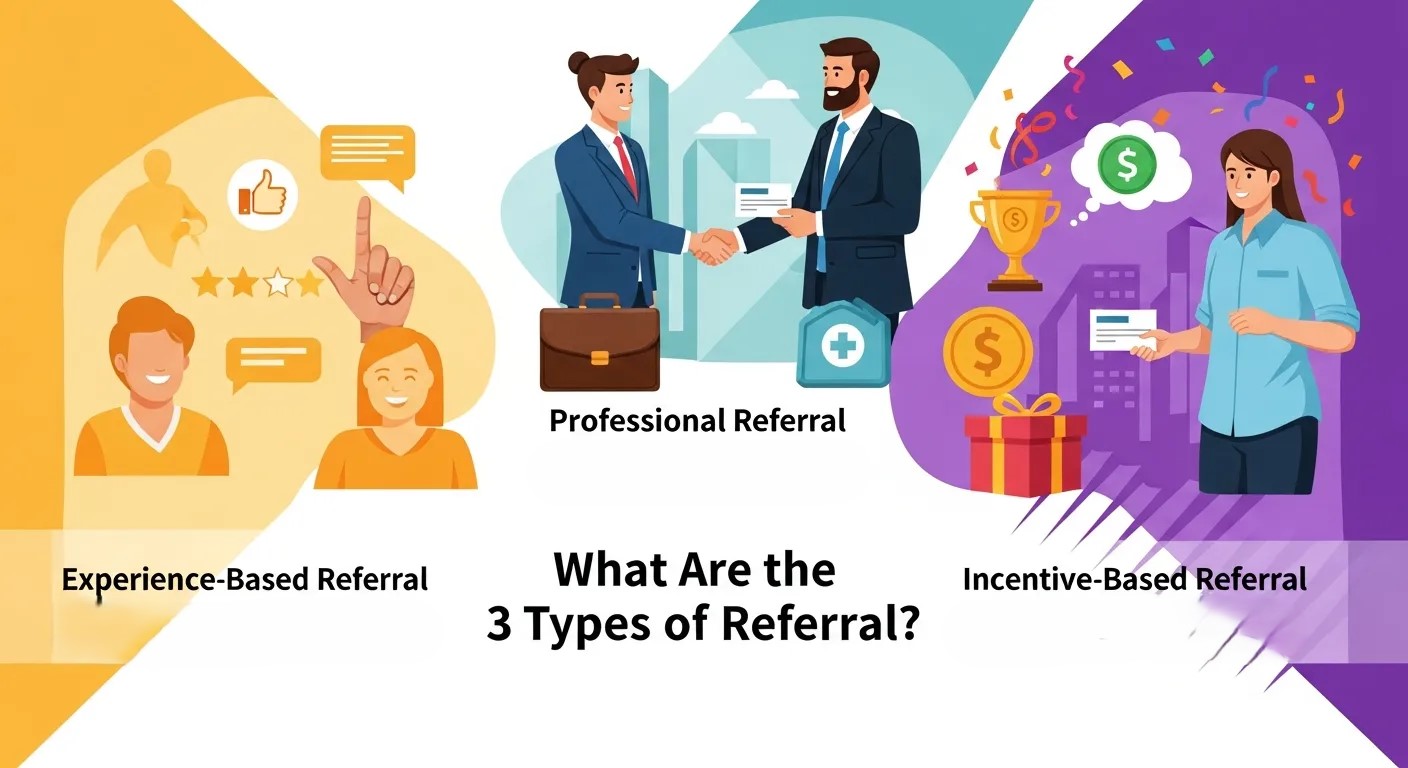
The 3 types of referral—direct, implied, and incentivized—offer complementary ways to grow business. Combining them maximizes trust, engagement, and measurable results while turning satisfied customers into loyal brand advocates efficiently.
Referral marketing has become one of the most powerful tools for business growth, leveraging the trust and advocacy of existing customers to bring in new ones. Unlike traditional advertising, referral marketing relies on personal recommendations, making leads more qualified and conversions higher. Understanding the 3 types of referral marketing is critical for any business aiming to scale effectively. Each type offers unique advantages and strategies that can be tailored to fit different customer journeys, ensuring maximum engagement and return on investment. In this post, we will break down these three referral types, explain how they work, and provide actionable insights for implementing them in your business. By the end, you’ll have a clear roadmap for harnessing referral marketing to drive sustainable growth, strengthen customer loyalty, and expand your reach organically. Whether you’re a startup or an established company, mastering referrals can transform the way you attract new customers.
Why Referrals Are Crucial for Business Growth
In today’s competitive market, businesses are constantly seeking ways to acquire new customers effectively. While paid advertisements can generate leads quickly, they often lack the trust and credibility that referrals naturally provide. This is where understanding the 3 types of referral becomes crucial for businesses looking to build lasting relationships with their audience. Referral marketing leverages satisfied customers to organically spread the word about a product or service, creating a trust-based growth model that paid ads alone cannot match.
Referral Marketing vs Traditional Advertising
Traditional advertising pushes messages to a broad audience, whether through social media ads, TV commercials, or email campaigns. While this can raise awareness, it doesn’t guarantee engagement or trust. On the other hand, referral marketing encourages your existing customers to share their genuine experiences. Since recommendations come from someone people already know and trust, they carry more weight and are far more likely to influence purchasing decisions. According to Nielsen, 92% of consumers trust referrals from friends and family over traditional ads, highlighting the immense potential of referral-based growth strategies.
Trust and Credibility Through Referrals
Referrals work because they tap into pre-existing trust. When someone recommends a product or service, they are putting their own reputation on the line. This inherent credibility cannot be easily replicated by a paid ad. By focusing on the 3 types of referral, businesses can ensure that every recommendation—whether direct, implied, or incentivized—builds confidence in their brand. Customers are more willing to try something new when the recommendation comes from someone they trust, which leads to higher conversion rates and stronger loyalty.
Cost-Effective Customer Acquisition
One of the most significant advantages of referral marketing is its cost efficiency. Unlike traditional advertising campaigns that require substantial budgets for impressions and clicks, referrals often grow organically with minimal investment. Businesses can leverage existing customers to expand their reach, turning satisfied users into brand advocates. This approach not only reduces acquisition costs but also attracts higher-quality leads who are more likely to engage and convert.
In summary, referral marketing offers a trust-driven, cost-effective, and high-converting alternative to traditional advertising. By understanding and applying the 3 types of referral, businesses can create a sustainable growth engine that maximizes customer engagement and loyalty while minimizing marketing spend.
Overview of the 3 Types of Referral
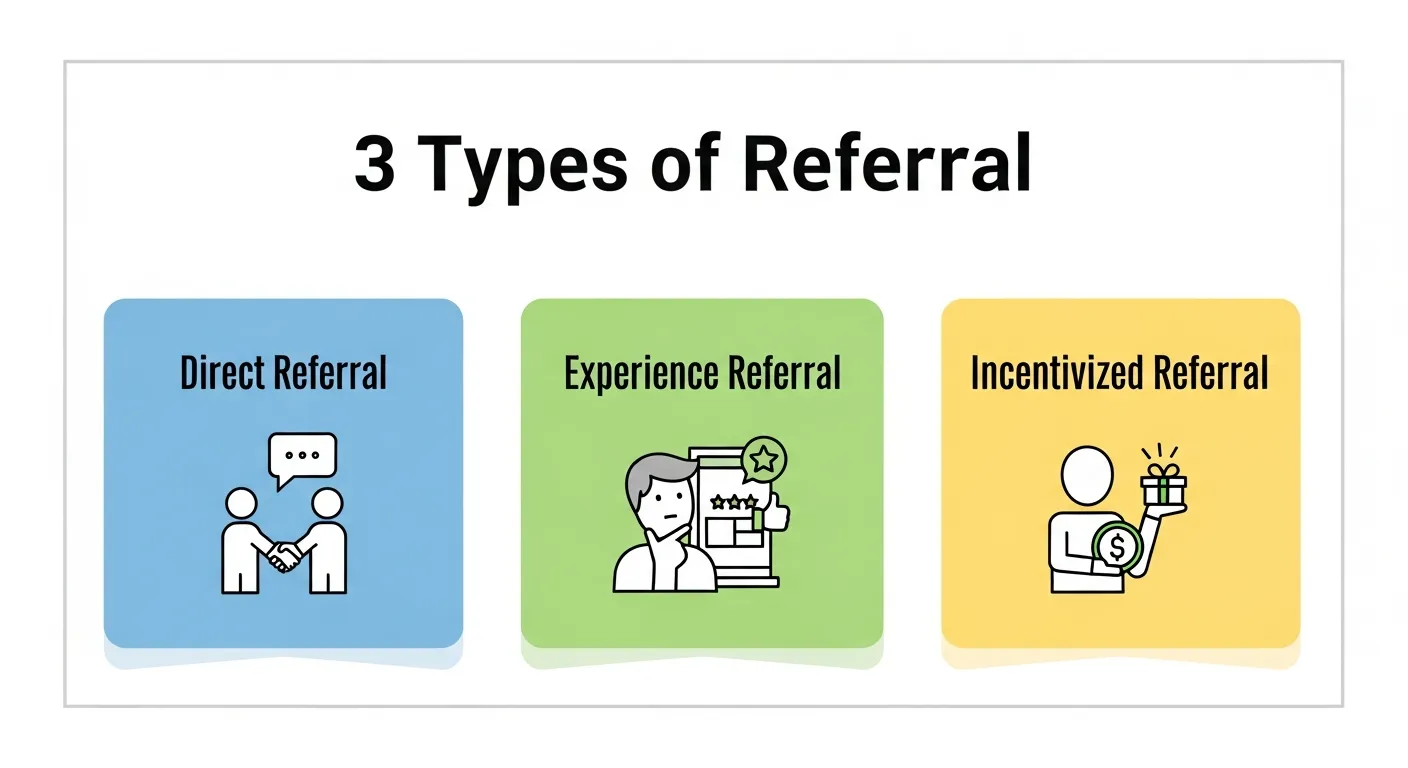
Understanding the 3 types of referral is essential for any business looking to leverage word-of-mouth marketing effectively. Each type operates differently, but when combined, they create a powerful referral ecosystem that drives trust, engagement, and growth.
- Direct Referrals occur when a customer personally recommends your product or service to someone they know. These referrals are highly trusted because they come from a real experience.
- Implied Referrals happen indirectly through association. This could be an influencer using your product, a feature in a trusted publication, or a social media mention. Even without a direct recommendation, the credibility of the source builds trust for your brand.
- Incentivized Referrals provide rewards to customers who refer others, such as discounts, cashback, or loyalty points. These programs motivate sharing and can scale quickly, helping businesses grow their customer base efficiently.
Here’s a simple table summarizing the 3 types of referral:
| Type of Referral | How It Works | Example | Benefit |
|---|---|---|---|
| Direct | Personal recommendation | Customer tells friend | High trust |
| Implied | Indirect association | Influencer or media mention | Builds credibility |
| Incentivized | Reward-based | “Refer & earn” program | Scalable & measurable |
By understanding how each type functions and how they complement each other, businesses can design referral programs that maximize both reach and effectiveness.
Direct Referrals
Direct referrals are the most straightforward form of referral marketing. They occur when a customer personally recommends a product or service to someone they know. Unlike advertisements or influencer mentions, direct referrals rely on authentic personal experiences. A satisfied customer sharing their positive experience with friends, family, or colleagues can have a powerful impact because it carries inherent trust and credibility. This type of referral is often organic and spontaneous. It can happen in face-to-face conversations, group chats, or through social media posts. The key element is that the recommendation is personal, genuine, and comes from someone who has firsthand knowledge of the product or service. Direct referrals are particularly important because they build high levels of trust and engagement. Consumers are far more likely to try a product recommended by someone they know than one promoted through paid advertising. According to Nielsen, people trust personal recommendations more than traditional ads, making direct referrals an invaluable component of the 3 types of referral.
Additionally, direct referrals contribute to organic growth. Unlike paid campaigns, which require continuous investment, direct referrals can spread naturally over time, creating a ripple effect where each satisfied customer brings in more leads without additional marketing spend.
Examples of Direct Referrals
Direct referrals can take many forms:
- Word-of-Mouth: A customer tells a friend about a service they loved, such as a new restaurant, app, or subscription.
- Social Shares: A user posts a positive review or recommendation on social media platforms, like Instagram or Facebook, tagging friends or sharing a personal experience.
- Group Chats: Recommendations in messaging apps like WhatsApp, Messenger, or Slack can influence multiple people at once.
Tips to Encourage Direct Referrals
While direct referrals often occur naturally, businesses can encourage them with simple strategies:
- Referral Links: Make it easy for customers to share your product by providing unique referral links. These links can track who referred whom and help you reward advocates effectively.
- Personalized Messages: Encourage customers to send personalized recommendations rather than generic messages. A message that reflects their experience resonates better with the recipient.
- Reward Loyal Customers: Incentivizing referrals with small rewards, discounts, or exclusive perks can motivate satisfied customers to share your business with their network.
Real-Life Example of Direct Referrals: Dropbox
Dropbox famously leveraged direct referrals to achieve massive growth. Users who recommended the service to friends received extra storage space, and the referred friends also got additional storage. This mutually beneficial setup encouraged sharing while maintaining authenticity, a perfect example of how direct referrals can drive rapid adoption.
Best Practices for Encouraging Direct Referrals
- Keep the referral process simple and easy to use. Complicated forms or unclear steps can discourage sharing.
- Express appreciation to customers who make referrals, even with a small thank-you message or token reward.
- Monitor and optimize your referral program by tracking which methods generate the most referrals, so you can focus on what works best.
Implied Referrals
Implied referrals are indirect recommendations that build trust and credibility without an explicit endorsement. Instead of a personal referral, the association with a trusted source, influencer, or reputable media outlet lends credibility to your brand. Implied referrals work because people tend to trust brands associated with authority figures or recognized platforms. Unlike direct referrals, implied referrals rely on perception and association. Seeing a celebrity use a product, a blog feature in a respected magazine, or a social media mention from an influencer can motivate potential customers to explore your brand. While less personal than direct referrals, implied referrals reach larger audiences and can create a powerful halo effect.
Implied referrals leverage credibility by association. The more authoritative or trustworthy the source, the stronger the impact on prospective customers. Key mechanisms include:
- Media Coverage: Articles, reviews, or mentions in reputable publications signal quality and trustworthiness.
- Influencer Mentions: When influencers use or reference your product, their followers often consider the recommendation credible.
- Brand Collaborations: Partnering with trusted brands creates positive associations for your business.
Examples of Implied Referrals
- A celebrity spotted wearing a new fashion brand generates buzz and curiosity.
- Airbnb’s listings featured in lifestyle magazines create trust among potential travelers.
- B2B software platforms mentioned in industry blogs signal reliability to corporate decision-makers.
Tips to Leverage Implied Referrals
- Collaborate with Influencers: Partner with micro or macro influencers whose audience aligns with your target market. Authentic usage stories amplify trust.
- Press Coverage: Seek features in reputable media outlets, blogs, and podcasts to reach wider audiences.
- User-Generated Content: Encourage customers to share experiences on social media, creating social proof that amplifies your brand’s credibility.
Implied Referrals for B2B Businesses
In B2B, implied referrals often come from trusted publications, industry awards, or endorsements from well-known companies. Being associated with credible sources increases confidence and shortens the sales cycle.
Case Study: Airbnb
Airbnb’s early growth relied on implied referrals, including media features in tech blogs and lifestyle publications. By highlighting customer stories and press mentions, Airbnb gained credibility and encouraged more travelers and hosts to join the platform.
Implied referrals complement direct and incentivized referrals, forming a comprehensive referral strategy. By building trust through association, businesses can reach larger audiences while enhancing brand authority.
Incentivized Referrals
Incentivized referrals reward customers for referring others, turning advocacy into a measurable growth strategy. Unlike direct or implied referrals, incentivized programs explicitly motivate sharing by offering tangible rewards such as discounts, cashback, or credits. This method not only encourages more referrals but also allows businesses to track program performance and scale systematically. Incentivized referrals can form a major part of a growth strategy when aligned with the audience’s interests and behaviors, making them one of the most controllable types in the 3 types of referral.
Incentivized referrals operate on a simple principle: customers receive a reward for successfully referring someone who engages with your product or service. Examples include:
- “Refer a friend, get $10” campaigns for e-commerce platforms.
- Uber offering ride credits for referrals.
- Amazon providing gift card rewards for successful customer referrals.
By attaching a clear benefit to each referral, businesses motivate customers to share actively. Unlike organic referrals, incentivized programs create predictable growth patterns and can be adjusted or optimized based on data insights.
Benefits of Incentivized Referrals
- Scalable: Programs can grow quickly as more customers participate.
- Measurable: Each referral can be tracked to evaluate ROI.
- Motivating: Rewards encourage customers to act and engage repeatedly.
Tips for Effective Incentivized Referrals
- Align Rewards with Audience Interests: Offer rewards that resonate with your target demographic to maximize participation.
- Keep the Process Simple: Ensure referral forms, sharing links, and reward redemption are intuitive and quick.
- Track and Optimize Program: Monitor referral conversions, reward effectiveness, and engagement to refine the program continuously.
Examples of Successful Incentivized Referral Programs
- Dropbox: Offered additional storage space for both referrer and referred, driving viral growth.
- Uber: Ride credits incentivized users to invite friends repeatedly.
- Amazon: Gift cards motivated repeat referrals for a variety of products.
Avoiding Pitfalls in Incentivized Programs
- Avoid overly complex reward structures that confuse participants.
- Ensure the reward is enticing but sustainable for your business.
- Communicate clearly how users earn and redeem rewards to maintain trust.
How to Combine the 3 Types of Referral
While each of the 3 types of referral—direct, implied, and incentivized—can work independently, combining them creates a more robust and effective referral program. Integrating these approaches allows businesses to leverage trust, credibility, and rewards simultaneously, maximizing reach and engagement.
Step 1: Start with Direct Referrals
Direct referrals are the foundation. Encourage satisfied customers to share their experiences through personalized messages, referral links, or social sharing. Focus on customer experience first: happy users are naturally motivated to share your brand, creating an authentic base for growth.
Step 2: Add Implied Referrals for Authority
Once your direct referrals are running, amplify trust through implied referrals. Collaborate with influencers, secure press coverage, or encourage user-generated content. These indirect endorsements enhance your brand’s credibility and expand your audience beyond immediate customer networks.
Step 3: Layer Incentivized Referrals
Finally, integrate incentivized referrals to scale your program. Offer rewards aligned with your audience’s interests to encourage sharing. Tracking tools and analytics will help monitor effectiveness, ensuring the program remains cost-efficient and impactful.
Benefits of Combining All Three
- Amplified Reach: Direct referrals capture immediate networks, implied referrals attract authority-driven audiences, and incentives motivate broader participation.
- Balanced Strategy: Organic growth from direct referrals complements measurable results from incentivized programs.
- Enhanced Trust & Engagement: Credibility from implied referrals reinforces personal recommendations, making your campaigns more persuasive.
By thoughtfully combining the 3 types of referral, businesses can create a self-sustaining referral ecosystem that drives growth, engagement, and brand loyalty.
Common Mistakes and Pitfalls
Even the best referral programs can fail if common mistakes are not addressed. Understanding potential pitfalls ensures that the 3 types of referral work effectively in driving growth.
Mistake 1: Overcomplicating the Referral Process
Complex forms, multiple steps, or unclear instructions discourage participation. Keep the sharing process simple and intuitive to maximize engagement.
Mistake 2: Ignoring Customer Experience
A referral program cannot succeed if the core product or service is subpar. Ensure your offerings meet or exceed expectations before expecting customers to advocate for your brand.
Mistake 3: Neglecting Promotion
Even the most well-designed referral program fails if customers are unaware of it. Promote through emails, social media, app notifications, and website banners to maintain visibility.
Mistake 4: Offering Poorly Aligned Incentives
Rewards should be meaningful and relevant to your audience. A generic or low-value incentive may fail to motivate referrals, especially in incentivized programs.
Mistake 5: Not Tracking or Measuring Success
Without proper analytics, you won’t know which referral type drives results. Track conversions, clicks, and ROI to identify strengths and optimize campaigns continuously.
Avoiding Pitfalls
- Simplify the referral process and communicate clearly.
- Prioritize customer satisfaction to ensure authentic advocacy.
- Promote programs across channels for maximum awareness.
- Align rewards with audience preferences.
- Regularly analyze performance and iterate.
By learning from these common mistakes, businesses can leverage all 3 types of referral effectively, achieving sustainable growth and higher customer engagement.
Measuring Success & Optimization
To maximize the impact of the 3 types of referral, businesses must measure and optimize performance consistently. Proper tracking allows you to understand which 3 type of referral —direct, implied, or incentivized—are driving results and how to improve the program over time.
Key Metrics to Track
- Referral Rate: Percentage of customers actively referring others.
Formula:(Number of Referrals ÷ Total Customers) × 100 - Conversion Rate: Percentage of referrals who become paying customers.
Formula:(New Customers from Referrals ÷ Total Referrals) × 100 - Customer Lifetime Value (CLV): Revenue generated from referred customers over time.
Formula:Average Revenue per Customer × Average Lifespan - Engagement Metrics: Shares, clicks, and social interactions indicate how effectively referrals are spreading.
Tools for Optimization
- Google Analytics: Track referral traffic, conversions, and user behavior.
- HubSpot: Monitor referral leads, campaign performance, and ROI.
- Referral Program Tools: Platforms like ReferralCandy, Yotpo, or Mention help manage incentives and measure success.
Best Practices for Optimization
- Regularly review which 3 types of referral drives the highest engagement and conversions.
- Test different reward structures in incentivized referrals.
- Experiment with content, messaging, and social campaigns for direct and implied referrals.
- Gather customer feedback to refine program experience.
By systematically measuring and optimizing referral performance, businesses can maximize the ROI of all 3 types of referral, creating a sustainable growth loop that continually attracts and retains customers.
Conclusion
Understanding the 3 types of referral—direct, implied, and incentivized—is essential for building a powerful, trust-driven marketing strategy. Direct referrals leverage personal recommendations, implied referrals create credibility through associations, and incentivized referrals scale growth with rewards. Combining all three types ensures maximum reach, engagement, and measurable results. Businesses that prioritize customer experience, simplify sharing, align incentives with audience interests, and track performance consistently can turn loyal customers into effective brand advocates. By implementing a balanced referral program, brands not only acquire new customers cost-effectively but also strengthen long-term loyalty, trust, and sustainable growth. Mastering the 3 types of referral helps businesses build a scalable and repeatable growth system. When you understand how the 3 types of referral work together, you can design smarter campaigns that convert faster. Using the 3 types of referral strategically also improves trust, reach, and ROI. Ultimately, integrating the 3 types of referral into your marketing funnel ensures sustainable success driven by the 3 types of referral.
FAQ: 3 Types of Referral
1. What are the 3 types of referral?
The 3 types of referral are direct, implied, and incentivized. Direct referrals are personal recommendations, implied referrals build credibility through associations, and incentivized referrals reward customers for sharing your brand.
2. Why are direct referrals important?
Direct referrals rely on personal trust and authentic recommendations, making them highly effective. Customers are more likely to act on suggestions from friends, family, or colleagues than from advertisements.
3. How do implied referrals work?
Implied referrals occur when your brand gains credibility indirectly through influencers, media mentions, or trusted partnerships. This type builds authority and attracts new audiences without explicit referrals.
4. What are incentivized referrals?
Incentivized referrals offer rewards—like discounts, credits, or gift cards—to motivate customers to share your brand. They are measurable, scalable, and can accelerate referral program growth.
5. Can I combine all 3 types of referral?
Yes. A comprehensive referral strategy combines direct, implied, and incentivized referrals to maximize reach, trust, and measurable results, creating a self-sustaining growth loop.
6. How do I measure the success of referral programs?
Key metrics include referral rate, conversion rate, customer lifetime value, and engagement metrics like shares or clicks. Tools like Google Analytics, HubSpot, and ReferralCandy help track performance.
7. Are referral programs cost-effective?
Absolutely. Referral marketing leverages existing customers as advocates, reducing reliance on paid ads while delivering higher conversion rates and stronger customer trust.
8. How do I encourage more referrals?
Provide a seamless referral process, meaningful incentives, and clear communication. Personalize messages, integrate social sharing, and recognize top referrers to boost engagement.
9. Can small businesses use all 3 types of referral?
Yes. Small businesses can 3 types of referral are implement: direct, implied, and incentivized referrals without large budgets by focusing on loyal customers, partnerships, and simple reward programs.
10. What is the main benefit of understanding the 3 types of referral?
Knowing the 3 types of referral helps businesses design effective, trust-driven strategies that increase customer acquisition, loyalty, and scalable growth while optimizing marketing efforts for measurable results.