
Referral Marketing Strategies drive trust-based growth by turning customers into advocates. With the right incentives, promotion, and optimization, businesses can scale sustainably and generate consistent, high-quality leads through powerful word-of-mouth marketing.
When someone recommends your brand to a friend, that’s not just a compliment—it’s a powerful form of marketing. Referrals convert up to five times better than traditional advertising, and the reason is simple: trust. People believe recommendations from friends and family far more than they trust ads or branded content.
Referral marketing harnesses this trust by turning your satisfied customers into active promoters of your business. Rather than spending heavily on paid ads that may or may not reach the right audience, you’re leveraging authentic word-of-mouth recommendations that carry real weight.
But here’s the catch: referral marketing doesn’t happen by accident. You need a strategic approach that makes it easy, rewarding, and compelling for customers to share your brand. The right referral marketing strategies can transform your customer base into a growth engine that drives consistent, high-quality leads.
This guide breaks down everything you need to know about building a successful referral program. You’ll learn why referral marketing works, discover proven strategies to boost your business, and get actionable steps to launch your own program. Whether you’re a small business owner, a SaaS founder, or running an e-commerce store, these strategies will help you tap into one of the most cost-effective growth channels available.
What Is Referral Marketing and Why It Matters
Understanding Referral Marketing
Referral marketing is a growth strategy where businesses encourage existing customers to recommend their products or services to others. When a customer makes a successful referral, both the referrer and the new customer often receive a reward—whether that’s a discount, credit, cash, or another incentive. You can also track referral performance using guides like Beginners Guide to Google Analytics Data Analysis.
The process is straightforward: you provide customers with a unique referral link or code, they share it with their network, and when someone makes a purchase using that link, both parties benefit. This creates a win-win situation that motivates customers to spread the word about your brand.
It’s important not to confuse referral marketing with affiliate marketing. While both rely on recommendations, affiliate marketing typically involves professional marketers or content creators who promote products for a commission. Referral marketing, on the other hand, focuses on everyday customers who genuinely love your product and want to share it with people they know.
Why Referral Marketing Outperforms Traditional Advertising
There are several compelling reasons why referral marketing delivers better results than conventional advertising:
Higher trust factor: Nielsen research shows that 92% of consumers trust recommendations from people they know. When a friend vouches for a product, it carries far more credibility than a Facebook ad or sponsored post.
Better conversion rates: Referred customers are more likely to make a purchase because they arrive with a pre-established level of trust. Check out unlocking growth with referral marketing for strategies to maximize this effect.
Lower acquisition costs: Once your referral program is set up, it requires minimal ongoing investment compared to paid advertising campaigns. You’re essentially paying for performance rather than impressions.
Long-term brand loyalty: Customers who come through referrals tend to have higher lifetime values. They’re more engaged with your brand from the start and are more likely to become loyal, repeat customers themselves.
The Psychology Behind Successful Referral Marketing Strategies
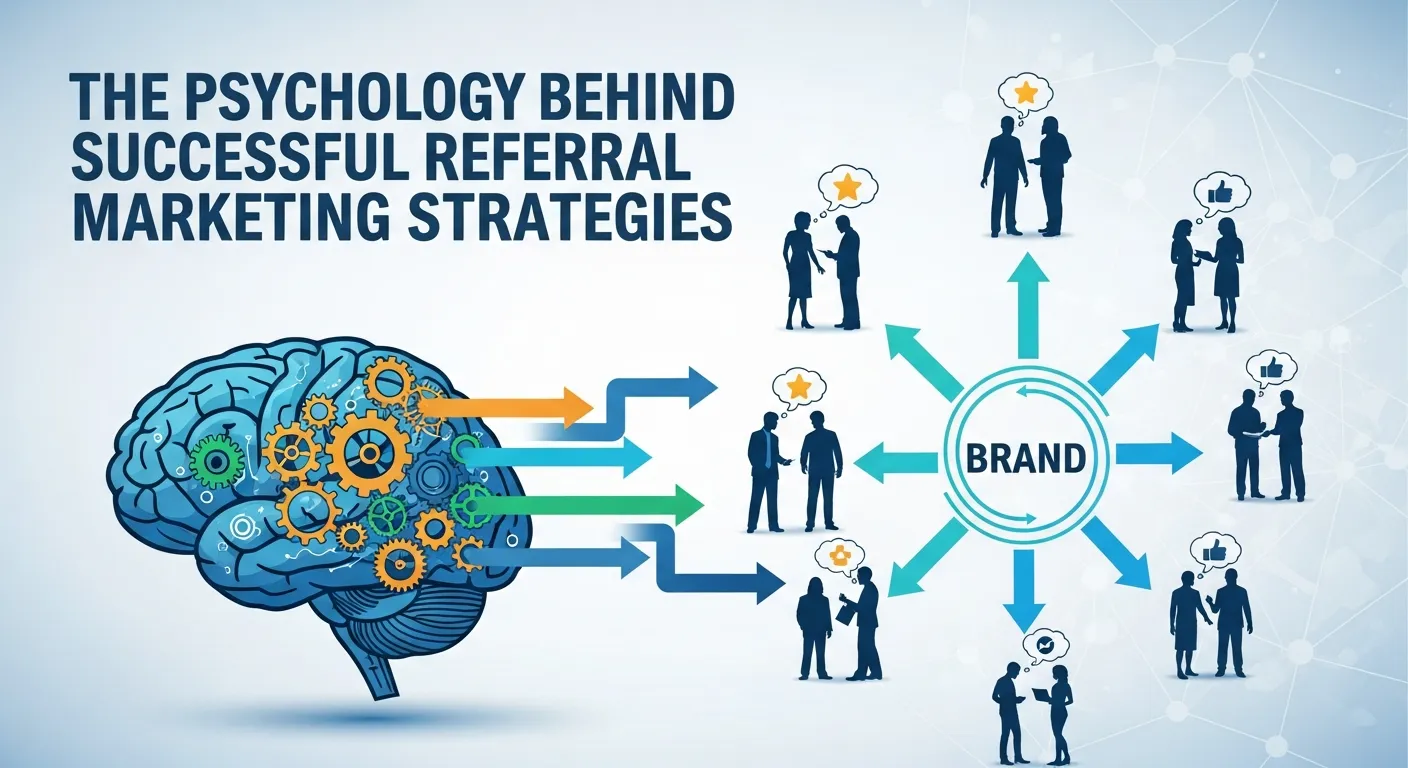
The Power of Social Proof
Humans are social creatures who look to others when making decisions. This psychological principle, known as social proof, explains why referrals are so effective. When someone we trust recommends a product, our brain interprets that as evidence the product is worth buying.
Social proof reduces perceived risk. Instead of taking a chance on an unknown brand, a referred customer feels confident because someone they know has already vetted the product. This dramatically shortens the decision-making process and increases the likelihood of conversion.
Emotional Triggers That Drive Referrals
Understanding what motivates people to refer others is crucial for designing an effective program. Several emotional and psychological triggers play a role:
Reciprocity: When you provide value to customers through great products and service, they naturally want to give something back. A well-designed referral program gives them an easy way to reciprocate by helping your business grow.
Incentives: While genuine satisfaction drives many referrals, rewards amplify participation. People are more motivated to take action when there’s a tangible benefit for both themselves and the person they’re referring.
Belonging and exclusivity: Being part of a referral program can make customers feel like insiders. They’re not just buyers—they’re ambassadors who get special perks for being loyal advocates of your brand.
10 Proven Referral Marketing Strategies to Boost Your Business
1. Offer Irresistible Incentives
The foundation of any successful referral program is a compelling incentive structure. You need to offer rewards that genuinely excite both the referrer and the new customer.
Double-sided rewards work best because they benefit everyone involved. For example, you might offer $20 off to existing customers who refer a friend, and $20 off for the friend who makes their first purchase. This creates a powerful motivation for the referrer to share and removes barriers for the new customer to try your product.
When choosing between cash, discounts, and credits, consider what aligns with your business model and what your customers value most. E-commerce brands often succeed with percentage discounts, while SaaS companies might offer account credits or free months of service. Test different reward types to see what drives the highest participation rates.
2. Make Referring Simple and Frictionless
The easier it is to refer someone, the more referrals you’ll get. Remove every possible barrier from the process.
Implement one-click sharing across email, social, and mobile. Learn tips in smart referral marketing automation. Pre-populate sharing messages with compelling copy that highlights the benefits of your product and the reward the recipient will receive.
Ensure your referral process is mobile-friendly. Many people will want to share your product while they’re on the go, so your referral links and landing pages need to work flawlessly on smartphones and tablets.
3. Create a Clear and Compelling Referral Message
Your referral messaging needs to clearly communicate what’s in it for both parties. Avoid vague language like “Share with friends.” Instead, use benefit-driven messaging such as “Give $20, Get $20” or “Refer a friend and you both save 25%.”
Your call-to-action should be direct and action-oriented. Phrases like “Refer Now,” “Share and Save,” or “Invite Friends” work well because they tell people exactly what to do next.
4. Promote Your Referral Program Everywhere
Don’t expect customers to stumble upon your referral program by accident. Actively promote it across every touchpoint:
Website: Feature your referral program prominently on your homepage, in your site navigation, and on product pages. Consider using a sticky banner or popup to catch visitors’ attention.
Email marketing: Send dedicated emails announcing your referral program to your entire customer base. Include referral program mentions in your regular newsletters and transactional emails.
Social media: Share posts about your referral program on all your social channels. Use eye-catching graphics and clear explanations of the benefits.
Post-purchase pages: The moment after someone completes a purchase is an excellent time to introduce your referral program. They’re already excited about your product and more likely to share it.
5. Use Timing Strategically
When you ask for referrals matters just as much as how you ask. Target customers at moments when they’re most satisfied with your brand.
Ask for referrals shortly after positive customer interactions, such as when someone leaves a five-star review, completes a successful onboarding experience, or reaches a milestone with your product.
Post-purchase timing also works well, especially if you wait a few days or weeks to give customers time to experience the value of what they bought. For subscription services, the moment after renewal is ideal because it indicates continued satisfaction.
6. Personalize the Referral Experience
Generic referral programs perform poorly compared to personalized ones. Use your customer data to create tailored experiences.
Provide personalized referral links that include the customer’s name or unique identifier. This makes the referral feel more authentic and helps you track which customers are driving the most referrals.
Consider offering custom rewards based on customer segments. High-value customers might receive enhanced incentives, while new customers get standard rewards. This approach recognizes different levels of brand advocacy and encourages greater participation.
7. Leverage Email Marketing for Referrals
Email remains one of the most effective channels for promoting your referral program. Set up automated referral campaigns that reach customers at optimal times.
Create a series of reminder emails for customers who haven’t yet participated in your referral program. Space these out appropriately—perhaps one reminder per month—to stay top of mind without being pushy.
For customers who’ve already made referrals, send thank-you emails that acknowledge their contribution and remind them they can refer more friends for additional rewards.
8. Gamify Your Referral Program
Adding game-like elements to your referral program can dramatically increase engagement and participation.
Create leaderboards that show top referrers and their rewards. This taps into people’s competitive nature and motivates them to refer more people to climb the rankings.
Implement tiered rewards where customers unlock increasingly valuable benefits as they make more referrals. For example, the first referral might earn $10, the third referral earns $20, and the fifth referral earns $50 plus exclusive perks.
Run referral contests with special prizes for the customers who make the most referrals within a specific timeframe. This creates urgency and excitement around your program.
9. Partner with Influential Customers
Not all customers have the same referral potential. Identify your brand advocates—the customers who are already talking about you on social media, leaving glowing reviews, and recommending you without prompting.
Reach out to these influential customers with personalized messages. Thank them for their support and invite them to join an exclusive tier of your referral program with enhanced benefits.
Encourage micro-influencers in your customer base to share their experiences. These don’t need to be celebrities—just engaged customers with a modest following who genuinely love your product. Their authentic endorsements can drive significant referrals.
10. Track, Analyze, and Optimize Performance
A successful referral program requires ongoing monitoring and refinement. Track key metrics to understand what’s working and what isn’t.
Monitor your referral conversion rate (how many referred leads become customers), cost per acquisition (how much you’re spending per new customer through referrals), and customer lifetime value (whether referred customers are more valuable over time).
Run A/B tests on different aspects of your program—test various reward amounts, messaging approaches, and promotional channels. Use the data to continuously improve your results.
Examples of Businesses Winning with Referral Marketing
E-commerce Example
Online fashion retailers often use discount-based referral programs where both the referrer and the new customer receive percentage discounts on their next purchase. A typical structure might offer 20% off for both parties, which is enough to motivate sharing without cutting too deeply into margins.
These programs work particularly well because fashion is inherently social. People naturally talk about where they got their clothes, making referrals feel organic rather than forced.
SaaS Example
Software companies frequently use credit-based or free-month rewards. For instance, a project management tool might offer one free month of service for every successful referral, with the new customer also receiving a free trial period.
This approach aligns perfectly with the subscription model because it increases customer lifetime value by extending the relationship with existing customers while bringing in new users at minimal acquisition cost.
Local Business Example
Service-based businesses like salons, gyms, or restaurants often implement loyalty-driven referral programs. A hair salon might offer a free haircut after three successful referrals, while a gym could provide a free month of membership.
These programs build community and encourage customers to bring their friends along, creating a more social and engaging experience that benefits everyone involved.
Common Mistakes to Avoid in Referral Marketing
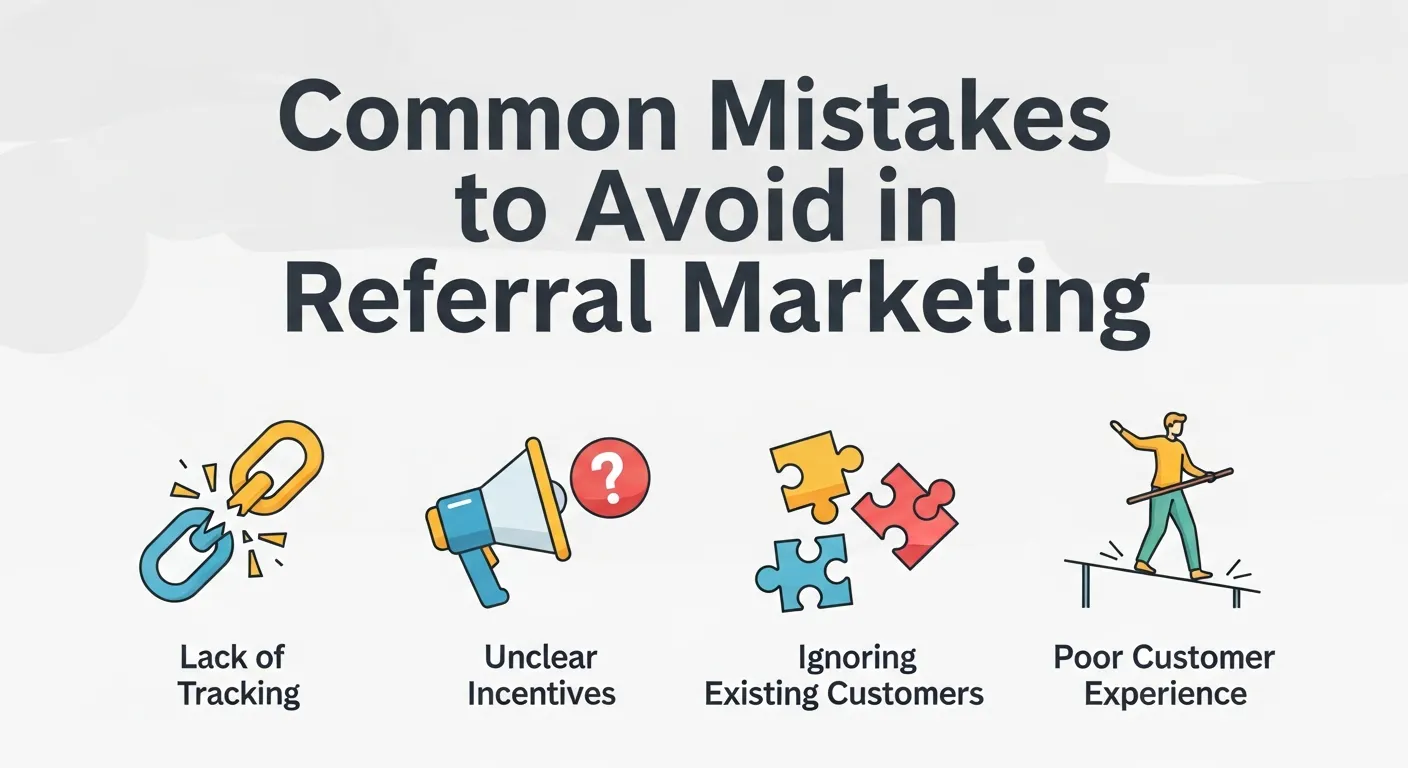
Complicated Processes
If your referral process requires multiple steps, logins, or confusing instructions, people simply won’t bother. Keep everything as simple as possible—ideally, referring should take no more than 30 seconds.
Weak Incentives
Offering rewards that feel insignificant won’t motivate action. A 5% discount might not be worth the effort of actively promoting your brand. Make sure your incentives are substantial enough to drive behavior change.
Poor Promotion
Building a referral program and then failing to promote it is like throwing a party and forgetting to send invitations. You need to actively market your program to your customer base through multiple channels.
Ignoring Data and Optimization
Many businesses launch referral programs and then never look at the performance data. Without regular analysis and optimization, you’re leaving significant growth potential on the table.
Tools and Platforms to Manage Referral Marketing
Features to Look For
When choosing referral marketing software, prioritize these capabilities:
Automation: The platform should automatically track referrals, distribute rewards, and send reminder emails without manual intervention.
Tracking: You need detailed analytics showing where referrals are coming from, which customers are most active, and how referred customers perform over time.
Fraud protection: Implement systems that detect and prevent referral fraud, such as people creating fake accounts to claim rewards.
Integration capabilities: Your referral software should integrate seamlessly with your e-commerce platform, CRM, email marketing tools, and other business systems.
Choosing the Right Platform for Your Business
Consider your budget when evaluating options. Some platforms charge flat monthly fees, while others take a percentage of referred sales. Calculate which pricing model works better for your expected referral volume.
Think about scalability. Choose a platform that can grow with your business rather than one you’ll quickly outgrow as your referral program succeeds.
Industry fit matters too. Some referral platforms specialize in e-commerce, while others are built for SaaS or service businesses. Select one that understands your specific needs.
How to Measure the Success of Your Referral Marketing Strategies
Key Metrics to Track
Referral conversion rate: What percentage of referred leads become paying customers? This tells you how well your referral traffic converts compared to other channels.
Cost per acquisition: How much are you spending in rewards and program management to acquire each new customer? This should be significantly lower than your costs for paid advertising.
Customer lifetime value: Do referred customers spend more and stay longer than customers from other channels? Many businesses find that referred customers have 16-25% higher lifetime values.
Participation rate: What percentage of your customer base is actively making referrals? If this number is low, you may need to improve your incentives or promotion strategies.
Calculating ROI from Referral Marketing
To calculate your referral program ROI, subtract your total program costs (including rewards, software fees, and management time) from the total revenue generated by referred customers. Divide that number by your total program costs and multiply by 100 to get a percentage.
A healthy referral program should deliver ROI of 300-500% or higher, meaning every dollar you invest generates three to five dollars in return.
Step-by-Step Action Plan to Launch Your Referral Marketing Strategy
Ready to build your referral program? Follow these steps:
Define your goal: Are you primarily focused on customer acquisition, increasing average order value, or building brand awareness? Your goal will influence your program design.
Identify ideal customers: Determine which customer segments are most likely to make successful referrals. Focus your initial outreach on these advocates.
Choose incentive structure: Decide what rewards you’ll offer and whether you’ll use a single-sided or double-sided reward system. Make sure the economics work for your business model.
Select tools: Choose referral software that fits your budget, integrates with your existing systems, and offers the features you need.
Launch and promote: Roll out your program with a dedicated marketing push across email, social media, and your website. Make sure customers understand how the program works and what they’ll gain.
Monitor and optimize: Track your metrics weekly during the first month, then monthly after that. Continuously test and refine your program based on performance data.
Conclusion
Referral Marketing Strategies are one of the most powerful Marketing Strategies for businesses seeking sustainable, trust-driven growth. Instead of relying solely on paid ads, referrals leverage authentic relationships and social proof to attract high-quality customers who are more likely to convert and stay loyal. By offering compelling incentives, simplifying the referral process, promoting consistently, and tracking performance, businesses can build a scalable growth engine fueled by satisfied customers. The key is to focus on value, timing, and continuous optimization. When implemented strategically, Referral Marketing Strategies don’t just increase sales—they create long-term brand advocates who actively contribute to ongoing business success.
FAQ: Referral Marketing Strategies
1. What Are Referral Marketing Strategies?
Referral Marketing Strategies are structured approaches that encourage existing customers to recommend a business to their friends, family, or colleagues in exchange for incentives. These strategies are designed to turn satisfied customers into brand advocates. Effective Referral Marketing Strategies focus on trust, simplicity, and rewards to drive consistent, high-quality customer acquisition.
2. Why Are Referral Marketing Strategies Important for Business Growth?
Referral Marketing Strategies are important because they leverage trust-based recommendations instead of cold advertising. Customers acquired through Referral Marketing Strategies typically convert faster, spend more, and remain loyal longer. This makes them one of the most cost-effective growth tactics available to modern businesses.
3. How Do Referral Marketing Strategies Differ from Affiliate Marketing?
While both involve sharing and rewards, Referral Marketing Strategies target existing customers who genuinely love the brand. Affiliate marketing usually involves third-party promoters earning commissions. Referral Marketing Strategies focus on relationship-driven growth, whereas affiliate marketing is more performance-based and transactional.
4. What Makes Referral Marketing Strategies So Effective?
The success of Referral Marketing Strategies lies in social proof and emotional triggers. People trust recommendations from people they know. When combined with incentives and a simple sharing process, Referral Marketing Strategies create a powerful cycle of trust, conversion, and loyalty.
5. What Types of Incentives Work Best in Referral Marketing Strategies?
Successful Referral Marketing Strategies often use double-sided rewards, where both the referrer and the new customer benefit. Popular incentives include discounts, store credits, cash rewards, free products, or subscription upgrades. Testing different rewards helps optimize Referral Marketing Strategies for maximum engagement.
6. How Can Small Businesses Use Referral Marketing Strategies?
Small businesses can implement Referral Marketing Strategies by offering simple rewards like discounts or loyalty points. Even without advanced tools, basic Referral Marketing Strategies—such as referral cards or email campaigns—can generate strong results. The key is consistent promotion and clear communication.
7. How Do You Promote Referral Marketing Strategies Effectively?
To maximize impact, Referral Marketing Strategies should be promoted across multiple channels—website banners, checkout pages, email newsletters, social media, and post-purchase confirmations. Consistent visibility ensures customers are always aware of your Referral Marketing Strategies and motivated to participate.
8. What Metrics Should Be Tracked in Referral Marketing Strategies?
Measuring performance is essential for improving Referral Marketing Strategies. Key metrics include referral conversion rate, participation rate, cost per acquisition (CPA), and customer lifetime value (CLV). Tracking these metrics helps refine and scale Referral Marketing Strategies effectively.
9. What Are Common Mistakes in Referral Marketing Strategies?
Common mistakes include complicated processes, weak incentives, and poor promotion. Ineffective tracking is another issue. To ensure success, Referral Marketing Strategies should remain simple, rewarding, and data-driven. Optimizing regularly keeps Referral Marketing Strategies performing at their best.
10. How Long Does It Take for Referral Marketing Strategies to Show Results?
The timeline depends on audience size and promotion efforts, but many Referral Marketing Strategies begin generating results within weeks. Long-term success requires consistency, testing, and optimization. Well-executed Referral Marketing Strategies build momentum over time, creating sustainable and scalable growth.