
Referral marketing drives trusted, high-converting customers by turning users into advocates. Avoid common mistakes, simplify referrals, offer strong incentives, track data, personalize outreach, and promote widely to build a scalable, cost-effective growth engine with long-term loyalty.
Referral marketing is a powerful strategy where existing customers recommend your products or services to friends, family, or colleagues. Because people trust personal recommendations more than advertisements, referral marketing is one of the highest-converting growth channels for businesses today. However, many referral marketing campaigns fail due to simple but avoidable mistakes, such as poor incentives, weak promotion, or complicated referral processes. These errors can prevent your referral program from generating real results and sustainable growth. In this article, we’ll explore the 5 mistakes that can kill your referral marketing campaign and share practical tips on how to fix them to maximize referrals, conversions, and customer loyalty.
What Is Referral Marketing?
Referral marketing is a growth strategy where businesses encourage existing customers to recommend their products or services to others in exchange for rewards or incentives. It leverages the power of word-of-mouth, which is one of the most trusted forms of marketing.
Key Points About Referral Marketing
- Customer-Driven Promotion:
Customers become brand advocates by sharing your business with friends, family, or colleagues. - Trust-Based Marketing Channel:
People trust recommendations from real people more than ads, influencers, or branded content. - Incentive-Based System:
Businesses offer rewards such as discounts, cash, free products, or credits to motivate referrals. - Dual-Sided Rewards:
Both the referrer and the referred customer often receive benefits, increasing participation rates. - Organic Growth Engine:
Referral marketing creates a viral loop where each new customer can bring in more customers. - Cost-Effective Acquisition:
You only pay rewards after a successful referral, making it cheaper than paid ads. - High Conversion Rates:
Referred customers convert faster because they already trust the brand through the referrer. - Long-Term Customer Value:
Referred customers tend to have higher lifetime value and stronger loyalty.
Why Referral Marketing Campaigns Fail
Referral marketing can be one of the most powerful growth strategies—but only when done correctly. Many businesses launch referral programs with high expectations, yet see little or no results. The reason is simple: common strategic mistakes that silently kill referral campaigns before they can scale.
Key Reasons Referral Marketing Campaigns Fail
- Lack of a Clear Strategy:
Many businesses launch referral programs without defined goals, target audience insights, or KPIs, making it hard to measure success. - Overcomplicated Referral Process:
If customers need to complete too many steps, they won’t participate. Simplicity is critical for high referral rates. - Weak Incentives:
Rewards that are not valuable or relevant fail to motivate customers to share your brand with others. - Poor Promotion of the Program:
A referral program that is not promoted across email, social media, website, and in-store touchpoints will remain invisible. - Ignoring Customer Experience:
Even the best referral incentives won’t work if customers are unhappy with your product or service. - No Tracking or Analytics:
Without tracking referrals, conversions, and rewards, businesses cannot optimize their referral marketing strategy. - Lack of Follow-Up and Engagement:
Brands often fail to nurture referrers, missing opportunities to turn them into long-term brand advocates.
Mistake 1: Overlooking the Importance of an Attractive Incentive
One of the most critical components of a referral marketing campaign is the incentive. If the offer isn’t compelling enough, your customers are unlikely to participate or persuade someone else to join. The biggest mistake companies make is offering generic or insufficient rewards that fail to align with their audience’s interests.
How to Fix It:
- Align Incentives With Your Audience: Know your customers and offer rewards that resonate with them. For example, exclusive discounts, free products, or gift cards often appeal to a wide range of customers.
- Two-Way Rewards: Make the incentive attractive for both the referrer (your customer) and the referee (their friend). This ensures a win-win situation.
- Make Rewards Valuable: Don’t skimp on rewards. A small discount might not be enough. Offering something valuable, like a free month of service for SaaS companies or premium product samples, can work wonders.
Mistake 2: Failing to Make Participation Simple
A referral program that is overly complicated can turn away even your most loyal customers. Whether it’s requiring too many steps to refer someone or using a platform that’s not user-friendly, complexity can be the death of your campaign.
How to Fix It:
- Streamline the Referral Process: Make your program simple to understand and easy to use. Clearly outline how customers can refer others and what they’ll receive in return.
- Integrate Digital Sharing Tools: Allow customers to share referral links directly through email, text, or social media platforms with just a click.
- Test the User Experience: Before launching, go through the process yourself and identify any friction points that could frustrate participants.
Mistake 3: Ignoring Data and Analytics
Many businesses launch referral programs without a concrete plan to monitor performance. Without tracking and analyzing key metrics, it becomes impossible to see what’s working and what needs improvement. This lack of insight leads to wasted resources and underperforming campaigns.
How to Fix It:
- Track Key Metrics: Focus on essential metrics such as referral conversion rates, customer lifetime value (CLV), number of referrals per customer, and ROI.
- Use Analytics Tools: Platforms like ReferralCandy, Yotpo, or Post Affiliate Pro not only help manage your campaign but also provide robust analytics to keep you informed.
- Adjust Based on Data: Use the collected data to tweak your campaign as needed. For example, if participation drops off in certain areas, investigate and remove obstacles.
Mistake 4: Underestimating the Power of Personalization
Generic messages and a “one-size-fits-all” approach can make your referral marketing campaign feel impersonal and unengaging. Customers are much more inclined to refer your product or service if the interaction feels tailored to them.
How to Fix It:
- Segment Your Audience: Group your customers based on preferences, purchase behavior, demographics, or engagement to send more relevant messages.
- Customize Referral Messages: Use customer names, reference specific past purchases, or highlight services they’ve particularly enjoyed in your referral communications.
- Leverage Email and Social Personalization: Emails and social media posts with customized visuals, text, and CTAs (call-to-action) consistently perform better than generic mass messages.
Mistake 5: Forgetting to Promote the Program
Even the best-designed referral programs will fail without proper promotion. A common mistake businesses make is assuming customers will automatically know about or participate in your program without significant outreach.
How to Fix It:
- Announce Your Program Loudly: Use all your communication channels, including email newsletters, social media, push notifications, website banners, and in-store promotions, to make customers aware of the program.
- Encourage Sharing: Use messaging that inspires action, such as “Refer a friend and both of you win!” Include shareable links and tools to make referrals easy.
- Switch Things Up: If participation is lagging, consider running limited-time offers, contests, or giveaways to create urgency.
How to Build a High-Performing Referral Marketing Campaign
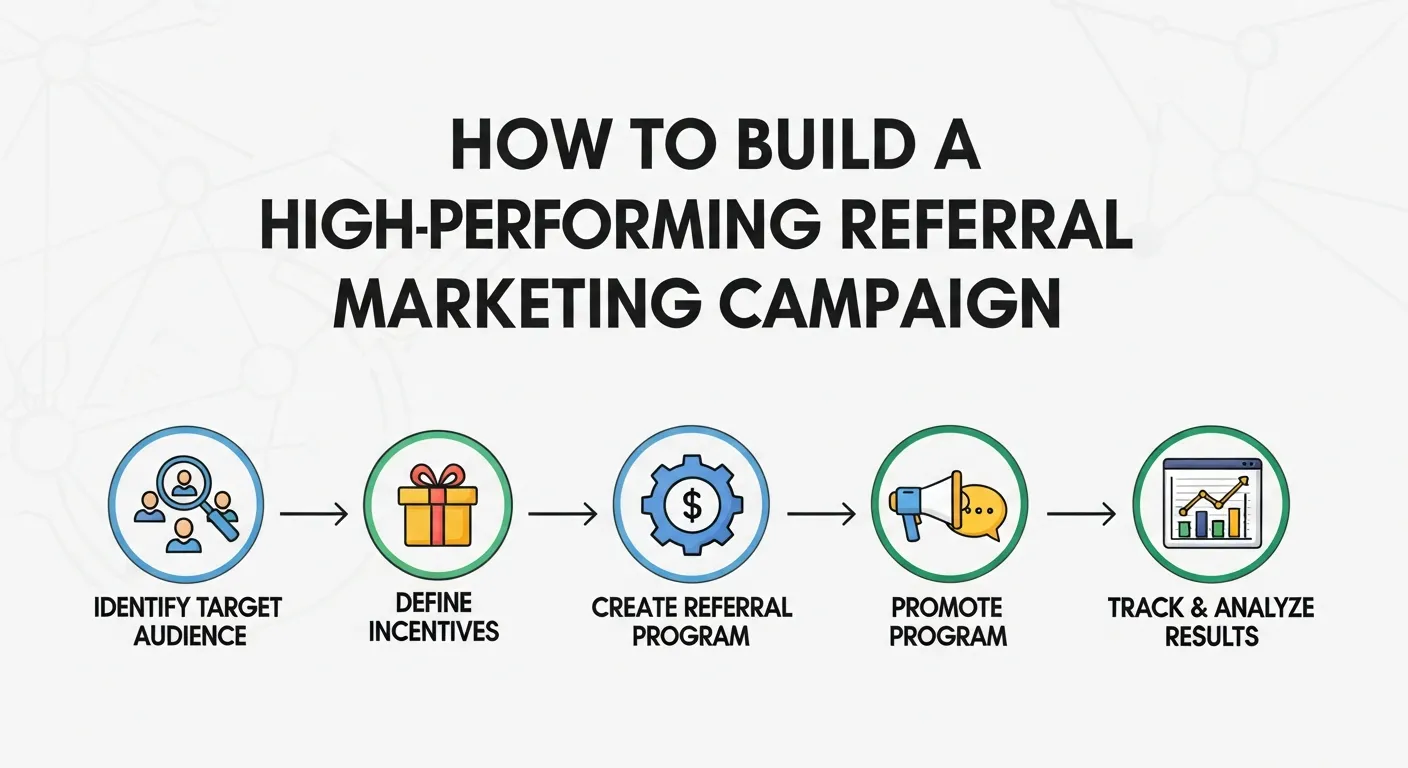
A high-performing referral marketing campaign doesn’t happen by chance—it requires a clear strategy, strong incentives, and continuous optimization. When designed correctly, referral marketing can become a scalable growth engine that brings high-quality customers at a low cost.
Step-by-Step Referral Strategy
1. Define Clear Goals
Start by identifying what you want to achieve with your referral program. Clear goals help you design the right strategy and measure success.
- Increase new customer acquisition
- Boost repeat purchases
- Improve customer retention
- Generate brand awareness
2. Choose the Right Incentives
Incentives motivate customers to refer others. However, rewards must be balanced and relevant to your audience.
- Discounts or store credits
- Free products or services
- Loyalty points or exclusive perks
- Dual incentives for both referrer and referred customer
3. Design a Simple Referral Flow
A complicated referral process reduces participation. Keep it simple and user-friendly.
- One-click referral links
- QR codes for offline referrals
- Easy signup or purchase process for referred users
- Automated reward tracking
4. Promote the Referral Program
Even the best referral program fails without promotion. Ensure customers know about it everywhere.
- Website banners and landing pages
- Email campaigns and SMS reminders
- Social media posts and stories
- In-store signage and staff promotion
5. Track and Optimize Performance
Continuous tracking ensures your referral campaign improves over time.
- Referral participation rate
- Conversion rate of referred customers
- Reward redemption rate
- Revenue and ROI from referrals
Referral Funnel Framework
A structured referral funnel helps you understand how customers move from awareness to loyalty.
Awareness
This is where customers discover your referral program.
- Promote via email, social media, and website
- Use clear messaging like “Refer a friend and earn rewards”
- Highlight benefits and incentives
Engagement
At this stage, customers interact with your brand and referral program.
- Encourage sharing through referral links or codes
- Use gamification, contests, or leaderboards
- Send reminders to inactive users
Referral
Customers actively refer friends or family members.
- Make sharing easy with one-click links
- Provide templates for social sharing or messaging
- Offer dual rewards to increase participation
Conversion
Referred users take action—signing up, purchasing, or visiting your business.
- Offer welcome discounts for referred customers
- Simplify onboarding and checkout
- Use trust signals like reviews and testimonials
Retention
The final stage turns referred customers into loyal advocates.
- Provide loyalty rewards and personalized offers
- Encourage repeat referrals
- Collect feedback and improve customer experience
Advanced Referral Marketing Tips
Referral marketing has evolved far beyond simple “invite a friend” programs. Advanced strategies focus on psychology, community building, and data-driven automation to maximize participation and lifetime value. By combining gamification, community advocacy, and AI-driven personalization, brands can transform referrals into a scalable growth engine that continuously attracts high-quality customers.
Gamification
Gamification taps into human motivation by making referrals fun, competitive, and rewarding. Instead of offering a single reward, create a dynamic system that encourages ongoing participation.
Leaderboards showcase top referrers publicly, fostering competition and social recognition. Seeing their names ranked motivates users to invite more friends to climb higher on the list.
Badges add a sense of achievement. For example, users can earn badges like “Super Referrer” or “Brand Ambassador” after reaching milestones. These visual rewards increase emotional engagement and social sharing.
Tier rewards introduce progressive incentives—such as bronze, silver, and gold tiers—offering increasing benefits like discounts, exclusive perks, or VIP access. Tiered systems keep customers engaged over time rather than making a single referral and stopping.
Community-Based Advocacy
Referral programs perform best when embedded within strong communities.
Brand communities on platforms like Discord, Facebook Groups, or private forums create spaces where customers share experiences, tips, and success stories, naturally driving organic referrals.
Micro-influencers within your community—loyal customers with smaller but highly engaged audiences—can be powerful advocates. Encourage them with exclusive perks or early access to products, turning them into trusted ambassadors.
User-generated content (UGC), such as testimonials, reviews, and social post,s adds authenticity. Featuring UGC on your website and social channels builds social proof and inspires others to join and refer friends.
AI and Automation in Referral Marketing
AI enhances referral programs by delivering personalized referral offers based on customer behavior, preferences, and purchase history. For example, high-value customers can receive premium referral rewards, while new users get simpler incentives.
Predictive analytics helps identify customers most likely to refer others and forecasts campaign performance. By targeting these high-probability advocates with tailored incentives, brands can maximize ROI and scale referrals efficiently.
Tools and Platforms for Customer Advocacy
Scaling a customer advocacy program requires the right technology stack. Tools and platforms help automate referrals, manage communities, collect feedback, and track advocacy performance—making it easier to turn customers into long-term brand promoters.
Referral Marketing Tools
Referral marketing platforms simplify the process of creating, managing, and tracking referral programs.
- ReferralCandy: Popular among eCommerce brands, it automates referral links, reward distribution, and referral tracking. It integrates seamlessly with platforms like Shopify and WooCommerce.
- Friendbuy: A powerful referral and loyalty platform used by enterprise brands. It offers customizable referral programs, advanced analytics, and fraud prevention features.
- Yotpo: Known for reviews and loyalty, Yotpo also provides referral program tools that combine social proof with customer incentives, boosting trust and conversion rates.
These tools help businesses launch referral programs quickly while tracking metrics like referral conversion rate, participation rate, and referral revenue.
Community and Feedback Platforms
Communities play a critical role in customer advocacy by creating spaces where customers connect, share experiences, and promote brands organically.
- Discord: Ideal for tech-savvy audiences and SaaS brands, offering real-time discussions, channels, and community events.
- Slack: Used by professional communities and B2B brands to engage customers, gather feedback, and foster collaboration.
- Facebook Groups: Effective for consumer brands, providing a familiar platform where customers share reviews, tips, and user-generated content.
Active communities strengthen emotional bonds, encourage peer-to-peer support, and naturally generate word-of-mouth referrals.
CRM and Automation Tools
Customer relationship management (CRM) and automation tools help brands identify advocates, personalize outreach, and nurture relationships.
- HubSpot and Salesforce: Track customer behavior, segment promoters, and automate referral and loyalty campaigns.
- Email marketing tools (e.g., Mailchimp, Klaviyo): Send referral invitations, advocacy campaigns, and reward notifications automatically.
By integrating CRM and automation tools with referral platforms, businesses can create personalized advocacy journeys and optimize organic growth at scale.
Common Myths About Referral Marketing
Referral marketing is often misunderstood, which prevents many businesses from leveraging its full potential. Several myths discourage brands from implementing referral programs, even though referrals consistently outperform traditional marketing channels in trust and conversion rates. Let’s debunk the most common misconceptions.
Only for startups
Many believe referral marketing is only suitable for startups looking for rapid growth. In reality, established brands like Dropbox, Airbnb, and Amazon have built massive customer acquisition engines through referrals. Enterprises use referral programs to increase retention, boost lifetime value, and strengthen brand advocacy—not just to grow quickly.
Only for online businesses
Referral marketing is not limited to digital companies. Offline businesses such as gyms, salons, retail stores, and service providers can run referral programs through loyalty cards, SMS campaigns, QR codes, and in-store incentives. Word-of-mouth remains one of the most powerful drivers of offline conversions.
Too expensive
Some businesses assume referral programs require high rewards and complex software, making them costly. However, referrals are often more cost-effective than paid advertising because rewards are only given after a successful conversion. Even small incentives—discounts, credits, or exclusive perks—can drive strong participation.
Hard to manage
With modern tools like ReferralCandy, Yotpo, and CRM-integrated referral platforms, managing referral campaigns is easier than ever. Automation, tracking dashboards, and fraud prevention systems simplify program management, making referrals scalable for businesses of any size.
Future of Referral Marketing
Referral marketing is evolving rapidly as technology and consumer behavior shift toward trust-based, community-driven ecosystems. The future of referrals will be shaped by communities, creators, AI, and decentralized loyalty systems.
Community-driven brands
Brands are increasingly building communities on platforms like Discord, Slack, and private forums. These communities foster engagement, collaboration, and organic referrals. Customers who feel emotionally connected to a brand are more likely to recommend it, making community building a core referral strategy.
Creator economy referrals
Creators and micro-influencers are becoming key referral drivers. Unlike traditional influencers, creators build deep trust with niche audiences. Brands will increasingly integrate referral links, affiliate models, and revenue-sharing programs into creator platforms, turning creators into scalable referral partners.
AI personalization
Artificial intelligence will transform referral marketing through hyper-personalized incentives, messaging, and timing. AI systems will predict who is most likely to refer, what reward motivates them, and when to prompt them—dramatically improving conversion rates and ROI.
Web3 loyalty programs
Blockchain-based loyalty systems will introduce tokenized rewards, NFTs, and decentralized referral tracking. These Web3 loyalty programs enable transparent reward distribution, transferable loyalty assets, and global participation without intermediaries, redefining how referrals and brand loyalty operate in the future.
Conclusion
A referral marketing campaign is one of the most powerful and cost-effective growth strategies for modern businesses. By turning satisfied customers into brand advocates, referrals build trust, drive high-quality leads, and improve conversion rates. With advanced tactics like gamification, community advocacy, and AI-driven personalization, referral programs can scale sustainably and outperform traditional advertising. Whether for startups or established brands, online or offline businesses, referral marketing creates a self-reinforcing growth loop that increases customer lifetime value, strengthens brand loyalty, and accelerates long-term business success.
FAQ: Referral Marketing Campaign
1. What is a Referral Marketing Campaign?
A Referral Marketing Campaign is a strategy where businesses encourage existing customers to recommend products or services to others in exchange for rewards or incentives.
2. Why is a Referral Marketing Campaign effective?
A Referral Marketing Campaign works because people trust recommendations from friends and family more than ads, leading to higher conversion rates and better customer quality.
3. How does a Referral Marketing Campaign work?
In a Referral Marketing Campaign, customers share referral links or codes, and both the referrer and the new customer receive rewards after a successful purchase or sign-up.
4. What rewards are used in a Referral Marketing Campaign?
Common rewards in a Referral Marketing Campaign include discounts, cash rewards, free products, store credits, loyalty points, or exclusive perks.
5. Is a Referral Marketing Campaign suitable for small businesses?
Yes, a Referral Marketing Campaign is ideal for small businesses because it is low-cost, performance-based, and highly scalable.
6. How can I promote a Referral Marketing Campaign?
You can promote a Referral Marketing Campaign through email marketing, social media, website banners, SMS campaigns, and in-store promotions.
7. What mistakes should be avoided in a Referral Marketing Campaign?
Common mistakes in a Referral Marketing Campaign include weak incentives, complicated referral processes, poor promotion, and not tracking performance metrics.
8. How do I track a Referral Marketing Campaign?
A Referral Marketing Campaign can be tracked using referral software, CRM tools, analytics dashboards, and metrics like referral rate, conversion rate, and ROI.
9. What tools are used for a Referral Marketing Campaign?
Popular tools for a Referral Marketing Campaign include ReferralCandy, Friendbuy, Yotpo, HubSpot, and Mailchimp for automation and tracking.
10. How can AI improve a Referral Marketing Campaign?
AI can personalize rewards, predict top referrers, automate messaging, and optimize timing, making a Referral Marketing Campaign more effective and data-driven.
Learn more about: What Are Common Mistakes in Referral Marketing?