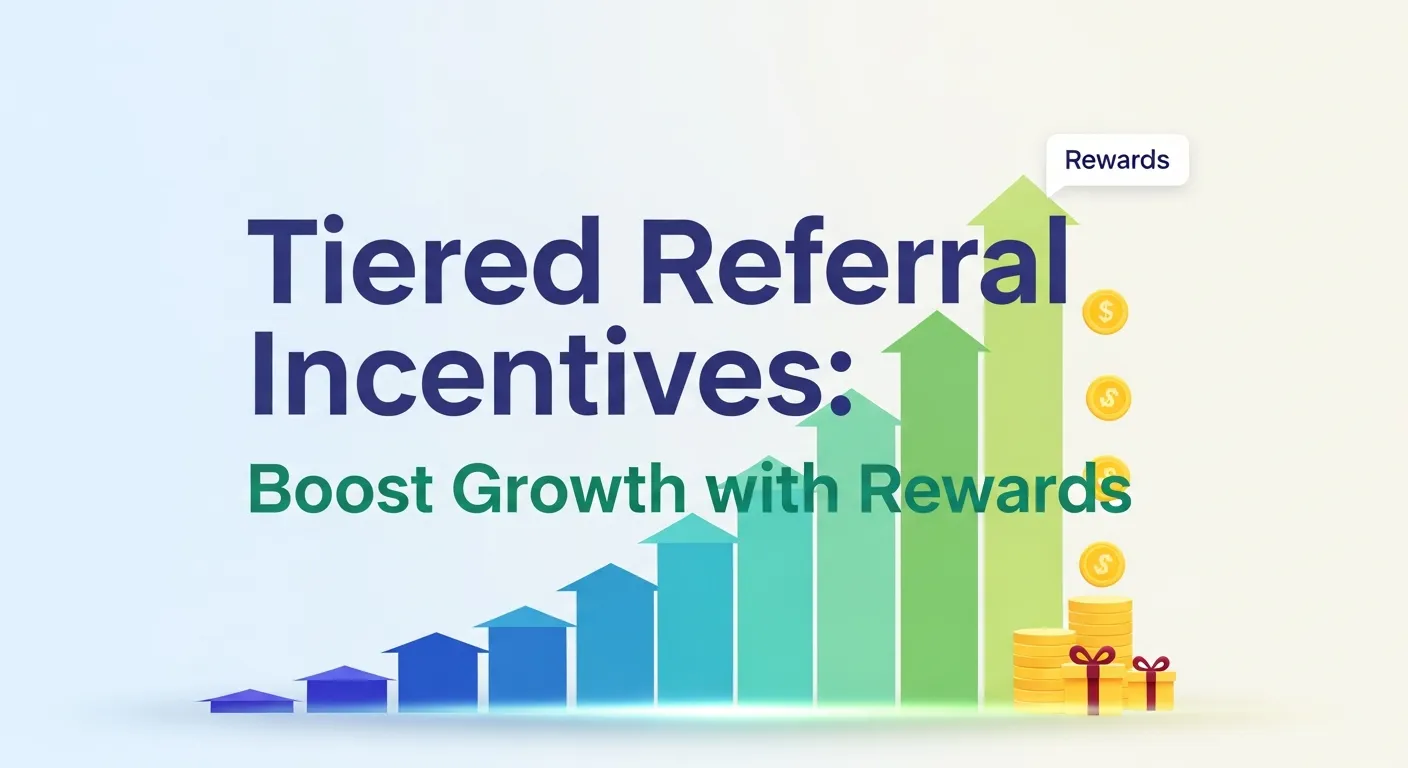
Tiered referral incentives drive more referrals by rewarding customers progressively, boosting engagement, retention, and viral growth while turning loyal users into powerful brand advocates.
Tiered referral incentives are a powerful strategy for driving customer growth through word-of-mouth marketing. By offering escalating rewards as customers refer more people, businesses can motivate repeat referrals, increase engagement, and build loyal brand advocates. Unlike flat referral rewards, tiered structures create a sense of progress and gamification, encouraging customers to actively promote your brand while unlocking increasingly valuable perks and benefits.
What Are Tiered Referral Incentives?
Tiered referral incentives are a structured reward system where referrers earn increasing rewards as they bring in more referrals. Instead of offering a single fixed reward, businesses create multiple reward levels (tiers) that unlock better perks when referral milestones are reached.
This approach taps into motivation and gamification—people are more likely to refer repeatedly when they see progress and bigger rewards ahead.
Why Tiered Referral Incentives Motivate More Referrals
1. Psychological Motivation
People enjoy progress and achievements. Seeing the next reward tier triggers a desire to continue referring.
2. Gamification Effect
Tiered rewards feel like a game or challenge, increasing engagement and participation.
3. Higher Referral Volume
A single reward motivates one referral, but tiered incentives push users to refer multiple people to reach bigger rewards.
4. Stronger Brand Loyalty
Customers who actively refer others feel more connected to the brand and become long-term advocates.
Examples of Tiered Referral Incentives
- SaaS platforms: Free months or premium features at higher tiers
- E-commerce brands: Discounts, gift cards, or free products
- Membership programs: VIP status, exclusive content, or early access
Key Benefits of Tiered Referral Incentives
- Increases referral frequency
- Improves customer retention
- Lowers customer acquisition cost
- Creates viral growth loops
How Tiered Referral Incentives Work
Tiered referral incentives operate on a simple principle: the more people a user refers, the better the rewards they unlock. Instead of offering a one-time reward, businesses design multiple referral levels with escalating benefits to encourage continuous referrals.
This system turns customers into active promoters and motivates them to keep sharing your brand with others.
Referral Levels Explained
Referral levels are milestones that users reach as they successfully refer new customers. Each level represents a specific number of referrals required to unlock a reward tier.
For example:
- Level 1: 1 successful referral
- Level 2: 5 successful referrals
- Level 3: 10 successful referrals
- Level 4: 25+ successful referrals
As users move up the levels, they feel progress and achievement, which drives them to continue referring.
Reward Tiers in Tiered Referral Incentives
Reward tiers are the incentives tied to each referral level. These rewards increase in value or exclusivity as users refer more people.
Common reward tier structures include:
- Basic Tier: Small rewards like discounts, cashback, or store credits
- Intermediate Tier: Larger discounts, gift cards, or premium features
- Advanced Tier: Free products, subscriptions, or service upgrades
- Elite Tier: VIP perks, exclusive access, or high-value gifts
The goal is to make higher tiers significantly more attractive so users feel compelled to reach them.
How Users Unlock Better Rewards
Users unlock rewards when their referrals meet specific criteria, such as:
- The referred person signs up
- The referred person makes a purchase
- The referred person completes a trial or subscription
Once the criteria are met, the referrer progresses to the next tier and receives a better reward. Many programs also show a progress tracker, helping users see how close they are to the next reward level.
Example of a Tiered Referral Incentive Structure
Here’s a simple tiered referral incentive model:
- 1 referral: $10 store credit
- 5 referrals: $50 bonus credit
- 10 referrals: Free premium membership for 1 year
- 25 referrals: Exclusive VIP product bundle
This structure motivates users to keep referring instead of stopping after a single reward.
Key Elements of an Effective Tiered Referral System
To make tiered referral incentives successful, businesses should include:
- Clear referral milestones
- Visible progress tracking
- Increasing reward value at each tier
- Easy sharing tools (links, codes, social sharing)
- Simple redemption process
Why This Structure Works
Tiered referral incentives leverage progress psychology and gamification, encouraging users to aim for higher rewards. This leads to more referrals, increased customer engagement, and scalable growth.
Planning Your Tier Structure

Start by defining the number of tiers and referral thresholds. Common models include bronze, silver, and gold levels, correlating to 1–5, 6–15, and 16+ referrals, for example. Ensure each tier offers a compelling, incremental benefit to maintain motivation without eroding your margins.
Extended Tips for Planning:
- Tier Count: 3–5 levels balance simplicity with progress. Consider adding Platinum or Diamond for power users.
- Referral Gaps: Make each next tier challenging but achievable. Gradual progression keeps users engaged without frustration.
- Duration: Decide if referrals reset annually or accumulate indefinitely. Resetting can create urgency, while cumulative tiers reward long-term loyalty.
- Milestones: Incorporate mini milestones inside tiers, such as small surprises at halfway points, to sustain motivation.
- Visual Representation: Use dashboards, progress bars, and tier badges to visually communicate progress.
Selecting the Right Rewards
Rewards should align with customer preferences and your brand value. Early tiers often use discounts or bonus credits, while higher tiers can unlock exclusive products, VIP access, or monetary bonuses. Test reward appeal with surveys or A/B experiments.
Extended Reward Ideas:
- Early Tier: Discounts, loyalty points, free shipping.
- Mid Tier: Premium products, early access to launches, personalized offers.
- Top Tier: VIP events, cash bonuses, luxury gifts, experiences.
- Seasonal or Limited-Time Rewards: Introduce time-sensitive rewards to create urgency and excitement.
Reward Ideas by Tier Table:
| Tier Level | Reward Examples | Engagement Benefit |
|---|---|---|
| Bronze | Small discounts, bonus loyalty points | Encourages first referrals |
| Silver | Premium discounts, early access to products | Retains mid-tier participants |
| Gold | VIP experiences, cash bonuses, exclusive gifts | Drives sustained engagement |
| Platinum | Limited edition products, high-value bonuses | Rewards high-value advocates |
| Diamond | Lifetime benefits, top-tier experiences | Creates brand ambassadors |
Seamless Automation and Integration

Choosing referral software that integrates with your CRM, email platform, and website is crucial. Automated tracking ensures accurate reward calculation and timely notifications. Configure workflows so participants receive tier-up emails or dashboard updates as they advance.
Extended Best Practices:
- Use software that syncs with all customer touchpoints: website, app, and email.
- Automate tier progression notifications to maintain excitement and transparency.
- Display real-time dashboards to allow users to see progress, upcoming rewards, and current rank.
- Enable social sharing directly from the dashboard to amplify organic reach.
- Regularly audit software accuracy to prevent errors in tracking or rewarding users.
Additional Tip: Automation not only saves administrative effort but also enhances the user experience—participants can track achievements and rewards without manual intervention.
Communicating the Program and Monitoring Performance
Clear, consistent communication drives participation. Use onboarding emails, in-app banners, social media posts, and blog announcements. Visualize progress bars and tier badges in your customer portal to spark excitement and transparency.
Extended Monitoring Insights:
Track metrics such as referral counts per user, tier progression rate, customer lifetime value (LTV) uplift, and program cost per acquisition (CPA). Dashboards that segment high-performers help you recognize top advocates and refine thresholds or rewards as needed.
Key Metrics Dashboard Example:
| Metric | Purpose | Notes |
|---|---|---|
| Referral Count per User | Tracks engagement and participation | Shows top referrers |
| Tier Progression Rate | Measures advancement through levels | Indicates motivation |
| Customer Lifetime Value (LTV) | Measures long-term impact | Higher for engaged advocates |
| Program Cost per Acquisition | Evaluates the ROI of incentives | Helps adjust rewards |
| Reward Redemption Rate | Measures reward appeal and effectiveness | Ensures incentives are desirable |
| Social Sharing Frequency | Evaluates viral potential | Helps optimize referral reach |
Engaging Customers Through Gamified Milestones
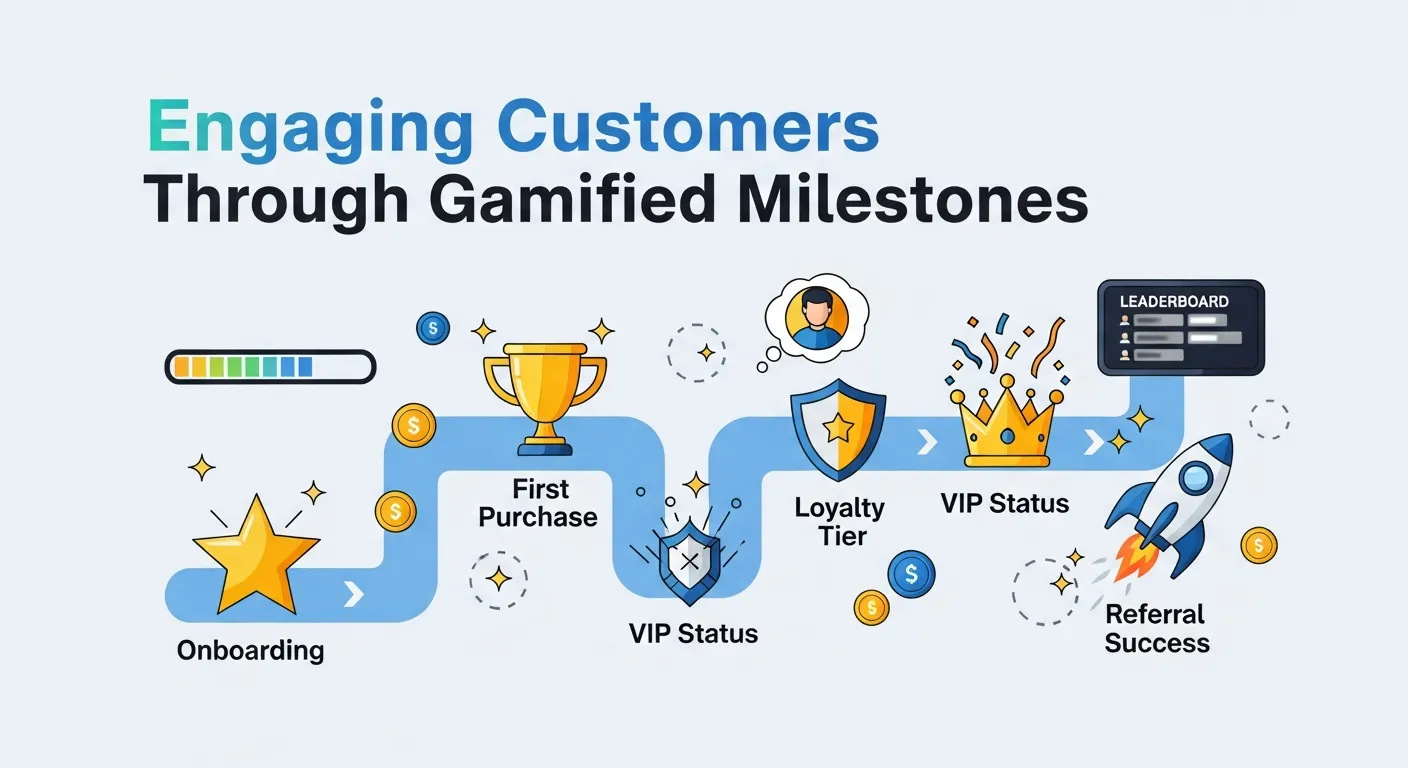
Gamification takes tiered referral programs to the next level by turning milestones into interactive experiences. Customers not only earn rewards but also enjoy the satisfaction of achieving goals, unlocking badges, and tracking progress visually.
How to Implement Gamified Milestones:
- Progress Bars: Show users exactly how close they are to the next tier.
- Badges and Achievements: Award virtual badges for first referral, completing tiers, or being a top referrer.
- Level-Up Notifications: Notify participants immediately when they move to a higher tier.
- Leaderboard Visibility: Encourage friendly competition by showcasing top performers publicly.
Benefits of Gamified Milestones:
- Increases motivation and sustained engagement.
- Creates a sense of achievement and recognition.
- Encourages participants to share milestones on social media.
- Enhances program transparency and excitement.
Gamification Elements by Tier:
| Tier Level | Gamified Element | Purpose |
|---|---|---|
| Bronze | Progress Bar | Shows immediate progress |
| Silver | Badge Unlock | Provides recognition for achievements |
| Gold | Leaderboard | Encourages competition among users |
| Platinum | Level-Up Alert | Boosts excitement and continued referrals |
Multi-Channel Referral Integration
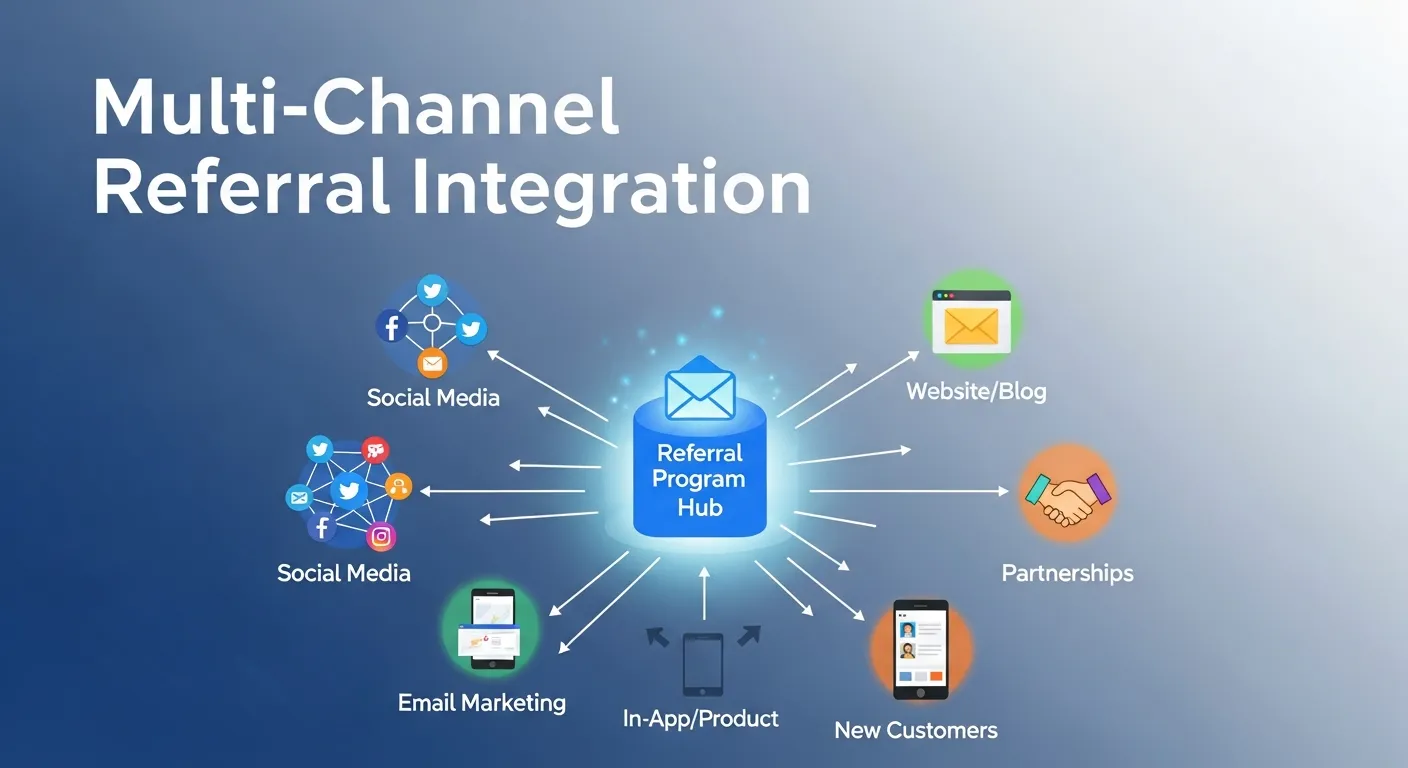
To maximize engagement, your tiered referral program should integrate across multiple channels, ensuring participants can refer easily wherever they spend time. Cross-channel integration increases visibility, reach, and participation rates.
Strategies for Multi-Channel Integration:
- Email Campaigns: Send reminders, progress updates, and reward notifications.
- Social Media Sharing: Enable direct sharing via Facebook, Instagram, LinkedIn, and TikTok.
- Website and App Integration: Embed referral buttons and dashboards directly on your platform.
- SMS & Push Notifications: Engage users with short, timely reminders about progress and rewards.
This approach is especially effective for referral programs for local businesses, where reaching customers across multiple touchpoints can drive foot traffic, awareness, and community engagement.
Key Benefits:
- Greater referral reach across platforms.
- Increased engagement by meeting customers where they are active.
- Higher conversion rates due to convenient referral methods.
- Enhanced brand visibility through social proof.
Measuring and Optimizing Tiered Referral Programs
Ongoing measurement helps sustain and grow your referral program. Key metrics include the number of referrals per user, tier progression speed, reward redemption rates, and social sharing engagement. Incorporating social media for referral marketing into your tracking strategy is essential, as it allows you to monitor how shared content, badges, or referral links perform across platforms. By analyzing social sharing patterns, you can identify which participants are driving the most referrals, optimize messaging, and refine reward structures to maximize engagement and reach.
Metrics to Track:
- Number of referrals per tier and per user.
- Tier progression speed and engagement patterns.
- Reward redemption rates.
- Social sharing frequency and engagement metrics.
- Program ROI and cost per acquisition (CPA).
Optimization Strategies:
- Adjust Tier Thresholds: Make tiers challenging but achievable based on user behavior.
- Refine Rewards: Survey participants to ensure rewards remain desirable.
- A/B Test Communication: Test email, push notifications, and in-app messages for clarity and engagement.
- Iterate Gamification Elements: Introduce new badges, challenges, or seasonal competitions to keep the program fresh.
Performance Tracking :
| Metric | Purpose | Recommended Action |
|---|---|---|
| Referral Count per User | Measure program participation | Adjust tier thresholds if low |
| Tier Progression Rate | Track advancement through levels | Reevaluate rewards for slow tiers |
| Reward Redemption Rate | Ensure incentives are attractive | Swap underperforming rewards |
| Social Sharing Frequency | Amplify organic reach | Introduce new sharing challenges |
| ROI & CPA | Measure cost-effectiveness | Adjust the budget or reward structure |
Leveraging Social Proof and Community Engagement
Social proof plays a powerful role in motivating participation in Tiered Referral Incentives. When customers see peers being rewarded or recognized, they are more likely to engage and strive for similar achievements. Integrating community-driven engagement adds a social layer that amplifies motivation, trust, and program visibility.
Strategies for Social Proof & Community Engagement
Public Recognition:
Feature top referrers on your website, social media channels, or newsletters to showcase success and inspire others to participate in your Tiered Referral Incentives program.
User Testimonials:
Highlight success stories from active participants to demonstrate real results and build trust among potential referrers.
Referral Sharing Leaderboards:
Display real-time rankings to encourage friendly competition and motivate users to move up referral tiers.
Community Challenges:
Introduce group milestones where collective referrals unlock rewards for everyone, strengthening community participation in Tiered Referral Incentives.
Social Badges:
Encourage participants to share achievements on social platforms using branded badges or hashtags, increasing program visibility and credibility.
Common Pitfalls to Avoid
- Overly Complex Tiers: Too many levels can confuse participants.
- Underwhelming Rewards: If incentives feel trivial, engagement stalls.
- Lack of Transparency: Customers must see how close they are to the next tier.
- Ignoring Power Users: Failing to acknowledge top advocates can reduce motivation.
- Delayed Rewards: Slow fulfillment of incentives can frustrate participants.
Scaling and Future-Proofing Your Tiered Referral Program

A successful tiered referral program is not static; it evolves to maintain engagement and meet growing customer expectations. Scaling your program ensures it continues driving growth as your user base expands.
Key Scaling Strategies:
- Introduce Seasonal or Limited-Time Tiers: Keep the program fresh by adding temporary levels or rewards during holidays or special events.
- Expand Reward Diversity: Introduce experiential rewards, exclusive content, or co-branded offers to keep participants motivated.
- Automate Feedback Loops: Regularly survey participants for insights on rewards, gamification features, and communication preferences.
- Integrate with Loyalty Programs: Tie referral tiers to loyalty points, VIP status, or other perks for seamless reward stacking.
- Regional or Language-Based Customization: Adapt tiers, rewards, and messaging for different markets to maximize relevance and participation.
Benefits of Scaling and Future-Proofing:
- Sustains long-term engagement and prevents program fatigue.
- Increases lifetime value by retaining top advocates.
- Expands referral reach as more participants actively promote the brand.
Real-World Examples
Companies like Dropbox and PayPal pioneered multi-level referral. Dropbox offered extra storage at each milestone, while PayPal increased cash bonuses. These success stories demonstrate that progressive rewards can fuel viral loops and rapid user acquisition.
Additional Examples:
- Airbnb: Users earned travel credits with tiered referrals, creating global viral growth.
- Uber: Escalating ride credits encouraged users to invite multiple friends, increasing engagement and adoption rates.
Conclusion
A tiered referral incentive program turns sporadic advocates into loyal, goal-driven promoters. By carefully structuring levels, selecting desirable rewards, automating tracking, and communicating effectively, you can create a self-reinforcing growth engine. Start small, iterate based on data, and watch your referral-driven pipeline expand.
FAQ: Tiered Referral Incentives
1. What are tiered referral incentives?
Tiered referral incentives are a reward system where users earn better rewards as they refer more people. Instead of one fixed reward, multiple tiers unlock increasing benefits at different referral milestones.
2. How do tiered referral programs work?
Tiered referral programs work by setting referral levels (tiers) and assigning rewards to each level. When users hit a referral milestone, they unlock a higher-value reward.
3. What is the difference between tiered and flat referral rewards?
Flat referral rewards offer the same incentive for every referral, while tiered referral incentives offer escalating rewards, motivating users to refer multiple people.
4. Why are tiered referral incentives effective?
Tiered referral incentives are effective because they gamify referrals, encourage repeated sharing, and leverage psychological motivation to unlock higher rewards.
5. What types of rewards can be used in tiered referral programs?
Common tiered rewards include:
- Discounts and store credits
- Gift cards or cashback
- Free products or services
- Premium memberships
- VIP perks or exclusive access
6. How many tiers should a referral program have?
Most businesses use 3 to 5 referral tiers. This provides enough motivation without making the program overly complex.
7. Can small businesses use tiered referral incentives?
Yes, small businesses can use tiered referral incentives with low-cost rewards like discounts, points, or exclusive perks. The structure can be scaled based on budget.
8. How do users track their referral progress?
Users can track progress through dashboards, referral counters, emails, or progress bars, showing how many referrals they need to reach the next tier.
9. Do tiered referral incentives increase customer retention?
Yes, tiered referral incentives boost customer loyalty and retention because users feel invested in the brand while working toward higher rewards.
10. Are tiered referral incentives suitable for all industries?
Tiered referral incentives work best for SaaS, ecommerce, memberships, fintech, and subscription services, but they can be adapted for almost any industry with the right rewards.
Learn more about: How to Choose the Right Marketing Channels for Your Business