Referral Marketing Software helps businesses automate referrals, increase conversions, and reduce acquisition costs. By choosing the right platform and optimizing incentives, companies can drive sustainable growth, improve retention, and turn satisfied customers into powerful brand advocates.
Paid ads can bring traffic. But word-of-mouth brings trust.
When someone hears about your product from a friend, they’re far more likely to buy. Research shows that people are four times more likely to purchase when referred by someone they know. That kind of conversion power is hard to ignore.
But here’s the challenge: managing referrals manually is messy. Tracking who referred whom, distributing rewards fairly, and measuring results becomes overwhelming fast. That’s where Referral Marketing Software steps in.
The right platform automates the entire process. It turns happy customers into active promoters without adding chaos to your workflow. You get clean tracking, automated rewards, and actionable insights—all in one place.
This guide walks you through everything you need to know about Referral Marketing Software. You’ll learn what it does, why it matters, and how to choose the best platform for your business. We’ll also review the top tools available and show you how to launch a referral program that actually drives growth.
What is Referral Marketing Software?
Definition and Core Purpose
Referral Marketing Software is a tool that automates the process of running referral programs. Instead of manually tracking who referred whom and distributing rewards by hand, the software handles everything for you.
It creates unique referral links for your customers, tracks when those links are shared and used, and automatically rewards both the referrer and the new customer. This removes guesswork and eliminates human error.
The core purpose is simple: turn your existing customers into a scalable acquisition channel. When done right, referrals become a reliable source of high-quality leads that convert better than cold traffic. To understand the mechanics behind referral systems, read How Does Referral Marketing Work? where we break down the referral journey step-by-step.
How Referral Marketing Software Works
Most platforms follow a straightforward process:
Unique referral links: Each customer gets a personalized link or code they can share with friends.
Tracking dashboards: The software monitors clicks, sign-ups, and purchases tied to each referral link.
Automated rewards distribution: Once a referral converts, both parties receive their rewards automatically—whether that’s cash, discounts, or store credit.
This automation means you can scale your referral program without adding manual work. Your team doesn’t need to verify every referral or chase down reward fulfillment.
Why Manual Referral Tracking Fails
Trying to run a referral program without software creates more problems than it solves.
Human error creeps in. Someone forgot to send a reward. A referral gets credited to the wrong person. Small mistakes damage trust and discourage participation.
Lack of scalability becomes obvious quickly. What works for 10 referrals breaks down at 100. You can’t grow a program that relies on spreadsheets and manual checks.
Poor analytics leave you guessing. Without real-time data, you can’t see which customers are your best advocates or which incentives drive the most conversions. You’re flying blind.
Referral Marketing Software eliminates these issues by automating the entire workflow and providing clear visibility into program performance. Poor analytics leave you guessing. Without real-time data, you can’t see which customers are your best advocates or which incentives drive the most conversions. You’re flying blind. To avoid this, businesses should learn how to properly analyze referral traffic in marketing and track performance metrics accurately.
Key Features to Look for in Referral Marketing Software
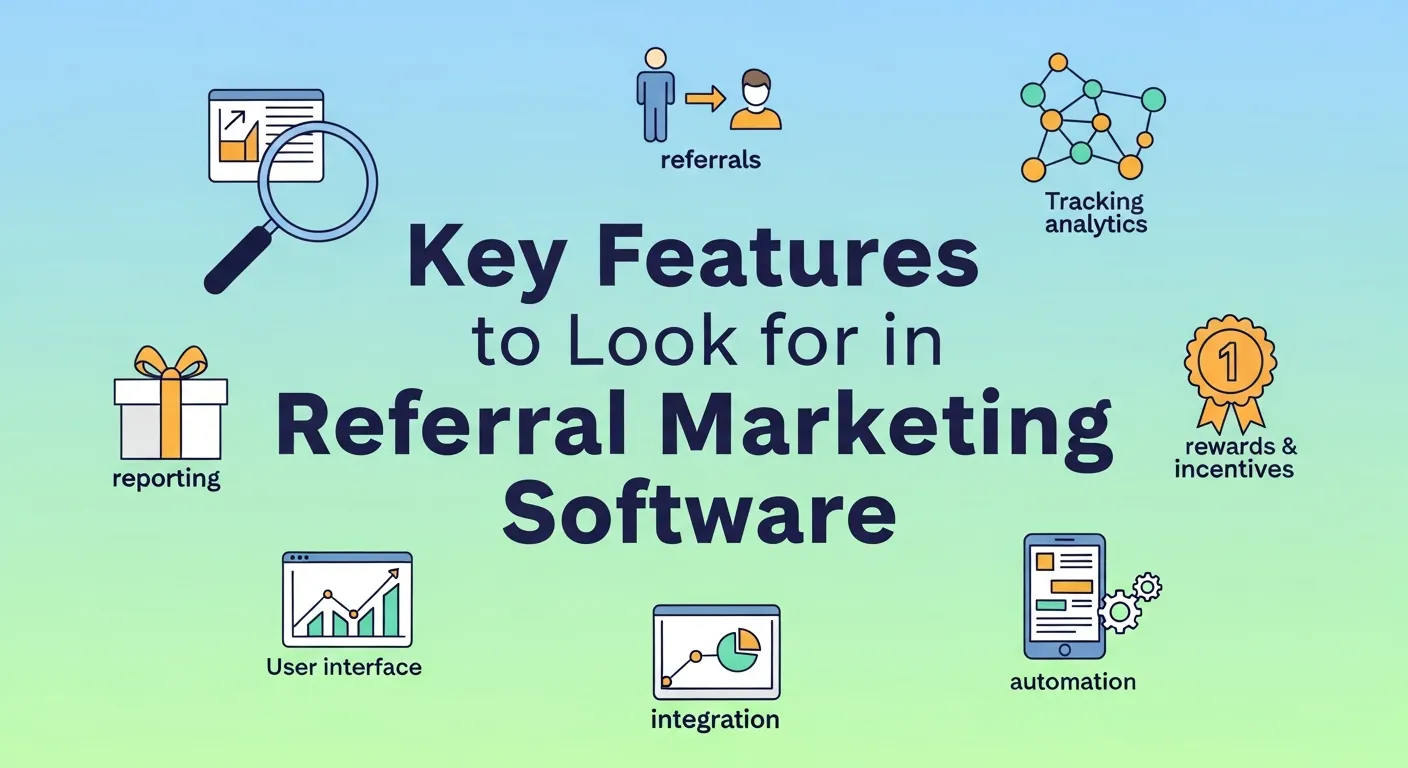
Easy Program Setup & Customization
The best platforms make it simple to launch a referral program that matches your brand.
Look for branding options that let you customize referral pages with your logo, colors, and messaging. This keeps the experience consistent and professional.
Landing page builders are another must-have. You need dedicated pages where customers can share their referral links and track their rewards. A good platform provides pre-built templates you can customize in minutes.
Automated Tracking and Analytics
Real-time performance tracking shows you exactly how your program is performing. You can see how many referrals are being shared, which ones convert, and who your top advocates are.
Conversion monitoring ties referrals directly to revenue. You’ll know which channels drive the most valuable customers and which incentives generate the highest ROI.
Without solid analytics, you’re guessing. With them, you’re optimizing.
Reward Management System
Flexible reward options keep your program engaging.
The best Referral Marketing Software supports multiple reward types: cash, discounts, store credit, and even physical products. This lets you tailor incentives to what motivates your audience.
Tiered rewards add another layer of motivation. Customers who refer more people earn bigger bonuses. This gamification element encourages ongoing participation.
Integration Capabilities
Your referral software shouldn’t exist in isolation. It needs to connect with the tools you already use.
Look for CRM integrations so referral data flows into your customer database. This helps you identify your best advocates and personalize follow-up campaigns.
Email marketing tools let you promote your referral program through automated sequences. And e-commerce platforms like Shopify or WooCommerce ensure seamless order tracking and reward fulfillment.
Fraud Detection and Security
Not everyone plays fair. Some users will try to game the system with fake accounts or self-referrals.
Good Referral Marketing Software includes duplicate detection to flag suspicious activity. If fraud prevention is a concern, explore our detailed guide on how to prevent fraud in referral marketing. This protects your budget and keeps your program credible.
Benefits of Using Referral Marketing Software
Higher Conversion Rates
Referrals convert better than any other acquisition channel. That’s because they come with built-in trust.
When a friend recommends your product, they’re vouching for you. The new customer already has a positive impression before they even visit your site. This trust-based acquisition shortens the sales cycle and boosts conversion rates.
Lower Customer Acquisition Cost (CAC)
Paid ads get expensive fast. Between rising CPCs and platform fees, your customer acquisition costs can spiral out of control.
Referral marketing flips that model. Your customers do the heavy lifting, and you only pay when a referral converts. This makes it one of the most cost-efficient growth strategies available.
Increased Customer Retention
Referral programs don’t just bring in new customers—they keep existing ones engaged.
When someone refers a friend, they become more invested in your brand. They want their friend to have a good experience, which deepens their own loyalty. This loyalty-driven growth creates a virtuous cycle that benefits retention and acquisition simultaneously.
Data-Driven Optimization
Referral Marketing Software gives you clear visibility into what’s working and what’s not.
You can test different reward structures, track which channels generate the most referrals, and identify your most valuable advocates. These actionable insights let you continuously improve your program and maximize ROI.
The Best Referral Marketing Software Platforms
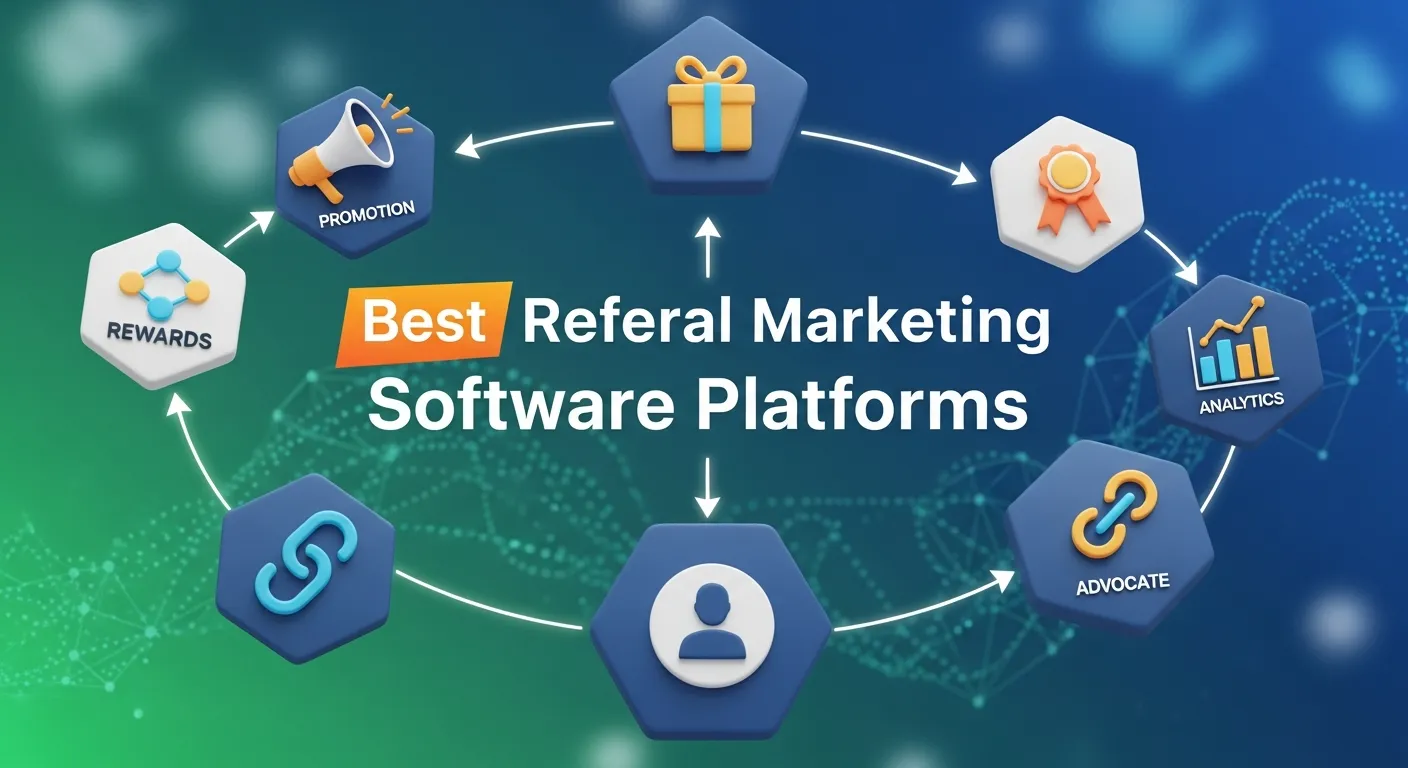
1. ReferralCandy
Best for eCommerce: ReferralCandy is designed specifically for online stores. It integrates seamlessly with Shopify, WooCommerce, and BigCommerce, making setup quick and straightforward.
Key features: Customizable referral campaigns, automated email reminders, and real-time analytics. You can offer cash rewards, discounts, or store credit.
Pricing overview: Plans start at $49/month, with pricing scaling based on orders processed.
Pros: Easy to use, strong eCommerce integrations, excellent customer support.
Cons: Limited functionality for non-eCommerce businesses, no free plan.
2. Yotpo
Best for Shopify stores
Yotpo combines referral marketing with loyalty programs and user-generated content. This all-in-one approach makes it a powerful choice for Shopify merchants looking to build community.
Integration strength: Native Shopify integration means data syncs automatically. You can also connect with email platforms like Klaviyo.
Loyalty + referral combo: Customers earn points for purchases and referrals, creating multiple engagement loops.
Pricing overview: Free plan available; paid plans start at $199/month.
Pros: Robust feature set, strong Shopify ecosystem, flexible reward structures.
Cons: Can feel overwhelming for smaller businesses, higher price point.
3. Extole
Enterprise-level automation
Extole is built for large-scale operations. It offers advanced segmentation, multi-channel campaigns, and deep analytics.
Advanced analytics: Track performance across customer segments, channels, and geographies. Extole provides enterprise-grade reporting that integrates with business intelligence tools.
Pricing overview: Custom pricing based on business size and needs.
Pros: Highly customizable, powerful analytics, excellent fraud detection.
Cons: Overkill for small businesses, requires technical setup.
4. InviteReferrals
Multi-channel sharing
InviteReferrals makes it easy for customers to share referral links across email, social media, WhatsApp, and SMS.
Gamified campaigns: Add leaderboards and milestone rewards to encourage ongoing participation. This gamification element increases engagement and drives more referrals.
Pricing overview: Plans start at $99/month.
Pros: Affordable, easy setup, strong multi-channel support.
Cons: Analytics could be more robust, fewer integrations than competitors.
5. Post Affiliate Pro
Affiliate + referral hybrid
Post Affiliate Pro blurs the line between affiliate and referral marketing. It’s a flexible platform that supports both customer advocacy and performance-based partnerships.
Custom commission structures: Set different reward rates for different products or customer segments. This flexibility is ideal for businesses with complex pricing models.
Pricing overview: Plans start at $129/month.
Pros: Flexible commission options, strong tracking capabilities, works for B2B and B2C.
Cons: Steeper learning curve, UI feels dated.
How to Choose the Right Referral Marketing Software
Identify Your Business Goals
What do you want your referral program to accomplish?
If you’re focused on lead generation, you need software with strong tracking and CRM integration. If retention is your priority, look for platforms that combine referrals with loyalty programs.
Clear goals help you evaluate which features matter most.
Consider Your Budget
Referral software ranges from free plans to enterprise solutions costing thousands per month.
Free vs premium tools: Free plans often come with limitations on referrals or integrations. If you’re just testing the waters, they’re fine. But as your program scales, you’ll likely need premium features.
Match your budget to your expected referral volume and revenue impact.
Check Scalability
Will this platform grow with your business?
Startup vs enterprise needs: A tool that works for 50 referrals a month might break at 5,000. Make sure the software you choose can handle increased volume without requiring a complete migration down the road.
Evaluate User Experience
Your customers need to find the referral process simple and intuitive. If sharing a referral link requires five clicks and a login, most people won’t bother. Look for platforms that prioritize customer ease-of-use with one-click sharing and mobile-friendly interfaces.
How to Successfully Launch a Referral Program Using Referral Marketing Software
Define Clear Incentives
Your reward structure makes or breaks your program.
Double-sided rewards work best. Give both the referrer and the new customer something valuable. This creates motivation on both sides and increases participation.
Test different reward amounts to find the sweet spot between profitability and appeal.
Simplify the Sharing Process
Make it ridiculously easy for customers to share their referral link.
Support multiple channels: email, social media, SMS. Let customers share with a single click. The fewer steps involved, the more referrals you’ll generate.
Promote the Program Strategically
Your referral program won’t succeed if no one knows it exists.
Add website banners on your homepage and checkout pages. Send post-purchase emails that encourage new customers to refer friends. Feature your top advocates in newsletters to inspire others.
Consistent promotion keeps your program top-of-mind.
Track, Analyze, and Optimize
Launch isn’t the finish line—it’s the starting point.
Monitor referral KPIs like conversion rate, average order value of referred customers, and participation rate. Use this data to tweak your incentives, messaging, and promotion strategy.
Continuous optimization turns a decent program into a growth engine.
Common Mistakes to Avoid When Using Referral Marketing Software
Offering Weak Incentives
If your reward doesn’t feel valuable, customers won’t participate. A 5% discount on a $200 product isn’t compelling. Test different reward levels and ask your customers what motivates them.
Making the Process Complicated
Every extra step reduces participation. If customers need to log in, navigate multiple pages, or copy-paste links manually, most will give up. Keep it simple.
Ignoring Analytics
Installing the software isn’t enough. You need to actively monitor performance and adjust your strategy based on real data. Ignoring analytics means leaving growth on the table.
Failing to Promote the Program
Even the best referral program won’t succeed if customers don’t know about it. Promote it consistently across all customer touchpoints.
Referral Marketing Software vs Affiliate Marketing Software
Key Differences
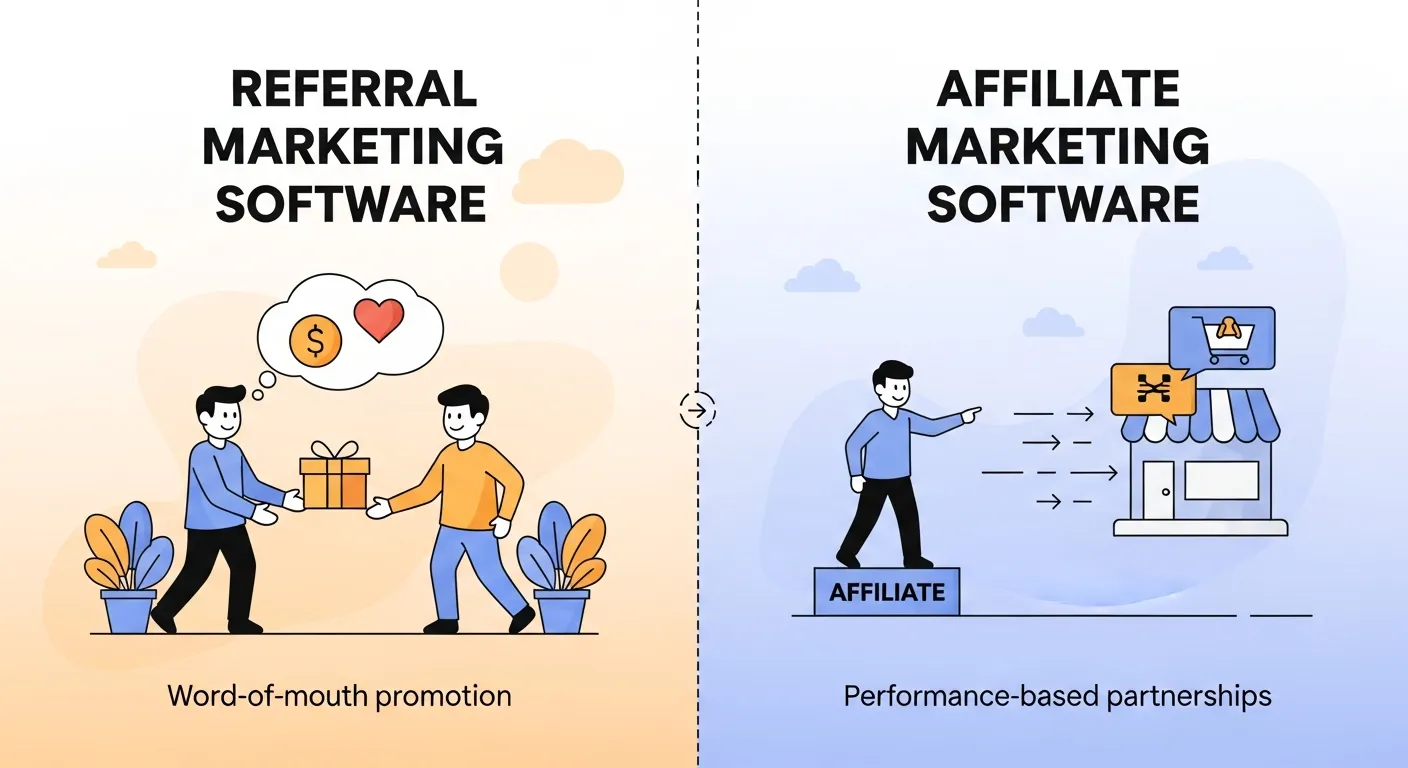
Referral marketing and affiliate marketing both leverage advocates, but they target different groups.
Advocates vs affiliates: Referral programs activate existing customers who love your product. Affiliate programs recruit external partners motivated by commission.
Referrals focus on trust and relationships. Affiliates focus on reach and performance.
When to Use Each Strategy
Use referral marketing when you want to deepen customer loyalty and tap into organic word-of-mouth. It’s ideal for businesses with strong customer satisfaction.
Use affiliate marketing when you need to expand reach quickly through influencers, bloggers, or media partners. It’s performance marketing at scale.
Many businesses run both strategies simultaneously. Referral Marketing Software and affiliate platforms can complement each other when used strategically.
Conclusion
Choosing the right Referral Marketing Software can significantly accelerate your business growth by turning loyal customers into active brand advocates. With automation, real-time tracking, fraud protection, and seamless integrations, modern referral tools eliminate manual effort while maximizing results. The best platforms not only increase conversions but also lower customer acquisition costs and improve retention. By offering compelling incentives, simplifying the sharing process, and continuously optimizing performance, businesses can build sustainable, trust-driven growth. Investing in powerful Referral Marketing Software isn’t just a marketing decision—it’s a long-term strategy for scalable revenue and stronger customer relationships.
FAQ: Referral Marketing Software
1. What is Referral Marketing Software?
Answer: Referral Marketing Software is a digital tool that helps businesses create, manage, and automate customer referral programs. It generates unique referral links, tracks referrals, distributes rewards, and provides performance analytics. This software eliminates manual tracking and allows companies to scale word-of-mouth marketing efficiently.
2. How Does Referral Marketing Software Work?
Answer: Referral Marketing Software works by assigning unique referral links or codes to customers. When someone shares the link and a new customer makes a purchase or signs up, the system automatically tracks the action and triggers rewards. It also provides dashboards to monitor referral performance and ROI.
3. Why Is Referral Marketing Software Important for Business Growth?
Answer: Referral Marketing Software helps businesses acquire high-quality leads at a lower cost. Since referrals come from trusted sources, they convert faster and retain longer. The automation and analytics features also allow businesses to optimize campaigns and scale growth effectively.
4. What Features Should I Look for in Referral Marketing Software?
Answer: Key features include automated tracking, customizable referral campaigns, reward management, CRM and email integrations, fraud detection, and real-time analytics. Easy setup and user-friendly sharing options (email, social media, SMS) are also essential for maximizing participation.
5. Is Referral Marketing Software Suitable for Small Businesses?
Answer: Yes, Referral Marketing Software is ideal for small businesses because it offers a cost-effective way to generate leads. Many platforms provide affordable plans or scalable pricing models, making it easy for startups and SMEs to launch and grow referral programs.
6. What Types of Rewards Work Best in Referral Programs?
Answer: Double-sided incentives often work best, where both the referrer and the new customer receive a reward. Popular options include discounts, cashback, store credit, gift cards, and exclusive access. The key is offering meaningful and relevant incentives.
7. How Is Referral Marketing Software Different from Affiliate Marketing Software?
Answer: Referral Marketing Software focuses on existing customers promoting your brand to friends and family, while affiliate marketing software typically involves professional marketers earning commissions. Referral programs are trust-based, whereas affiliate marketing is more performance-driven.
8. Can Referral Marketing Software Integrate with Other Tools?
Answer: Most modern Referral Marketing Software integrates with CRM systems, email marketing tools, and eCommerce platforms. These integrations streamline data flow, automate communication, and improve campaign tracking for better overall performance.
9. How Can I Measure the Success of Referral Marketing Software?
Answer: Success can be measured using metrics such as referral conversion rate, number of shares, customer acquisition cost (CAC), lifetime value (LTV), and overall ROI. Advanced dashboards help track these KPIs in real time.
10. What Are Common Mistakes to Avoid When Using Referral Marketing Software?
Answer: Common mistakes include offering weak incentives, making the referral process complicated, failing to promote the program, and ignoring analytics data. To maximize results, keep the process simple, reward participants properly, and continuously optimize your campaign strategy.