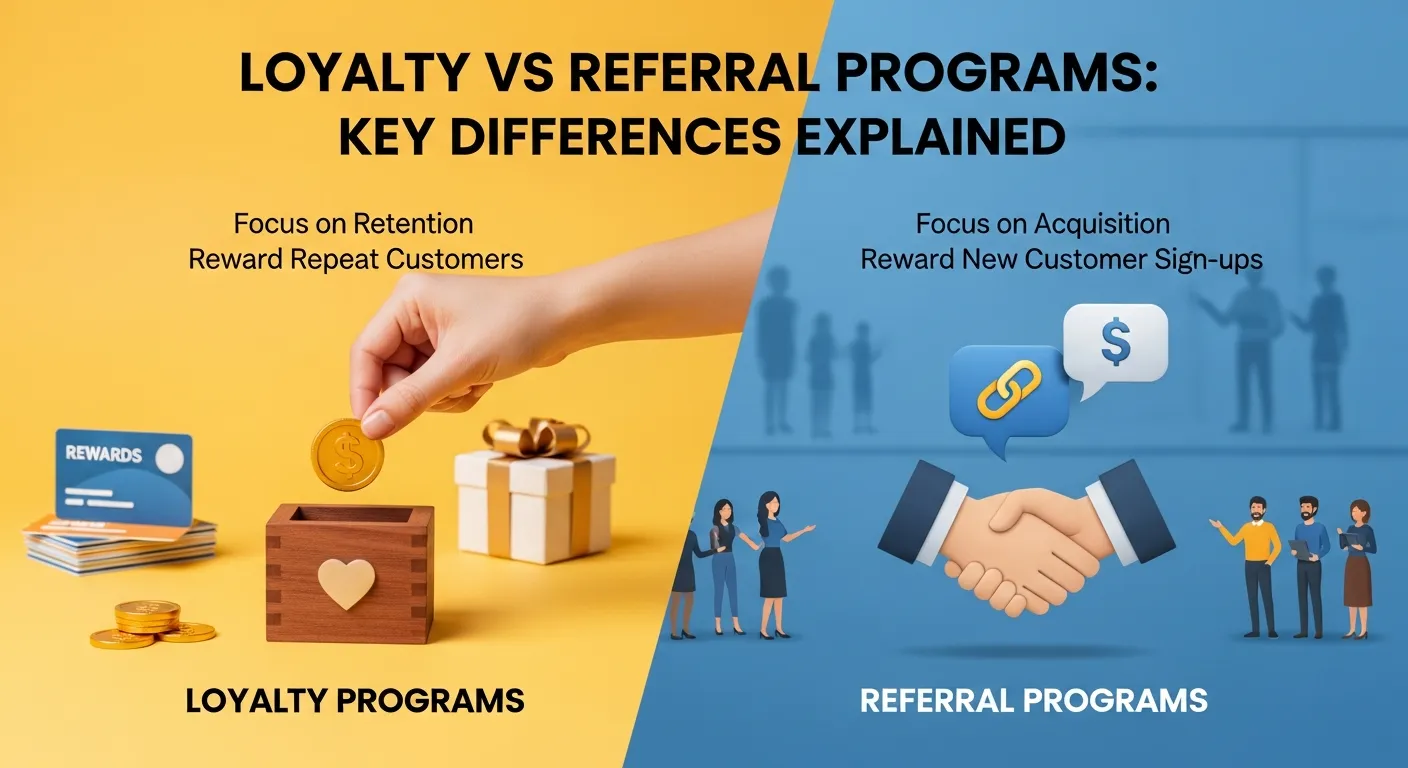
While both strategies aim to drive business growth, they operate in different ways. Loyalty programs focus on rewarding repeat purchases and long-term engagement, encouraging customers to stick with your brand. Referral programs, on the other hand, harness the power of word-of-mouth marketing, turning satisfied customers into brand advocates who bring in new clients.
Understanding the distinctions between these strategies—and knowing how to implement them effectively—can significantly impact your return on investment. In this guide, we’ll explore Loyalty vs Referral Programs, highlighting their unique benefits, key differences, and best practices for maximizing ROI. Whether your goal is to boost repeat sales, expand your customer base, or create a stronger community around your brand, this comparison will equip you with actionable insights to make informed decisions.
What Are Loyalty Programs?
Definition and Overview
Loyalty programs are structured marketing strategies designed to reward customers for repeated engagement with a brand. By offering incentives such as points, discounts, or exclusive access, these programs encourage customers to return and make additional purchases. Unlike one-time promotions, loyalty programs foster a long-term relationship between the customer and the brand.
Common examples include points-based systems, where every purchase earns points that can be redeemed for products or services; tiered rewards, which grant greater benefits as customers reach higher spending thresholds; and membership perks, which offer exclusive deals or early access to products. These programs are widely used across sectors such as retail, e-commerce, travel, and hospitality. Brands like Starbucks with their Starbucks Rewards program and Sephora with Beauty Insider demonstrate how effective loyalty programs can be in driving repeat business and strengthening customer engagement.
Benefits of Loyalty Programs
Loyalty programs offer several significant advantages for businesses. First, they encourage repeat purchases, directly increasing customer lifetime value (CLV). Customers who feel rewarded for their loyalty are more likely to return and spend more over time. Second, loyalty programs help build strong brand advocacy. Engaged customers are more likely to share positive experiences and recommend the brand to others. Third, these programs provide rich data on customer behavior, enabling highly personalized marketing campaigns. Businesses can analyze purchase patterns, preferences, and engagement levels to tailor offers, improving the relevance and effectiveness of promotions.
Common Loyalty Program Types
- Points-Based Programs – Customers earn points per purchase, which can be redeemed for discounts, free items, or special perks.
- Tiered or VIP Programs – Customers achieve higher levels with greater rewards based on spending or engagement milestones.
- Subscription-Based or Membership Programs – Customers pay a fee or register for membership to access exclusive offers or premium benefits.
Notable examples include Starbucks Rewards, which uses a points-based system with tiered benefits, and Sephora Beauty Insider, which combines points, tiered levels, and exclusive events to retain customers.
What Are Referral Programs?
Definition and Overview
Referral programs are designed to encourage existing customers to bring in new customers by sharing their positive experiences. Unlike loyalty programs, which primarily focus on retaining current customers, referral programs are acquisition-driven. They reward participants for promoting the brand, often using incentives such as discounts, free products, or cash rewards for successful referrals.
These programs rely on the trust and influence that current customers have with their networks. By tapping into these personal connections, brands can attract high-quality leads with a higher likelihood of conversion than cold marketing methods. Popular examples of referral programs include Dropbox, which offered additional storage for successful referrals, Uber, which rewarded both the referrer and the referred with ride credits, and Airbnb, which gave travel credits for successful invitations.
Benefits of Referral Programs
Referral programs provide several advantages for businesses:
- High Conversion Rates – Leads generated through trusted recommendations are more likely to convert into paying customers.
- Cost-Effective Acquisition – Compared to traditional advertising, referral programs often deliver a lower cost per acquisition.
- Organic Brand Awareness – Each referral introduces the brand to new potential customers in an authentic and credible way, expanding reach without aggressive marketing spend.
Common Referral Program Types
- Single-Sided vs Double-Sided Rewards – Single-sided rewards give incentives only to the referrer, while double-sided rewards benefit both parties.
- Social Sharing Campaigns – Customers can share referral links via social media, amplifying reach.
- In-App or Email-Based Referral Tracking – Digital tracking allows seamless monitoring of referrals and automatic reward distribution.
Brands like Dropbox, Uber, and Airbnb have set benchmarks for successful referral campaigns, demonstrating how incentivized advocacy can accelerate growth while keeping marketing costs manageable.
Loyalty vs Referral Programs: Key Differences
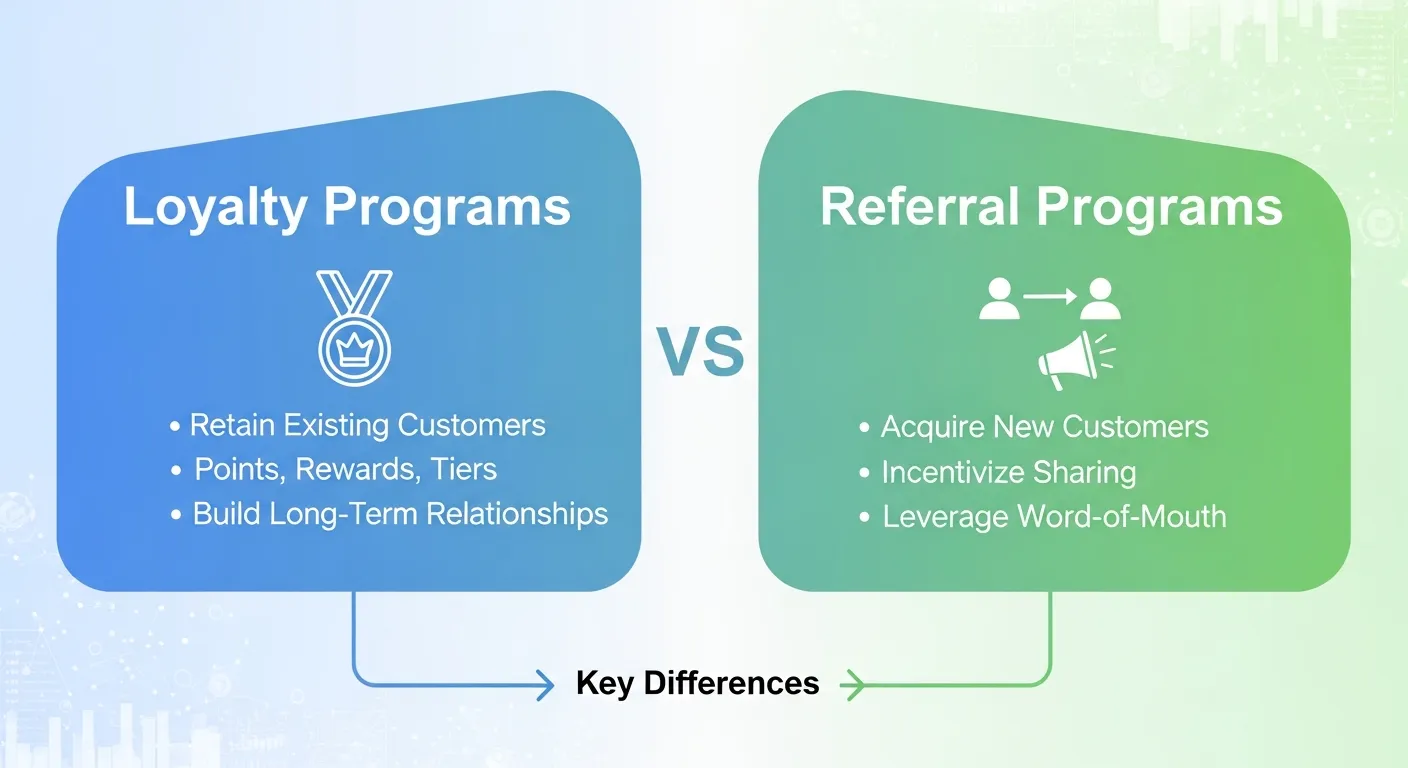
Understanding the distinctions between loyalty vs referral programs is crucial for businesses aiming to optimize customer engagement and growth. While both strategies aim to boost revenue and strengthen customer relationships, they differ significantly in purpose, structure, and impact. By comparing their key characteristics, brands can make informed decisions on how to balance retention and acquisition efforts effectively.
Goal Orientation
The primary goals of loyalty and referral programs differ fundamentally. Loyalty programs are designed to retain existing customers, encouraging repeat purchases and fostering long-term engagement. By rewarding consistent behavior, brands aim to increase customer lifetime value (CLV) and deepen brand loyalty.
In contrast, referral programs focus on customer acquisition. Their goal is to expand the customer base by motivating existing clients to introduce new prospects to the brand. These programs leverage the credibility of personal recommendations, which often leads to higher conversion rates compared to traditional advertising. While loyalty programs strengthen internal relationships, referral programs are outward-facing, aiming to grow reach and attract new audiences.
Incentive Structure
In loyalty programs, rewards are typically tied to customer behavior over time. Common structures include points accumulation, tiered benefits, or discounts based on spending frequency. Customers earn incentives as they continue to engage with the brand, creating a self-reinforcing cycle of loyalty.
Referral programs, however, reward action rather than ongoing engagement. Incentives are granted only when a customer successfully brings in a new client. This could include discounts, free products, or cash rewards. Double-sided referral programs provide benefits to both the referrer and the referred, further motivating participation and accelerating adoption.
Target Audience
The audiences targeted by loyalty and referral programs also differ. Loyalty programs are exclusively aimed at existing customers, focusing on strengthening their relationship with the brand. By personalizing rewards based on purchasing habits and engagement history, brands can retain high-value clients and prevent churn.
Referral programs extend their reach beyond current customers. While they begin with existing users as advocates, the ultimate goal is to acquire new customers. This dual-target approach allows brands to grow their network and increase market penetration, tapping into social circles and word-of-mouth influence to attract high-quality leads.
Cost and ROI Considerations
When evaluating loyalty vs referral programs, cost structure and return on investment (ROI) play a major role in strategy selection. Loyalty programs often involve ongoing expenses, such as the cost of rewards, program management, and technological infrastructure. However, they offer long-term benefits through enhanced CLV, data-driven insights, and stronger customer retention. The personalized marketing opportunities generated by loyalty programs can further increase ROI by targeting offers to highly engaged customers.
Referral programs typically operate on a pay-per-success model, meaning businesses pay only when a new customer is successfully acquired. This structure often results in lower upfront costs and provides scalability, as reward costs grow proportionally with program success. Additionally, referral programs can deliver impressive ROI through network effects: as more customers participate, the potential for exponential growth increases without significant increases in marketing spend.
Engagement Style
Finally, engagement styles set loyalty and referral programs apart. Loyalty programs emphasize internal engagement, aiming to strengthen the bond between the brand and its current customer base. Communication tends to be personalized, and interactions focus on rewarding existing behavior and fostering long-term relationships.
Referral programs, on the other hand, encourage external engagement. They motivate customers to share the brand experience with friends, family, or colleagues, creating organic marketing opportunities through word-of-mouth. This outward focus allows brands to leverage social influence and peer recommendations, often resulting in faster and more cost-effective acquisition than traditional advertising channels.
In summary, while both loyalty and referral programs are powerful tools in a modern marketing strategy, they serve complementary purposes. Loyalty programs excel at retaining and rewarding existing customers, enhancing lifetime value, and building brand advocacy. Referral programs are geared toward acquiring new customers efficiently, using social proof and network effects to expand reach. Understanding the distinctions between loyalty vs referral programs—from goals and incentives to engagement style and ROI considerations—enables businesses to implement strategies that balance retention with acquisition, ultimately maximizing growth and profitability.
How Loyalty and Referral Programs Complement Each Other
While loyalty and referral programs serve distinct purposes, combining them can create a powerful hybrid strategy that drives both retention and acquisition. By leveraging the strengths of each, businesses can maximize customer lifetime value while simultaneously expanding their customer base.
One effective approach is rewarding loyal customers for referring friends and family. For example, a brand might offer loyalty points or VIP perks when a customer successfully brings in a new client. This approach incentivizes both repeat engagement and advocacy, encouraging customers to stay connected while actively promoting the brand.
The benefits of integrating loyalty and referral programs are significant. Businesses gain higher retention rates as loyal customers feel recognized and rewarded, while new customer acquisition occurs organically through trusted recommendations. This synergy not only strengthens brand loyalty but also reduces customer acquisition costs compared to traditional marketing campaigns.
Best practices for hybrid programs include:
- Tracking metrics: Monitor both repeat purchase behavior and referral activity to understand which incentives drive the most impact.
- Personalizing rewards: Tailor benefits to different customer segments to maximize engagement and perceived value.
- Incentivizing both behaviors: Ensure customers see tangible value in staying loyal and in referring others, balancing the reward structure for optimal participation.
By thoughtfully combining loyalty and referral strategies, businesses can create a self-reinforcing growth loop—retaining valuable customers while simultaneously expanding their reach through authentic, incentivized advocacy.
How to Implement a Loyalty Program
Set Clear Goals
The first step in building an effective loyalty program is defining clear, measurable goals. Metrics such as customer lifetime value (CLV), repeat purchase rate, and overall engagement help businesses evaluate program success. By establishing these benchmarks upfront, brands can design incentives that align with desired outcomes and ensure that the program drives meaningful growth.
Choose the Right Rewards
Selecting rewards that resonate with your audience is critical. Common options include points systems, discounts, or VIP perks for top-tier customers. The key is to align incentives with both customer desires and business objectives. For instance, offering exclusive access to new products or personalized experiences can deepen engagement while promoting high-value behaviors. Thoughtful reward selection ensures the program feels valuable to customers and encourages consistent participation.
Track and Optimize
Ongoing tracking and optimization are essential to maintain program effectiveness. Analytics should measure engagement rates, points redemption, and overall ROI. Monitoring these metrics allows businesses to identify which rewards motivate the most activity and which aspects may need adjustment. Programs should be flexible, adapting to changing customer behaviors and market trends. By continuously refining the loyalty strategy, businesses can maximize participation, retention, and long-term profitability.
How to Implement a Referral Program
Design Incentives That Work
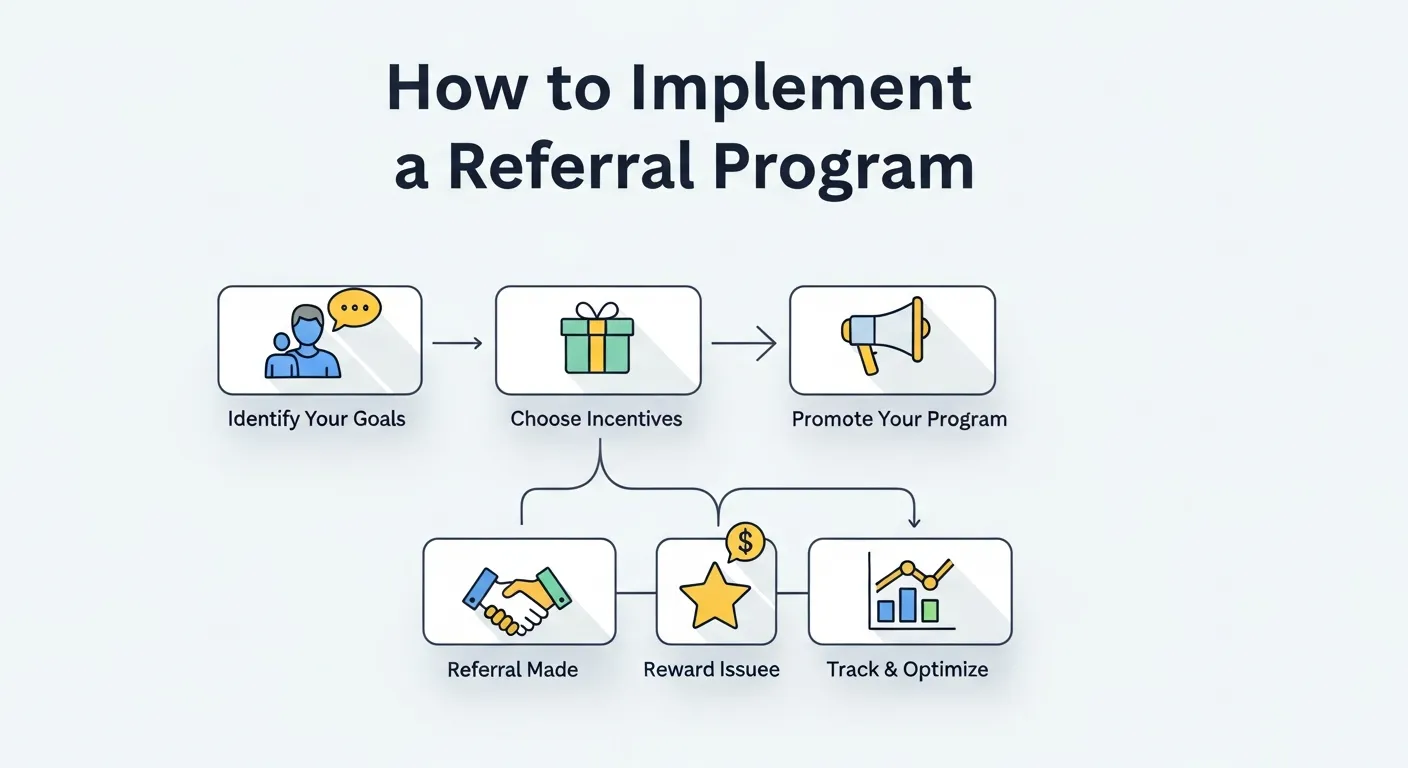
A successful referral program starts with the right incentives. Brands must decide between single-sided rewards, which benefit only the referrer, and double-sided rewards, which provide benefits to both the referrer and the referred customer. Double-sided rewards often drive higher participation because both parties feel motivated to engage. Incentives can include discounts, free products, credits, or exclusive perks. The key is to make the benefits compelling, valuable, and easy to understand so that customers are encouraged to share the brand with their network.
Promote Your Program Effectively
Even the best referral program needs effective promotion to succeed. Businesses should leverage multiple channels such as email marketing, social media posts, in-app notifications, and website banners to inform customers about the program. Gamifying the referral process—using leaderboards, milestone rewards, or challenges—can also boost participation by making it fun and engaging. Clear communication about rewards and simple referral processes ensures higher adoption and better results.
Measure Success
Tracking and optimization are critical to maximizing the ROI of referral programs. Key metrics include referral conversions, shares, clicks, and program ROI. By analyzing this data, businesses can identify which incentives work best, which channels generate the most referrals, and how to refine messaging or reward structures. Continuous monitoring ensures the program evolves with customer behavior and maintains its effectiveness over time.
Case Studies: Loyalty vs Referral Programs in Action
Starbucks Rewards – Loyalty Program Success
Starbucks has built a highly effective loyalty program with its Starbucks Rewards system. Customers earn points for every purchase, unlocking tiered benefits like free drinks, exclusive offers, and early access to new products. The program drives repeat purchases, strengthens brand loyalty, and provides Starbucks with rich customer data to personalize marketing campaigns.
Dropbox – Viral Growth via Referrals
Dropbox leveraged a referral program to achieve rapid growth. Users received additional free storage for inviting friends, while new sign-ups also gained benefits. This double-sided incentive created a viral loop, dramatically expanding Dropbox’s user base at minimal marketing cost. The program exemplifies how referrals can drive efficient customer acquisition through trust and social sharing.
Hybrid Approach – Combining Loyalty and Referrals
Some brands implement a hybrid strategy, rewarding loyal customers for referring others. For example, a customer might earn loyalty points for repeat purchases and additional points or perks when a friend signs up through a referral. This approach maximizes retention while generating organic acquisition, creating a self-reinforcing growth cycle that strengthens customer relationships and broadens the audience simultaneously.
Common Mistakes to Avoid
Even well-intentioned loyalty and referral programs can fail if key pitfalls are overlooked. One common mistake is implementing a poor reward structure or creating a complicated process. If rewards are unclear, too small, or difficult to redeem, customers lose motivation to participate.
Another critical error is a lack of tracking or analytics. Without monitoring engagement, redemption rates, or ROI, businesses cannot evaluate program performance or identify areas for improvement. Programs must include clear metrics and regular analysis to ensure they drive the desired outcomes.
Ignoring customer experience is also detrimental. Programs that feel impersonal, confusing, or time-consuming risk alienating participants instead of fostering loyalty or advocacy.
Finally, failing to align the program with the overall marketing strategy can reduce effectiveness. Loyalty and referral programs should complement broader brand goals, integrating with messaging, promotions, and customer engagement initiatives. Programs that operate in isolation are less likely to deliver meaningful results.
Future Trends in Loyalty vs Referral Programs
The landscape of loyalty and referral programs is evolving rapidly, driven by technology and changing consumer expectations. AI and machine learning are enabling hyper-personalized rewards and offers, tailoring programs to individual customer behavior and preferences.
Gamification and interactive rewards are increasingly popular, making participation more engaging through points, challenges, leaderboards, and milestone incentives. Social commerce and influencer-driven referrals are creating new avenues for customer acquisition, leveraging peer recommendations and trusted voices to amplify brand reach.
With the rise of mobile-first behavior, app-based loyalty programs are becoming standard, allowing seamless tracking, push notifications, and instant rewards. Businesses adopting these trends can deliver more engaging, efficient, and measurable programs that drive both retention and growth.
Conclusion
Understanding the distinctions between loyalty vs referral programs is essential for any business looking to maximize growth. Loyalty programs strengthen retention and long-term engagement, while referral programs accelerate new customer acquisition. Combining both strategically can create a powerful synergy, driving higher lifetime value and organic growth. By experimenting, tracking data, and optimizing rewards, brands can design programs that delight customers, foster advocacy, and deliver measurable ROI in today’s competitive marketplace.
FAQ: loyalty programs and referral programs
1: What are loyalty programs and referral programs?
Loyalty programs reward repeat customers for their ongoing engagement, while referral programs incentivize existing customers to bring in new clients. Understanding Loyalty vs Referral Programs helps businesses choose the right strategy for retention and growth.
2: How do loyalty programs differ from referral programs?
The main difference is the goal: loyalty programs focus on retention, and referral programs focus on acquisition. Comparing Loyalty vs Referral Programs clarifies which approach drives repeat purchases versus new customer growth.
3: Can a business use loyalty and referral programs together?
Yes! A hybrid approach combines retention and acquisition strategies. Integrating both strategies is a smart way to maximize ROI when considering Loyalty vs Referral Programs.
4: What types of rewards work best for loyalty programs?
Points, tiered perks, and membership benefits are popular options. When designing programs, comparing Loyalty vs Referral Programs helps ensure rewards align with customer behavior and business goals.
5: How are referral program incentives structured?
Referral programs may use single-sided or double-sided rewards, giving benefits to the referrer and sometimes the referred. Businesses should evaluate Loyalty vs Referral Programs to balance incentives and effectiveness.
6: What industries benefit most from loyalty programs?
Retail, e-commerce, travel, and hospitality commonly see strong results from loyalty programs. Understanding Loyalty vs Referral Programs can help these sectors optimize retention strategies.
7: Are referral programs cost-effective?
Yes, because they use a pay-per-success model and leverage social trust. Businesses weighing Loyalty vs Referral Programs can determine which offers better acquisition ROI.
8: How can businesses track program success?
Analytics for engagement, redemption, referrals, and ROI are essential. Comparing metrics in Loyalty vs Referral Programs ensures both retention and acquisition efforts are optimized.
9: What mistakes should be avoided in loyalty or referral programs?
Complicated processes, unclear rewards, ignoring customer experience, and a lack of tracking are common pitfalls. Understanding Loyalty vs Referral Programs helps prevent these errors.
10: What trends are shaping loyalty and referral programs?
AI personalization, gamification, social commerce, influencer-driven referrals, and mobile-first experiences are transforming both strategies. Future-focused businesses should explore Loyalty vs Referral Programs to stay competitive.
Learn about: Why Referral Programs Fail and What You Can Do About It