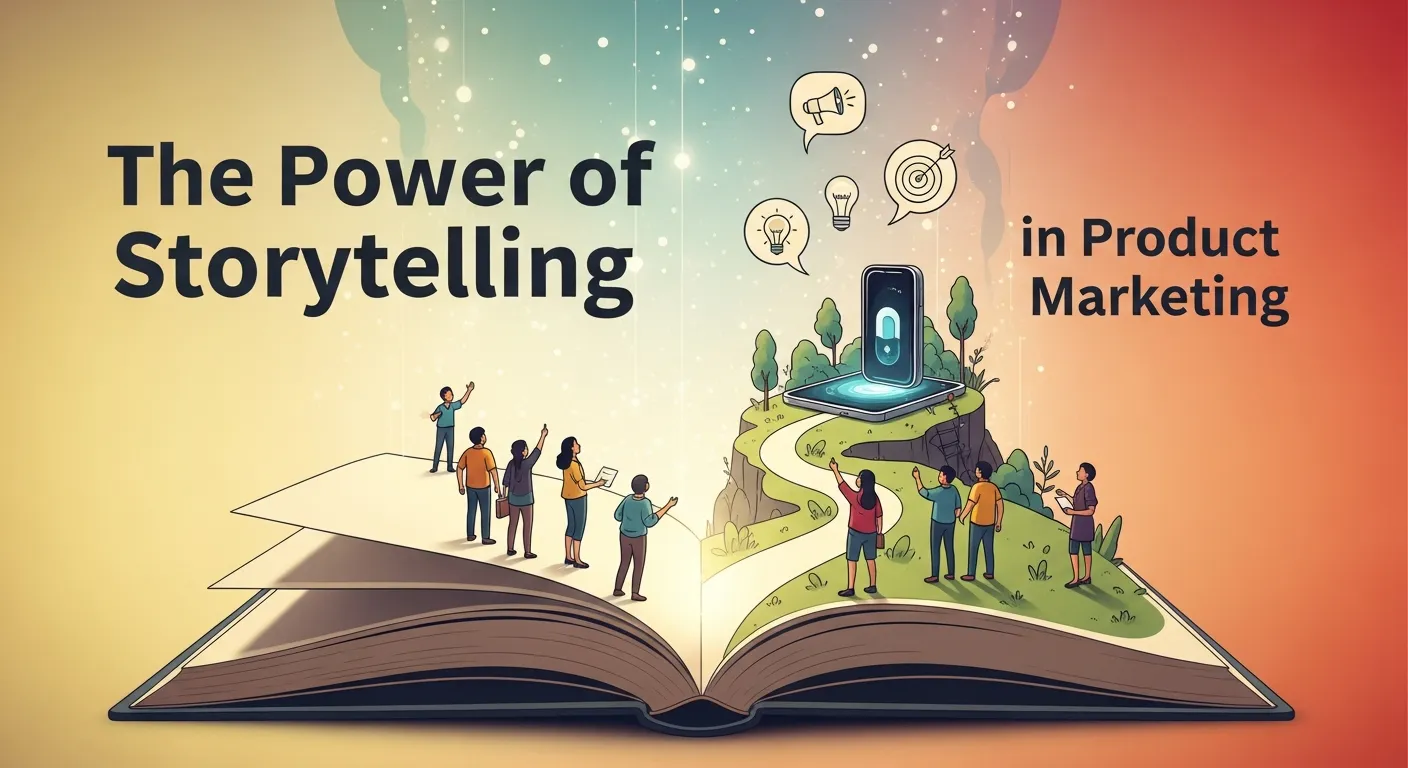
Storytelling in product marketing helps brands connect emotionally with customers, improve engagement, and increase conversions. By using narratives instead of features, businesses can build trust, enhance brand recall, and drive long-term customer loyalty.
Storytelling has become a powerful tool in modern product marketing, helping brands connect with customers beyond features and specifications. By using relatable narratives, businesses can build emotional connections, simplify complex products, and influence buying decisions. In this guide, we explore how storytelling works in product marketing, why it matters, and how brands can use it to drive engagement, conversions, and long-term customer loyalty.
What Is Storytelling in Marketing?
Storytelling in marketing is the practice of using narratives to communicate a brand’s message, values, and product benefits in a relatable and engaging way. Instead of listing features, storytelling focuses on real experiences, emotions, and journeys that help customers connect with a product on a deeper level. It turns products into meaningful solutions and brands into memorable experiences.
What Is Product Marketing Storytelling?
Product marketing storytelling is the practice of using compelling narratives to explain how a product fits into a customer’s life, solves a problem, or creates a positive transformation. Instead of focusing only on what a product does, storytelling highlights why it matters and how it makes a difference.
Key components of product marketing storytelling include:
- The Hero: Usually the customer, not the brand.
- The Problem: A challenge or pain point the customer faces.
- The Journey: The process of discovering and using the product.
- The Solution: How the product solves the problem.
- The Transformation: The positive outcome after using the product.
This structure helps audiences emotionally connect with the message and see themselves in the story.
Difference Between Storytelling and Feature-Based Marketing
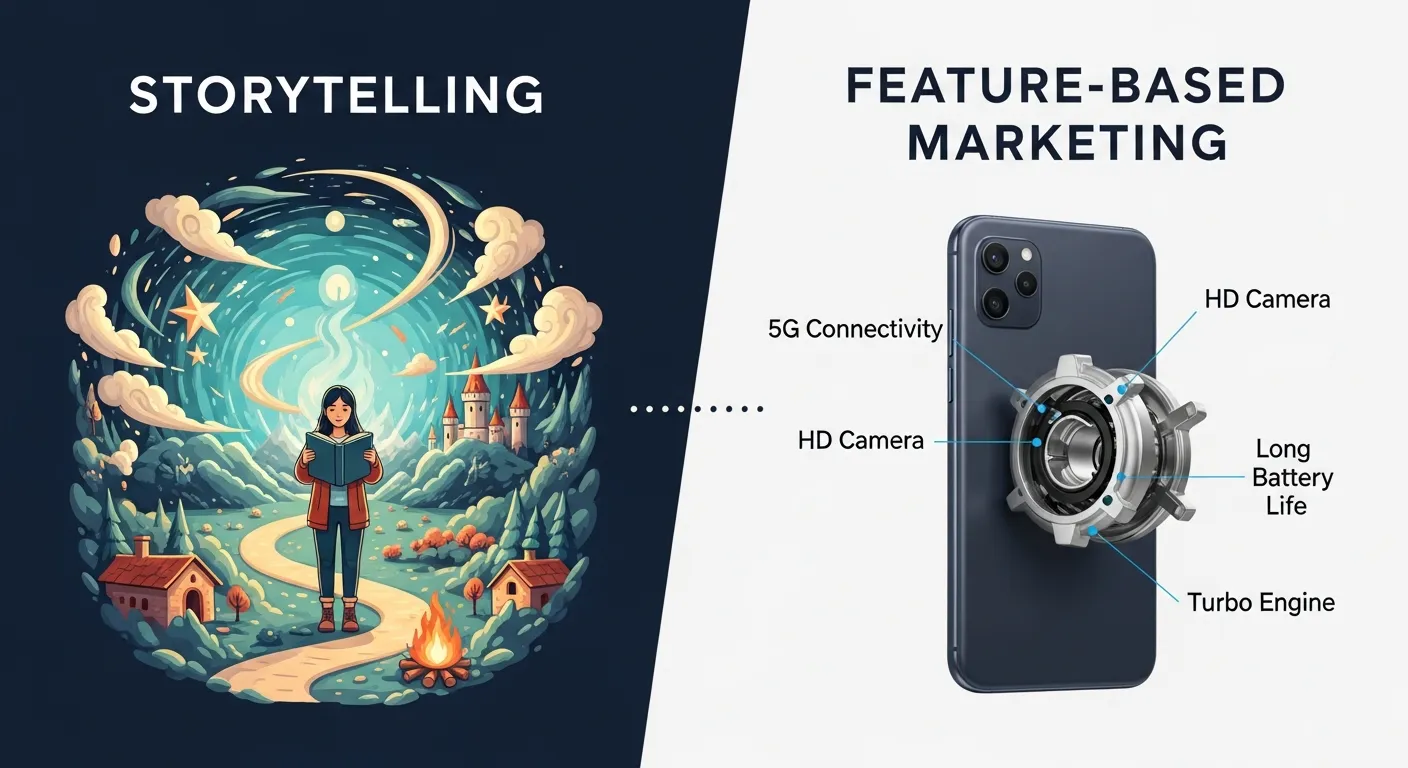
Feature-based marketing focuses on product specifications, technical details, and pricing. It answers the question, “What does this product do?”
Storytelling-based product marketing answers a deeper question: “How will this product change my life or business?”
| Feature-Based Marketing | Storytelling Product Marketing |
|---|---|
| Lists specs and features | Shows real-life use cases |
| Focuses on the product | Focuses on customer experience |
| Rational and data-driven | Emotional and narrative-driven |
| Short-term persuasion | Long-term brand loyalty |
While features are important, storytelling makes those features meaningful and memorable.
Examples of Narrative-Driven Brands
Many successful brands use storytelling to strengthen their product marketing:
- Apple: Apple doesn’t just sell devices—it tells stories about creativity, innovation, and empowering individuals.
- Nike: Nike’s campaigns focus on athletes’ journeys, struggles, and victories, positioning products as tools for success.
- Airbnb: Airbnb tells stories about belonging, travel experiences, and human connections rather than just listing accommodations.
- Slack (SaaS example): Slack highlights how teams collaborate better and work happier, using real customer stories to show transformation.
These brands prove that storytelling-driven product marketing builds
Why Stories Matter More Than Features
Human brains are wired for narrative. Neuroscience research shows that when we hear stories, our brains release oxytocin, dopamine, and other chemicals that create emotional connections and improve memory retention. This biological response explains why customers remember story-driven campaigns far longer than they remember product specifications.
Traditional product marketing focuses on what a product does. Storytelling reveals why it matters. A fitness tracker doesn’t just count steps—it helps busy parents reclaim their health and energy. A project management tool doesn’t just organize tasks—it transforms chaotic teams into well-oiled machines that deliver results.
Stories also provide context that makes complex products accessible. Instead of overwhelming customers with technical details, narratives create relatable scenarios where prospects can envision themselves using and benefiting from the product. This emotional connection often proves more persuasive than the most impressive feature set.
The Psychology Behind Story-Driven Marketing
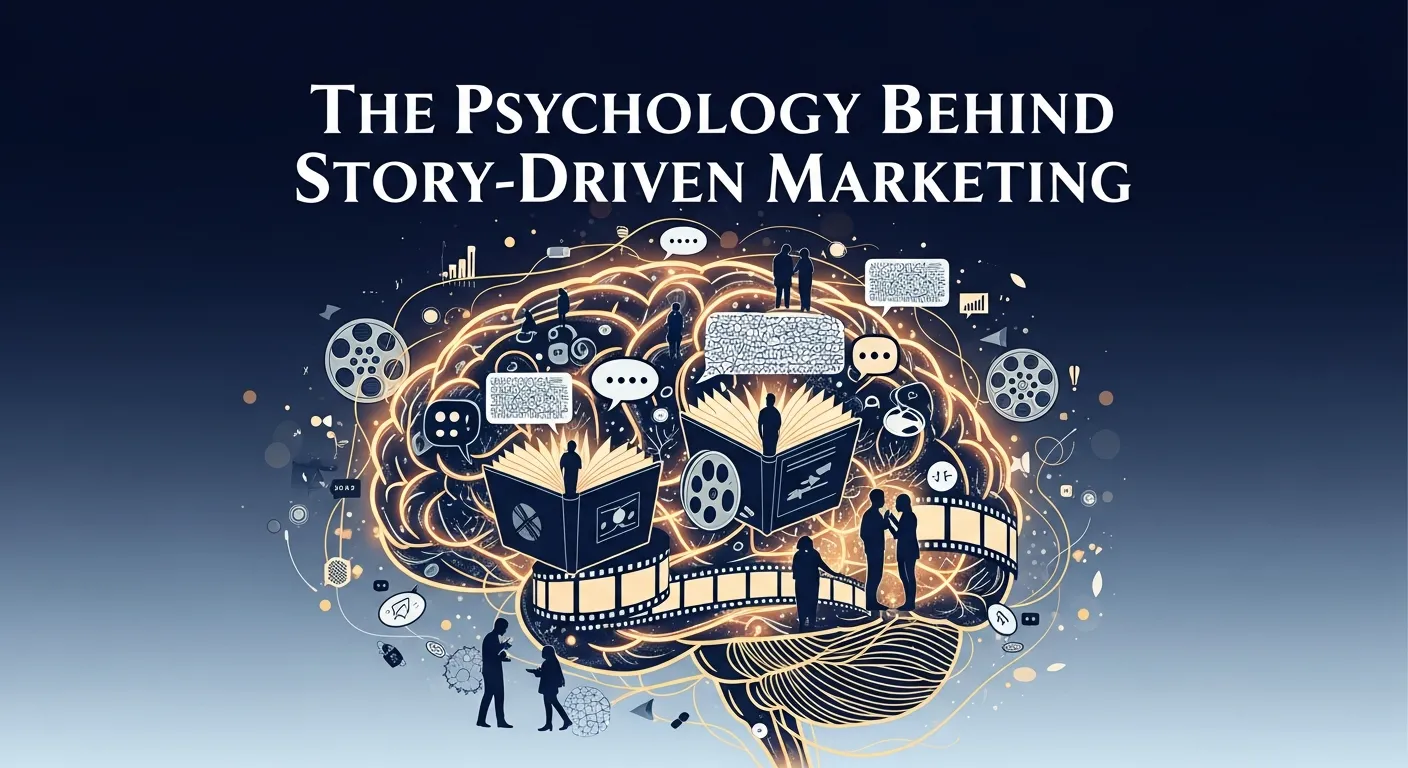
Stories engage multiple areas of the brain simultaneously. When customers hear narratives about products, their sensory cortex activates as if they’re experiencing the story firsthand. Motor areas light up during action sequences. The frontal cortex engages in interpreting meaning and emotion.
This multi-sensory brain activation creates what psychologists call “narrative transportation”—a phenomenon where people become so absorbed in stories that they temporarily lose awareness of their immediate surroundings. When customers reach this state, they become more receptive to messaging and more likely to adopt the attitudes and beliefs presented in the narrative.
This is where buyer psychology in product marketing becomes crucial. Storytelling aligns perfectly with how buyers process information emotionally and cognitively. People don’t make purely rational purchasing decisions—they are influenced by personal goals, fears, social identity, and perceived self-image. By understanding these psychological drivers, product marketers can craft stories that reflect the internal motivations behind customer behavior, not just the external features of a product.
Effective product marketing stories also leverage social proof through character identification. When prospects see themselves reflected in story protagonists who successfully use the product, they experience vicarious success that builds confidence in their own potential outcomes.
Core Elements of Compelling Product Stories
Great product marketing stories share several fundamental components that make them memorable and persuasive.
The Relatable Protagonist
Every compelling story starts with a character your audience can identify with. This protagonist should face challenges, goals, and circumstances that mirror your target customers’ experiences. The more specifically you define this character, the stronger the connection becomes.
Successful product stories often feature ordinary people in familiar situations rather than exceptional individuals with unique circumstances. A small business owner struggling with inventory management resonates more broadly than a Fortune 500 executive with unlimited resources.
Authentic Conflict and Stakes
Conflict drives engagement and creates emotional investment in story outcomes. Product marketing narratives need genuine problems that matter to your audience—not manufactured crises or trivial inconveniences.
The stakes should feel meaningful and relevant. Time pressure, financial impact, professional reputation, family well-being, or personal growth all represent stakes that motivate customer action. The higher the stakes, the more invested your audience becomes in finding solutions.
Clear Resolution Through Your Product
The story resolution demonstrates how your product enables the protagonist to overcome challenges and achieve their goals. This resolution should feel earned rather than coincidental, showing logical cause-and-effect relationships between product features and positive outcomes.
Avoid making your product the hero of the story. Instead, position it as the tool or catalyst that enables the human protagonist to become their own hero. This approach feels more authentic and empowering to prospects.
Storytelling Frameworks for Product Marketing
The Hero’s Journey Framework
Joseph Campbell’s hero’s journey provides a powerful structure for product marketing narratives. This framework follows a protagonist through departure from their ordinary world, challenges and trials, transformation, and return with new wisdom or capabilities.
In product marketing contexts, the ordinary world represents the customer’s current state with existing problems or limitations. The call to adventure occurs when they recognize the need for change. Your product becomes the mentor or magical tool that enables their transformation journey.
Technology companies often use this framework effectively. A small startup begins in the ordinary world of manual processes and scattered tools. They face the challenge of scaling operations. Your software solution becomes the mentor that guides them through digital transformation, ultimately returning them to their business world as a more efficient, competitive organization.
The Problem-Agitation-Solution Model
This classic marketing framework gains power when enhanced with storytelling elements. Rather than simply stating problems, compelling narratives make audiences feel the emotional weight of these challenges through specific, detailed scenarios.
The agitation phase deepens by exploring consequences and missed opportunities. What happens if the problem persists? How does it impact relationships, growth, or peace of mind? Stories make these consequences tangible and personal.
The solution phase then provides relief and hope through your product, but embedded within a narrative that shows realistic implementation and results rather than abstract benefits.
The Before-and-After Transformation
Transformation stories powerfully demonstrate product value by contrasting life before and after adoption. These narratives work particularly well for products that create significant lifestyle or business process changes.
Effective transformation stories include specific details about both states. Instead of vague improvements, they show concrete changes in daily routines, work processes, relationships, or outcomes. The more vivid and specific these details, the more compelling the transformation becomes.
Integrating Stories Across Product Marketing Channels
Website Copy and Landing Pages
Product pages and landing pages provide prime real estate for storytelling. Rather than leading with feature lists, begin with customer scenarios that illustrate product value. Use case studies presented as mini-narratives rather than dry testimonials.
Navigation and user experience can also support storytelling by guiding visitors through logical story progressions. Progressive disclosure techniques reveal information in a narrative sequence, building understanding and engagement as prospects move through your site.
Email Marketing Campaigns

Email sequences offer excellent opportunities for serialized storytelling. Multi-part narratives can follow customer journeys over time, showing product integration and evolving benefits through extended use.
Drip campaigns work particularly well with story arcs that mirror the customer decision-making process. Early emails might focus on problem identification and emotional stakes, while later messages demonstrate solutions and positive outcomes.
Social Media Narratives
Social platforms excel at bite-sized story moments that connect to larger narratives. Individual posts can highlight specific story beats while linking to complete narratives on owned media properties.
User-generated content provides authentic story material when customers share their own experiences. Curating and amplifying these organic narratives often proves more credible than brand-created stories.
Video Content and Demos
Video naturally supports storytelling through visual and auditory elements that create immersive experiences. Product demos gain impact when embedded within customer scenarios rather than presented as feature tours.
Documentary-style case studies allow real customers to tell their own stories while demonstrating product value. These authentic narratives often outperform polished commercial content in terms of credibility and engagement.
Measuring Story-Driven Marketing Success
Engagement Metrics
Story-driven content typically generates higher engagement rates than feature-focused materials. Monitor time on page, social shares, comment quality, and email click-through rates to gauge narrative effectiveness.
Brand story campaigns often show improved brand recall and recognition metrics. Regular brand awareness surveys can track whether storytelling efforts enhance brand memorability and emotional association.
Conversion Impact
Track conversion rates across story-driven campaigns compared to traditional product marketing approaches. Many brands discover that story-focused landing pages and email sequences generate higher conversion rates despite longer content formats.
Customer lifetime value often improves with story-driven acquisition since narratives tend to attract more engaged, committed customers who better understand product value and applications.
Qualitative Feedback
Customer interviews and feedback surveys reveal whether stories resonate with intended audiences. Ask customers what initially attracted them to your product and how they describe your brand to others. Story-driven marketing often influences these responses significantly.
Sales team feedback provides insights into whether marketing narratives align with actual customer concerns and decision-making processes. Effective stories should make sales conversations easier and more natural.
Common Storytelling Pitfalls to Avoid
Over-Polished Narratives
Audiences quickly detect and reject stories that feel manufactured or overly promotional. Authentic imperfection often proves more compelling than glossy perfection. Real customer challenges include setbacks, doubts, and gradual progress rather than instant transformation.
Avoid creating protagonists who are too perfect or scenarios that resolve too easily. Struggle and effort make eventual success more satisfying and believable.
Misaligned Audience Understanding
Stories fail when they reflect marketer assumptions rather than actual customer experiences. Regular customer research ensures narratives address real problems and aspirations rather than perceived ones.
Different customer segments may require different stories even for identical products. Decision-makers and end-users often have distinct concerns and motivations that require tailored narrative approaches.
Weak or Unclear Product Connection
Some marketing stories become so engaging that they overshadow the actual product benefits. Compelling narratives must clearly demonstrate how product features enable story resolutions.
Avoid forcing product integration into stories where it feels unnatural. Instead, select scenarios where your product naturally plays a meaningful role in customer success.
Building Your Product Marketing Story Strategy
Audience Research and Persona Development
Effective storytelling begins with deep customer understanding. Conduct interviews, surveys, and observational research to understand customer challenges, goals, emotions, and decision-making processes.
Develop detailed personas that go beyond demographics to include motivations, fears, aspirations, and communication preferences. These psychological insights inform story development and character creation.
Story Inventory and Content Planning
Audit existing customer success stories, testimonials, and case studies for narrative potential. Many organizations possess compelling story material that needs better structuring and presentation.
Create content calendars that balance different story types and themes. Plan narrative arcs across multiple touchpoints and marketing campaigns to create cohesive customer experiences.
Testing and Iteration
Experiment with different story formats, lengths, and emotional tones to identify what resonates best with your audience. A/B testing can reveal whether narrative approaches outperform traditional marketing messages.
Continuously gather customer feedback to refine story accuracy and relevance. Market conditions, customer needs, and competitive landscapes evolve, requiring story adaptation over time.
Measuring the Impact of Storytelling in Product Marketing
Storytelling in product marketing is powerful, but its effectiveness must be measured with data. Tracking the right metrics and using proper analytics tools helps marketers understand how stories influence customer behavior, conversions, and long-term loyalty.
Key Metrics: Engagement, CTR, Conversions, and Retention
1. Engagement Metrics
Engagement shows how audiences interact with your storytelling content. High engagement indicates that your narrative resonates with your target audience.
Key engagement metrics include:
- Time on page
- Scroll depth
- Social shares and comments
- Video watch time and completion rate
These metrics reveal whether your story captures attention and keeps users interested.
2. Click-Through Rate (CTR)
CTR measures how many people click on your call-to-action after engaging with your story-based content. A compelling narrative often increases curiosity and emotional connection, leading to higher CTRs on:
- Email campaigns
- Paid ads
- Landing pages
- Social media posts
A strong CTR indicates that storytelling successfully motivates users to take the next step.
3. Conversions
Conversions measure how many users complete desired actions, such as:
- Purchasing a product
- Signing up for a demo or trial
- Downloading a resource
- Subscribing to a newsletter
Story-driven product marketing often improves conversion rates by building trust and reducing hesitation. Tracking conversion rate, cost per conversion, and revenue per visitor helps quantify storytelling ROI.
4. Customer Retention and Loyalty
Retention metrics show how storytelling impacts long-term customer relationships. Emotional storytelling can increase brand affinity, leading to repeat purchases and higher lifetime value.
Important retention metrics include:
- Repeat purchase rate
- Customer lifetime value (CLV)
- Churn rate
- Net Promoter Score (NPS)
Strong retention metrics indicate that storytelling creates deeper brand connections.
Tools and Analytics Methods
Google Analytics & GA4
Use Google Analytics or GA4 to track engagement, traffic sources, conversion funnels, and user behavior across storytelling campaigns.
Marketing Automation Platforms
Tools like HubSpot, Marketo, and Mailchimp help measure email storytelling performance, including open rates, CTR, and conversion rates.
Social Media Analytics Tools
Platforms like Meta Insights, LinkedIn Analytics, and third-party tools (Hootsuite, Sprout Social) track storytelling engagement, reach, and audience sentiment.
A/B Testing Tools
Use tools like Google Optimize, VWO, or Optimizely to test storytelling vs. feature-based content. Compare CTRs, conversions, and user engagement to determine what performs better.
Customer Feedback & Surveys
Collect qualitative data through surveys, reviews, and interviews to understand how stories influence perception, trust, and purchasing decisions.
Conclusion
Product marketing through storytelling transforms how customers perceive and interact with brands. Instead of focusing only on features, storytelling highlights real-world impact, emotional value, and customer journeys. When combined with data-driven measurement and strategic execution, storytelling can increase engagement, boost conversions, and strengthen brand loyalty. Brands that master storytelling will stand out in competitive markets and create meaningful, lasting relationships with their audiences.
FAQ: Storytelling in Product Marketing
1. What is storytelling in product marketing?
Storytelling in product marketing is the use of narratives to explain how a product solves problems, creates value, and fits into a customer’s life, rather than just listing features.
2. Why is storytelling important in product marketing?
Storytelling builds emotional connections, increases brand recall, and helps customers understand the real-world value of a product, leading to higher conversions and loyalty.
3. How does storytelling influence customer buying decisions?
Stories trigger emotions, build trust, and make information memorable. Customers are more likely to buy when they feel emotionally connected to a brand or product story.
4. What are the key elements of a product marketing story?
The main elements include the hero (customer), the problem, the journey, the solution (product), and the transformation or outcome.
5. How is storytelling different from traditional product marketing?
Traditional product marketing focuses on features and specs, while storytelling focuses on customer experiences, emotions, and real-life use cases.
6. What types of stories work best in product marketing?
Customer success stories, brand origin stories, product innovation stories, and user-generated content are among the most effective storytelling formats.
7. How can brands use storytelling in product marketing campaigns?
Brands can use storytelling across websites, social media, email campaigns, ads, videos, and case studies to create consistent and engaging narratives.
8. How do you measure the impact of storytelling in product marketing?
You can measure engagement, click-through rate (CTR), conversions, retention, and brand sentiment using analytics tools and customer feedback.
9. Can storytelling work for B2B product marketing?
Yes. B2B storytelling often focuses on customer success stories, problem-solving journeys, and ROI-driven narratives that resonate with business buyers.
10. What are common mistakes in product marketing storytelling?
Common mistakes include focusing too much on the brand instead of the customer, exaggerating claims, lacking authenticity, and ignoring clear calls to action.
Learn more: Can Referral Marketing Work Without an Existing Customer Base?