Understanding Referral Marketing Services
What Are Referral Marketing Services?
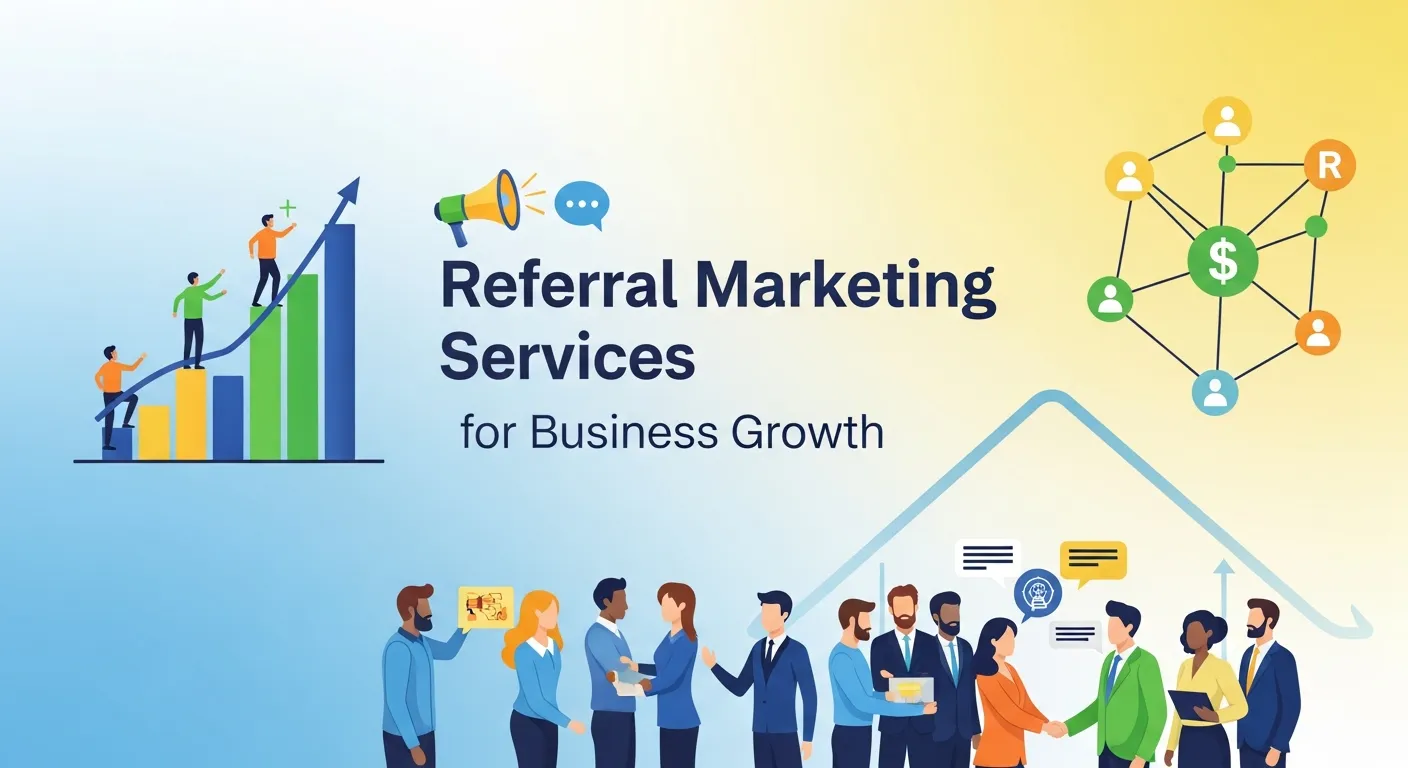
Referral marketing services are specialized solutions that help businesses leverage their existing customers to attract new ones. At their core, these services focus on creating structured programs where satisfied customers are encouraged to refer friends, family, or colleagues in exchange for incentives.
Unlike DIY referral programs, which businesses may attempt to manage manually using spreadsheets or basic email campaigns, professional referral marketing services provide a comprehensive infrastructure. They include software platforms, automated tracking, and analytics tools that simplify program management, making it easier to scale and optimize. By choosing professional services, businesses can ensure a seamless experience for both the referrer and the referred customer, boosting engagement and loyalty.
How Referral Marketing Services Work
Professional referral marketing services typically operate through dedicated platforms or software solutions. These tools automate most of the referral process, including sending invitations, tracking successful referrals, and managing rewards.
The workflow usually begins with the business designing a referral program tailored to its objectives—such as increasing customer acquisition, promoting a specific product, or rewarding loyal clients. Customers are then invited to participate, often through personalized links or codes that make tracking straightforward. The system monitors each referral’s progress, automatically notifying participants when rewards are earned and providing performance reports for the business.
Advanced platforms also offer integrations with CRM systems, email marketing tools, and social media channels, enabling businesses to manage all aspects of referral marketing in a unified way. Automation reduces errors, saves time, and ensures consistent communication, which can dramatically improve program success.
Why Businesses Need Referral Marketing Services
Investing in referral marketing services offers several key advantages over managing referral efforts manually. First, they save time and reduce operational complexity by automating tasks such as tracking referrals, sending reminders, and distributing rewards.
Second, these services provide valuable data-driven insights. Businesses can monitor which channels generate the most referrals, identify top-performing customers, and measure the ROI of their referral campaigns in real time. This actionable data allows for continuous program optimization and ensures marketing resources are used effectively.
Finally, referral marketing services often deliver a higher ROI compared to traditional marketing channels. Since referrals come from trusted sources, they tend to convert at higher rates and have longer-lasting customer relationships. By leveraging these services, businesses can achieve sustainable growth while enhancing customer satisfaction and loyalty.
Key Benefits of Using Referral Marketing Services
Increased Customer Acquisition
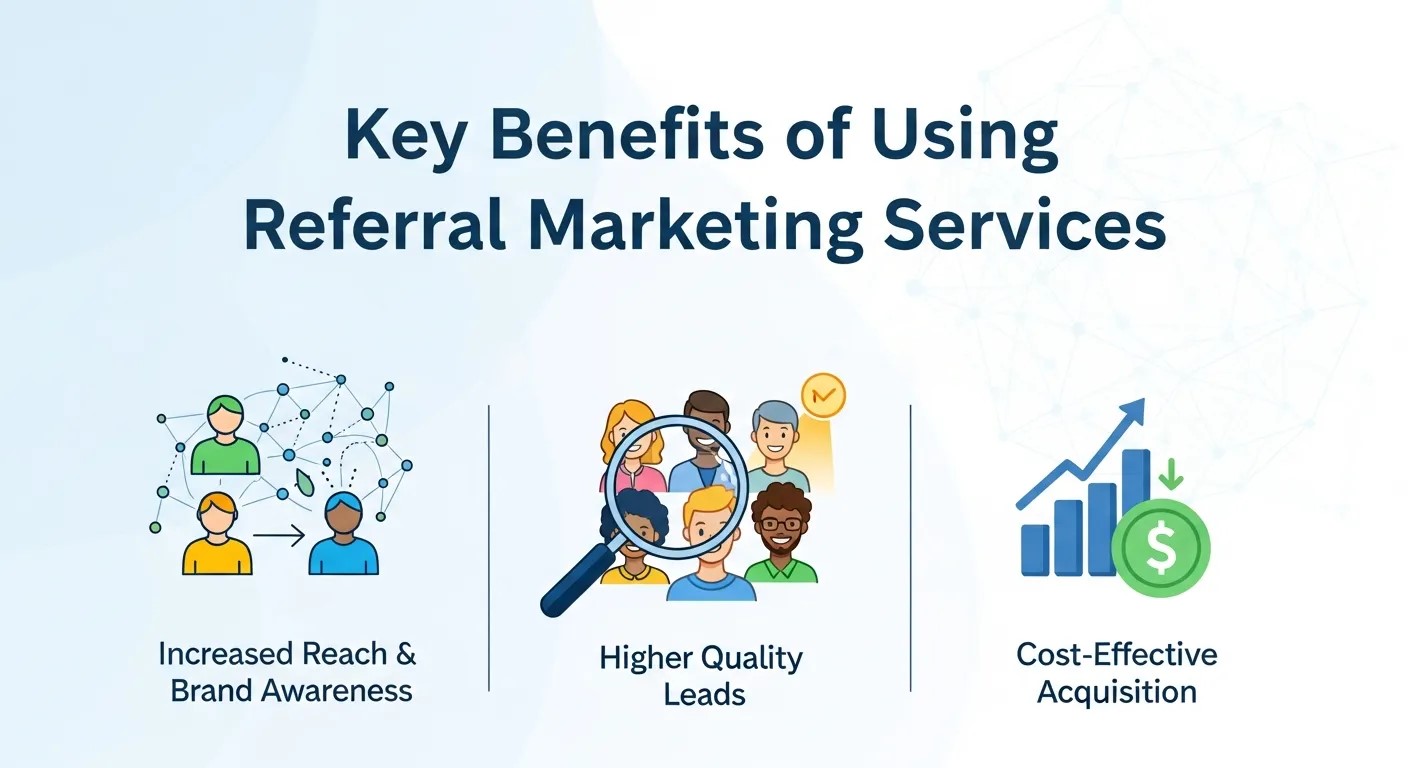
One of the most significant advantages of using referral programs is the ability to attract high-quality leads through trusted sources. When existing customers recommend a business to their friends, family, or colleagues, these referrals carry built-in credibility, making them more likely to convert.
Businesses that leverage structured referral initiatives often see measurable growth. For example, case studies across various industries show that referred customers have higher engagement rates and are more likely to make repeat purchases compared to leads from traditional marketing channels. By encouraging referrals, companies can scale their customer base efficiently while maintaining quality leads.
Enhanced Customer Loyalty
Rewarding customers for sharing a product or service goes beyond acquisition—it strengthens relationships. Customers feel valued when their advocacy is recognized, which deepens brand loyalty.
Referral programs turn satisfied users into active brand advocates. This not only amplifies word-of-mouth marketing but also fosters a community of engaged customers who are invested in the brand’s success. Over time, this loyalty can translate into recurring purchases, long-term engagement, and a network effect that drives sustainable growth.
Cost-Effective Marketing Solution
Compared to traditional marketing campaigns or paid advertising, referral-based strategies offer a much lower cost per acquisition (CPA). Since the leads come through personal recommendations, businesses often spend less to convert them than they would through online ads, SEO campaigns, or direct marketing.
This cost-efficiency allows companies—especially startups and small businesses—to maximize marketing budgets while achieving strong results. Even at scale, the ROI remains attractive because the program incentivizes customers to bring in new business, reducing dependence on expensive advertising channels.
Measurable Results and Analytics
Another major advantage is the ability to track performance and measure success. With proper tools, businesses can monitor every step of the referral process, from invitations sent to conversions completed.
Analytics help identify top referrers, high-performing channels, and the overall impact of the program on revenue. This data-driven approach enables continuous optimization, ensuring that marketing efforts are focused on the strategies that yield the best results. Businesses can adjust incentives, messaging, and campaigns based on real metrics, making the approach both strategic and scalable.
Essential Features of Effective Referral Marketing Services
Easy-to-Use Platform
A user-friendly platform is the backbone of any successful referral initiative. Both businesses and customers benefit when the interface is simple and intuitive. Customers can quickly share referral links or codes without confusion, while businesses can manage programs, track progress, and monitor engagement effortlessly.
Seamless referral sharing encourages higher participation rates, as customers are more likely to engage when the process is straightforward and hassle-free. Platforms that prioritize usability reduce friction, making the referral experience enjoyable and efficient.
Automated Tracking and Rewards
Automation is key to eliminating manual errors and ensuring timely recognition of customer efforts. Effective systems automatically track referrals, monitor conversions, and notify participants when they earn rewards.
Instant reward notifications not only enhance customer satisfaction but also encourage continued participation. By automating these processes, businesses save time and reduce administrative overhead, allowing marketing teams to focus on strategy rather than operational tasks.
Multi-Channel Integration
To maximize reach, modern referral solutions integrate seamlessly across multiple channels. Email campaigns, social media platforms, SMS, and even messaging apps like WhatsApp enable customers to share referrals wherever they interact with the brand.
This multi-channel approach ensures that businesses capture attention across different touchpoints, increasing the likelihood of referrals converting into new customers. The more channels a program supports, the broader its potential audience.
Personalization Options
Customization is essential for making referral campaigns relevant and engaging. Personalized messages and targeted campaigns allow businesses to connect with high-value customers in a way that resonates personally.
Tailored referral invitations, unique reward structures, or customer-specific incentives increase the chances of participation and sharing. Personalization not only drives engagement but also strengthens relationships with loyal customers.
Advanced Analytics and Reporting
Measuring performance is critical to refining referral programs. Advanced analytics provide detailed insights into referrals, conversions, and ROI, allowing businesses to identify trends and optimize strategies.
Monitoring top referrers, high-performing channels, and overall program effectiveness enables continuous improvement. With comprehensive reporting, marketing teams can make data-driven decisions, adjusting incentives, messages, and campaigns to maximize results and business growth.
Strategies to Maximize Referral Marketing Services
Offer Attractive Incentives
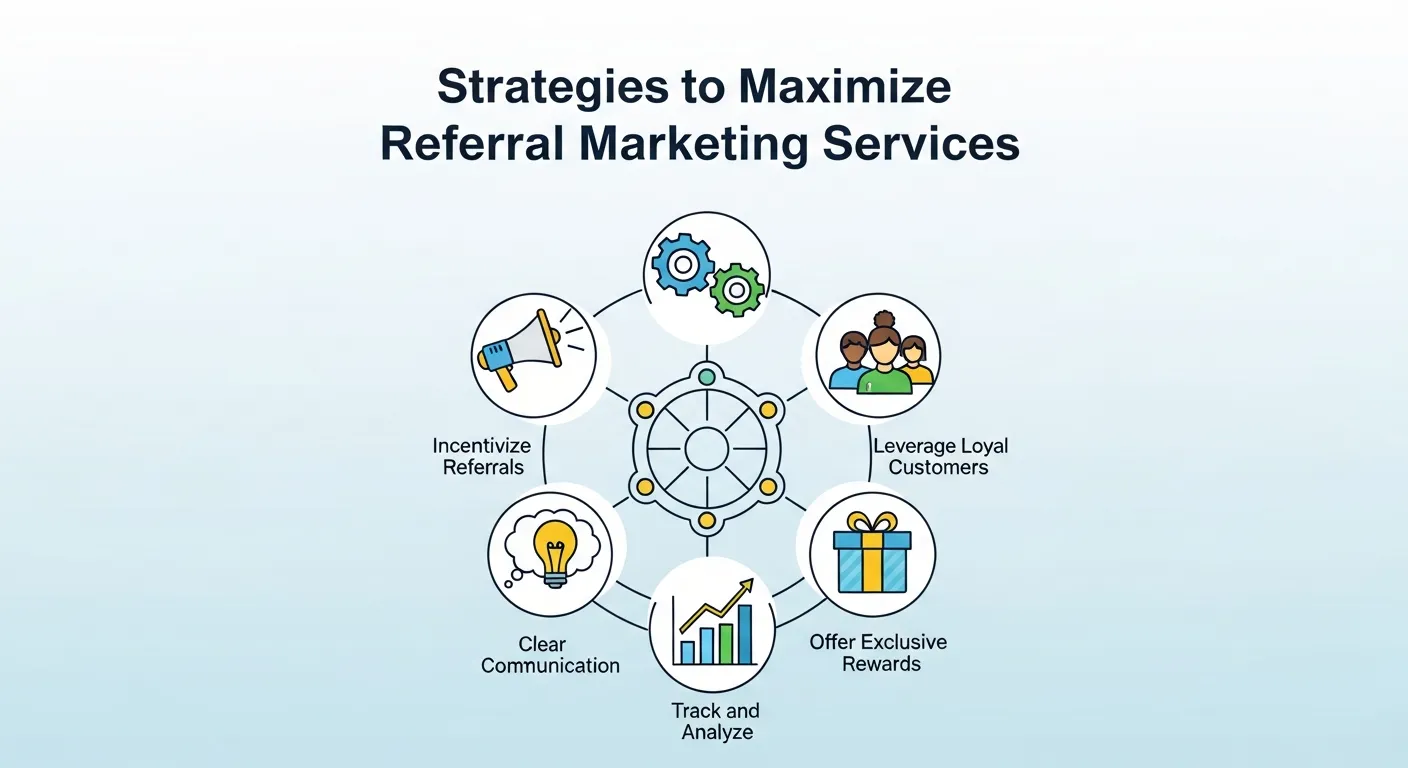
One of the most effective ways to encourage participation is by offering rewards that customers truly value. This can include discounts, cashback, free products or services, or exclusive access to premium features.
Two-sided incentives—where both the referrer and the referred customer benefit—tend to perform particularly well. This approach not only motivates existing customers to share but also gives new customers a reason to engage, creating a win-win scenario that drives higher conversions.
Simplify the Referral Process
Ease of use is critical to the success of any referral initiative. Customers are far more likely to share referrals when the process is quick and straightforward.
Features like one-click sharing, QR codes, social media buttons, and unique referral links make participation seamless. By reducing friction, businesses can significantly increase the number of successful referrals, ensuring the program reaches its full potential.
Encourage Social Proof
Social proof can greatly amplify referral efforts. Showcasing testimonials, customer success stories, and positive reviews builds trust and encourages others to participate.
Highlighting top referrers and publicly rewarding their achievements not only recognizes loyal advocates but also motivates others to engage. When potential customers see real people benefiting from your offerings, they’re more likely to take action.
Integrate With Loyalty Programs
Combining referral initiatives with existing loyalty programs can boost engagement and foster repeat business. Customers can earn points, rewards, or tiered benefits for each successful referral, creating a stronger connection between advocacy and loyalty.
This integration encourages ongoing participation, as customers see tangible long-term benefits beyond a single reward, making them more likely to continue referring friends and family.
Leverage Automation Tools
Automation is essential for scaling referral programs efficiently. Automated email reminders, push notifications, and alerts ensure that customers stay engaged and informed about opportunities to refer.
Auto-tracking of referrals and rewards reduces administrative work and eliminates errors, allowing marketing teams to focus on strategy while the system manages day-to-day operations. Consistent, automated communication keeps participants motivated and the program running smoothly.
Promote Referral Programs
Even the best referral programs need visibility. Promotion through email marketing, social media posts, website banners, and in-app notifications ensures that customers know about the program and understand how to participate.
Common Mistakes to Avoid in Referral Marketing Services
Complicated Referral Processes
A referral program’s success relies heavily on simplicity. Overly complex steps or unclear instructions can frustrate customers and drastically reduce participation. Common UX mistakes include requiring too many form fields, confusing navigation, or multiple steps to claim rewards.
To avoid this, streamline the referral process as much as possible: one-click sharing, pre-filled forms, and clear instructions help maximize engagement. A simple, intuitive experience encourages more customers to participate and share consistently.
Weak Incentives
Rewards that fail to motivate customers can undermine even the most well-designed programs. If the incentive is too small, irrelevant, or delayed, users may lose interest in participating.
It’s important to test different incentive types—such as discounts, cashback, free products, or exclusive access—to determine which works best for your audience. Strong, meaningful rewards create excitement and drive higher referral rates.
Poor Promotion of the Program
Even the best referral program will fail if customers aren’t aware of it. Poor promotion is a common mistake that limits reach and engagement.
Businesses should use multiple channels—email campaigns, social media, website banners, and in-app notifications—to ensure visibility. Promoting the program at the right time, such as immediately after a purchase, can dramatically increase participation and overall success.
Ignoring Data and Feedback
A major mistake is failing to track performance and collect user feedback. Without monitoring metrics or understanding customer experiences, businesses can’t optimize their referral programs effectively.
Analyzing conversion rates, referral sources, and top referrers provides actionable insights. Additionally, soliciting customer feedback helps identify friction points and areas for improvement, ensuring the program evolves to meet user expectations.
Measuring Success of Referral Marketing Services
Key Metrics to Track
To evaluate effectiveness, it’s essential to monitor key metrics such as referral rate, conversion rate, customer lifetime value, and cost per referral. These indicators provide a clear picture of program performance and help quantify ROI.
Tracking these metrics allows businesses to understand how well the referral program contributes to growth compared to other marketing channels.
Using Analytics to Improve Performance
Analytics play a crucial role in optimizing referral programs. By identifying top referrers, popular campaigns, and high-performing channels, businesses can focus efforts where they have the most impact.
Insights from data enable smarter decisions regarding incentive design, messaging, and timing. Continuous analysis ensures that campaigns evolve to maintain high engagement and conversion rates.
A/B Testing Your Referral Campaigns
A/B testing is key to incremental improvements. By testing different offers, landing pages, referral messaging, and reward structures, businesses can determine what resonates most with their audience.
Even small optimizations can significantly improve referral participation and conversion rates over time, leading to more effective and profitable programs.
Case Studies of Successful Referral Marketing Services
Dropbox – Free Storage Incentives
Dropbox famously scaled its user base through a referral program offering additional free storage to both referrers and referees. The double-sided incentive encouraged users to actively share with friends, resulting in exponential growth.
Uber – Global Growth via Referrals
Uber leveraged referral programs to acquire riders and drivers worldwide. By offering free rides or ride credits to both parties, Uber turned existing users into brand advocates, fueling rapid international expansion.
Small Business Success Stories
Many local businesses and online startups have successfully used referral programs to grow their customer base. For instance, a boutique store offering discounts for friend referrals or a SaaS startup providing extended trial periods to new users demonstrates that referral initiatives work effectively at any scale.
Future of Referral Marketing Services
AI and Predictive Analytics
Artificial intelligence is transforming referral programs by enabling personalized offers and predicting which customers are most likely to refer others. Businesses can now target high-value advocates with tailored incentives, increasing both participation and conversion rates.
Social Media and Social Commerce Integration
Platforms like TikTok, Instagram, and WhatsApp have made sharing referrals easier and more viral. Influencer-driven campaigns and social commerce integration allow businesses to reach large audiences quickly, amplifying program impact.
Emerging Technologies
The future also includes blockchain-based rewards, ensuring transparency and security in reward distribution, and gamified referral programs that use points, leaderboards, and challenges to engage users. Loyalty apps combined with referral mechanics can turn participation into a fun and interactive experience, boosting engagement and retention.
Conclusion
Referral marketing services empower businesses to grow by turning satisfied customers into advocates. By offering attractive incentives, simplifying referral processes, and leveraging technology, businesses can drive high-quality leads, enhance loyalty, and reduce marketing costs. Avoid common pitfalls, track performance metrics, and optimize campaigns for maximum impact. From startups to established enterprises, professional referral marketing services provide the tools and insights necessary for sustainable growth. Implementing these strategies can help your business unlock the true power of referrals, create long-term customer relationships, and achieve measurable success in today’s competitive market.
FAQ: Referral Marketing Services
1. What are referral marketing services?
Referral marketing services are professional solutions or platforms that help businesses create, manage, and track referral programs. They allow companies to reward customers for recommending their products or services, turning satisfied clients into brand advocates.
2. How do referral marketing services work?
These services typically provide tools to generate unique referral links, track who referred whom, and automate reward distribution. Businesses can integrate these services with websites, apps, and email campaigns to maximize participation.
3. What types of businesses can benefit from referral marketing services?
Referral marketing works for almost any business, including e-commerce stores, service providers, SaaS companies, startups, and even local businesses. Any business that relies on trust and word-of-mouth can benefit.
4. What incentives should I offer in a referral program?
Common incentives include discounts, free products, cashback, points in loyalty programs, or exclusive offers. Two-sided rewards—benefiting both the referrer and the referee—are often the most effective.
5. How can I promote my referral program effectively?
Promotion can be done through email newsletters, social media posts, website banners, and in-app notifications. Highlighting rewards and making sharing easy increases program participation.
6. How do I measure the success of a referral marketing program?
Key metrics include the referral rate, conversion rate of referred leads, customer acquisition cost (CAC), and customer lifetime value (CLV). Tracking these helps optimize the program for maximum ROI.
7. Can referral marketing services integrate with my existing software?
Yes, most professional referral services integrate with CRM systems, email marketing platforms, e-commerce stores, and social media, allowing automated tracking and seamless reward distribution.
8. What common mistakes should I avoid in referral marketing?
Avoid complicated referral processes, weak incentives, poor promotion, and ignoring performance analytics. Simplicity, attractive rewards, and consistent tracking are key for success.
9. How much do referral marketing services cost?
Costs vary based on the platform and features. Some offer subscription-based pricing, while others charge per referral or a percentage of revenue generated. Free tools are available but often lack advanced tracking and automation.
10. What is the future of referral marketing services?
Referral marketing is evolving with AI-driven personalization, predictive analytics, social commerce integration, gamification, and blockchain-based rewards, making it easier for businesses to increase engagement and scale growth efficiently.