
Boost your business growth with Referral Marketing. Learn proven strategies to simplify referrals, offer meaningful incentives, and track results—turning loyal customers into advocates and driving higher leads, retention, and sustainable revenue growth.
Think about the last time you tried a new restaurant, switched software platforms, or bought a product online. Chances are, someone you trust recommended it. That’s the power of word-of-mouth—and it’s exactly what makes referral marketing one of the most effective growth strategies available.
Growth with Referral Marketing can transform your business by leveraging your loyal customers to bring in new leads. Unlike traditional advertising that interrupts and persuades, referral marketing taps into existing relationships and trust. When a satisfied customer recommends your product or service, their endorsement carries more weight than any paid ad ever could.
The benefits are compelling. Referral marketing delivers higher conversion rates, costs significantly less than traditional marketing channels, and builds a foundation of trust with new customers from day one. Referred customers also tend to stick around longer and spend more over their lifetime.
This guide will walk you through everything you need to know about referral marketing—from understanding how it works to implementing proven strategies that drive real results. Ready to turn your customers into your most powerful marketing asset?
What is Referral Marketing?
Definition and Concept
Referral marketing is a strategy that encourages and rewards existing customers for recommending your business to their friends, family, and colleagues. It’s essentially structured word-of-mouth marketing with a clear incentive system in place.
Unlike traditional marketing that relies on casting a wide net through ads, cold calls, or email blasts, referral marketing is targeted and relationship-based. Your current customers become brand advocates who vouch for your product or service to people they know. This personal endorsement makes all the difference—people are four times more likely to buy when referred by a friend.
How Referral Marketing Works
The referral marketing process follows a straightforward path:
Step 1: A satisfied customer discovers your referral program. They learn about the rewards available for sharing your business with others.
Step 2: The customer shares a unique referral link or code with friends via email, social media, or word-of-mouth.
Step 3: Their friend (the referee) clicks the link and makes a purchase or signs up for your service.
Step 4: Both the referrer and referee receive their rewards. This could be a discount, cash bonus, free product, or loyalty points.
Let’s look at a real example. Dropbox famously used referral marketing to grow from 100,000 to 4 million users in just 15 months. They offered both the referrer and the new user extra storage space—a reward that cost Dropbox almost nothing but provided genuine value to users. The process was seamless, the incentive was clear, and the results were extraordinary.
Why Growth with Referral Marketing is Essential for Businesses
Higher Conversion Rates
Referrals convert at rates three to five times higher than other marketing channels. Why? Because trust has already been established. When your friend tells you about an amazing coffee shop or a productivity app that changed their workflow, you’re far more likely to check it out than if you saw a random ad.
According to Nielsen, 92% of consumers trust recommendations from people they know over any other form of advertising. This trust translates directly into sales. Referred customers don’t need as much convincing—they arrive pre-sold on your value proposition.
Cost-Effective Marketing Strategy
Traditional advertising can drain your budget quickly. Pay-per-click campaigns, social media ads, and influencer partnerships all require significant upfront investment with no guarantee of return.
Referral marketing flips the traditional ad model. You only pay when you get results—when a new customer actually makes a purchase or signs up. The cost per acquisition through referrals is typically 54% lower than through other channels. Enhance your ROI with marketing analytics tools that reveal how to boost your campaigns.
Consider this: if you spend $1,000 on Facebook ads, you might get 50 clicks and 2-3 conversions. That same $1,000 invested in referral rewards could generate 20-30 new customers who arrive with built-in trust and higher lifetime value.
Boosts Customer Loyalty and Retention
Referral programs don’t just bring in new customers—they strengthen your relationship with existing ones. Check out our guide on referral programs boosting retention. When you reward customers for spreading the word about your business, you’re acknowledging their loyalty and giving them another reason to stay engaged with your brand.
Customers who participate in referral programs tend to be more invested in your success. They’ve put their reputation on the line by recommending you, so they want you to deliver a great experience. This creates a positive feedback loop where your best customers become even more loyal while helping you acquire similar high-value customers.
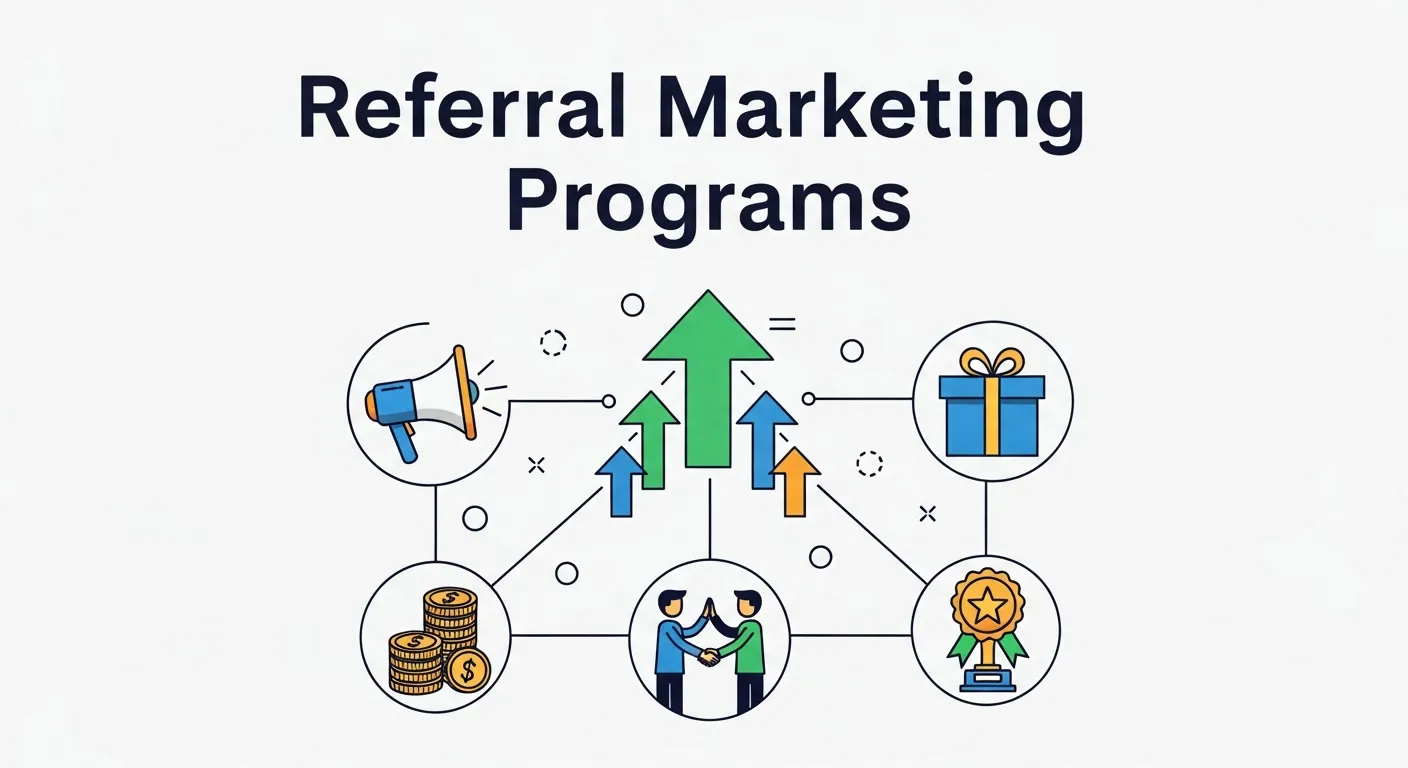
Types of Referral Marketing Programs
Customer-to-Customer Referrals
This is the most common type of referral program. Your customers refer friends, family members, or colleagues in exchange for rewards. Both parties typically benefit—the referrer gets a discount or bonus, and the new customer receives a welcome incentive.
Popular reward structures include:
- Percentage discounts on future purchases
- Free products or service upgrades
- Loyalty points that accumulate toward bigger rewards
- Cash bonuses or account credits
- Exclusive access to new features or products
The key is making the reward valuable enough to motivate action but sustainable for your business model.
Employee Referral Programs
For B2B companies, employees can refer potential clients or candidates. See how B2B referral marketing works. Your employees understand your products or services deeply and likely have professional networks filled with potential customers or clients.
Employee referral programs work particularly well for recruiting (referring qualified job candidates) and for generating B2B leads. Incentivize your team to make introductions, and you’ll tap into networks you couldn’t reach through traditional outreach.
Affiliate Referral Programs
Affiliate programs take referral marketing to a professional level. Instead of relying solely on customers, you partner with content creators, bloggers, or influencers to scale your referral efforts beyond your existing customer base. Platforms like affiliate marketing guides help streamline these partnerships.
This approach works well when you want to scale referrals beyond your existing customer base. Affiliates are motivated by ongoing earnings potential and will actively promote your business to maximize their commission. Just make sure to provide them with quality marketing materials and track their performance accurately.
Proven Strategies to Maximize Growth with Referral Marketing
Offer Irresistible Incentives
Your referral rewards need to be compelling enough to overcome inertia. People are busy—they won’t take action unless there’s clear value in it for them.
The most successful programs use double-sided rewards, where both the referrer and the new customer benefit. This creates a win-win situation and makes it easier for your advocates to pitch your business. Nobody wants to feel like they’re only helping themselves.
Examples of strong incentives include:
- Cash bonuses: Direct payments or account credits (Uber’s “Give $20, Get $20” campaign)
- Discounts: Percentage off next purchase for both parties
- Free products: Give away your product or a premium upgrade
- Exclusive access: Early access to new features, VIP status, or members-only perks
- Tiered rewards: Increasing benefits for multiple successful referrals
Test different reward structures to see what resonates with your audience. Sometimes a smaller but more immediate reward works better than a larger, delayed incentive.
Simplify the Referral Process
Friction kills referrals. If your program is complicated or time-consuming, even motivated customers will abandon the process.
Make sharing effortless by providing:
- One-click sharing buttons for email, WhatsApp, Facebook, Twitter, and LinkedIn
- Pre-written message templates that advocates can personalize
- Unique referral links that automatically track attribution
- QR codes for in-person sharing at events or retail locations
- Mobile-optimized experiences since most sharing happens on smartphones
The best referral programs can be completed in under 30 seconds. The faster and easier you make it, the more referrals you’ll generate.
Personalize and Segment Your Referral Campaigns
Not all customers are the same, so why treat them identically? Segment your referral campaigns based on customer behavior, purchase history, or engagement level.
Your most loyal customers might respond to exclusive VIP rewards, while new customers might need a lower-barrier entry incentive. High-value B2B clients could appreciate professional networking opportunities, while e-commerce shoppers might prefer immediate discounts.
Use your customer data to tailor messaging and rewards. Send personalized referral invitations that acknowledge specific purchases or milestones. This attention to detail makes customers feel valued and increases participation rates.
Leverage Social Proof and Testimonials
People are more likely to refer others when they see that referrals are working and that real people are benefiting. Showcase success stories, testimonials, and user-generated content that demonstrates the value of your referral program.
Display metrics like “Join 10,000+ customers who’ve earned rewards through referrals” or feature customer stories about how referral bonuses helped them. This social proof validates the program and encourages participation.
Encourage your happiest customers to leave reviews and share their experiences publicly. These testimonials become powerful referral tools that potential customers encounter during their research phase.
Track, Measure, and Optimize Performance
You can’t improve what you don’t measure. Set up comprehensive tracking for your referral program to understand what’s working and what needs adjustment.
Key metrics to monitor include:
- Number of referrals generated per month
- Conversion rate of referred leads
- Customer lifetime value (LTV) of referred vs. non-referred customers
- Program participation rate among your customer base
- Cost per acquisition through referrals
- Time to conversion for referred customers
- Reward redemption rates
Use referral marketing platforms that integrate with your CRM to automatically track these metrics. Run A/B tests on reward structures, messaging, and sharing mechanisms. Small optimizations can lead to significant improvements in program performance. Monitor referral metrics such as conversion rate, lifetime value, and reward redemption. Tools like advanced analytics for marketing performance can help optimize campaigns.
Common Mistakes to Avoid in Referral Marketing
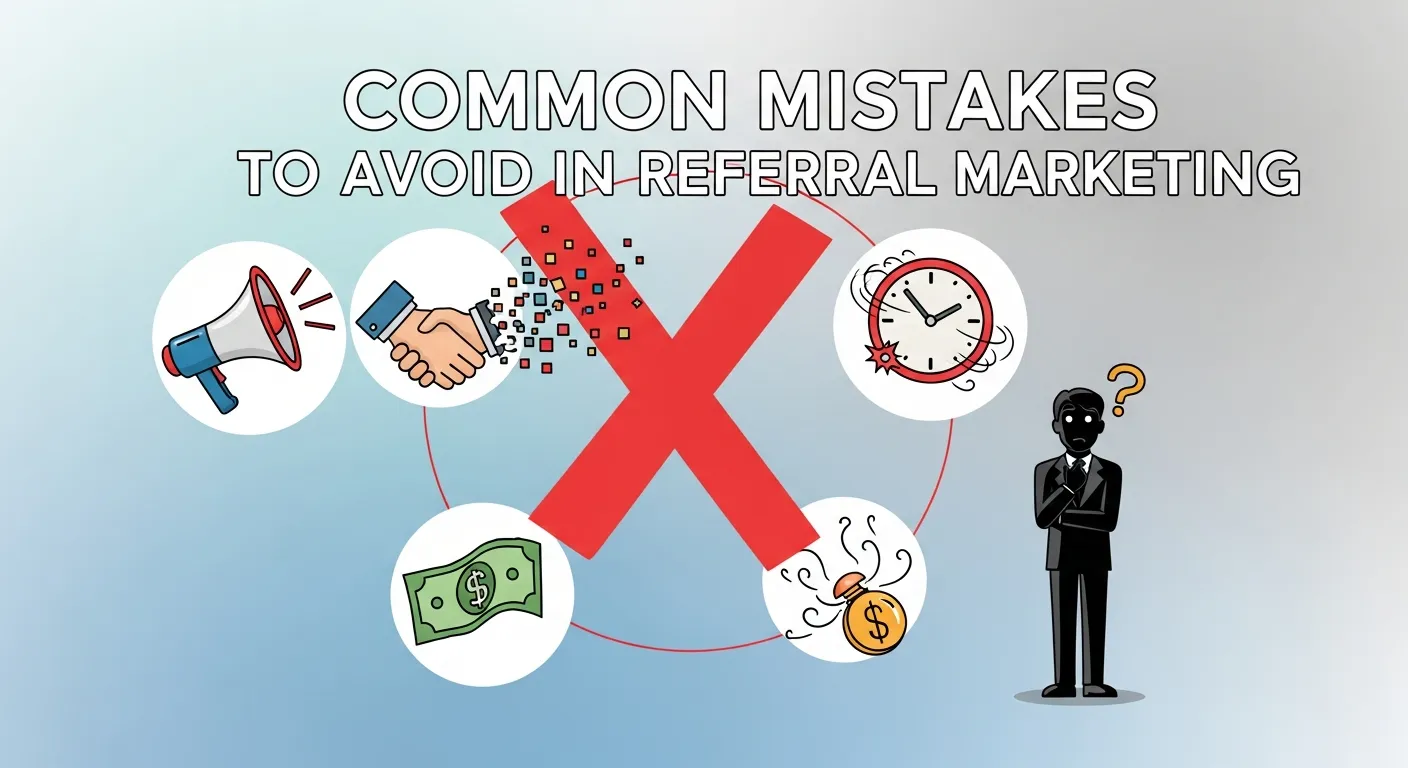
Even well-intentioned referral programs can fail if you make these common mistakes:
Overcomplicating the referral process. Multiple steps, confusing instructions, or technical barriers will stop referrals before they start. Keep it simple and intuitive.
Offering low-value incentives. A 5% discount on a future purchase probably won’t motivate action. Make sure your rewards are substantial enough to inspire effort.
Ignoring tracking and analytics. Without data, you’re flying blind. You won’t know which channels work best, which customers refer most, or what ROI you’re actually getting. Invest in proper tracking infrastructure.
Not promoting the program consistently. One email announcement isn’t enough. Integrate referral program promotion into your customer journey—in welcome sequences, post-purchase emails, account dashboards, and customer service interactions.
Forgetting to thank and recognize your advocates. Show appreciation for customers who refer others. A simple thank-you message or public recognition goes a long way toward building goodwill and encouraging continued participation.
Tools and Platforms to Boost Growth with Referral Marketing
Popular Referral Marketing Tools
The right software can make or break your referral program. These platforms automate tracking, simplify sharing, and provide analytics to measure success:
ReferralCandy: Designed for e-commerce businesses, with easy Shopify integration and automated reward fulfillment.
Friendbuy: Offers advanced segmentation and personalization features, ideal for brands wanting sophisticated targeting.
Yotpo: Combines referral marketing with reviews and loyalty programs for a comprehensive customer engagement platform.
Rewardful: Perfect for SaaS companies using Stripe, with simple affiliate and referral tracking.
GrowSurf: Developer-friendly platform with flexible API and customization options for tech companies.
Choosing the Right Platform for Your Business
Consider these factors when selecting a referral marketing tool:
Ease of integration: Does it work seamlessly with your existing e-commerce platform, CRM, or payment processor?
Reward flexibility: Can you offer various reward types and structures? Can you change them easily?
Analytics capabilities: What metrics does it track? Can you export data for deeper analysis?
User experience: Is the interface intuitive for both you and your customers?
Pricing structure: Does the cost align with your budget and expected ROI?
Support and resources: What kind of customer support and educational materials are available?
Start with a free trial when possible to test the platform with real customers before committing.
Case Studies: Brands Achieving Growth with Referral Marketing
Dropbox: The Storage Space Strategy
Dropbox’s referral program is legendary in the startup world. They offered 500MB of free storage to both the referrer and the new user (up to 16GB total). This simple incentive drove a 60% increase in sign-ups and helped Dropbox grow from 100,000 to 4 million users in 15 months. The program was so successful that 35% of all daily sign-ups came from referrals.
Airbnb: Travel Credits for Both Parties
Airbnb’s referral program offers travel credits to both the person making the referral and the new user who books their first stay. This double-sided incentive perfectly aligns with their business model—both parties are encouraged to use the platform more frequently. The program helped Airbnb expand internationally by turning travelers into advocates who shared the platform with friends in different cities.
Uber: Ride Credit Rewards
Uber’s “Give $20, Get $20” campaign became a model for ride-sharing growth. When existing users referred friends, both received ride credits. This strategy was particularly effective because the reward was immediate and directly related to the service. The simplicity of the program and the clear value proposition helped Uber achieve rapid market penetration in new cities.
Conclusion
Implementing these strategies for Growth with Referral Marketing can dramatically boost leads, retention, and revenue. Focusing on a clear, simple, and easy-to-use referral program ensures that customers are motivated to share your brand. Offering meaningful incentives, personalizing campaigns, and tracking results consistently will maximize engagement and ROI. Avoid common pitfalls like complicated processes or low-value rewards. By combining strategy, simplicity, and effective incentives, businesses can turn loyal customers into powerful advocates. In today’s competitive market, a well-executed referral marketing program is not just optional—it’s a proven driver of sustainable growth and long-term success.
FAQ: Growth with Referral Marketing
1. What is Growth with Referral Marketing?
Answer: Growth with Referral Marketing is a strategy where businesses leverage satisfied customers to bring in new leads. By encouraging referrals, companies increase conversion rates, retention, and brand credibility efficiently.
2. Why is referral marketing effective for business growth?
Answer: Referral marketing works because people trust recommendations from friends or family more than advertisements. Leads generated through referrals convert faster and often stay loyal longer, driving sustainable growth and revenue.
3. What types of referral programs exist?
Answer: Businesses can implement customer-to-customer programs, employee referral programs, and affiliate referral programs. Each type targets different audiences but shares the same goal: expanding reach and boosting growth.
4. How do I design an effective referral program?
Answer: Focus on simplicity, clear incentives, and ease of sharing. Personalized rewards and accessible referral channels increase participation, ensuring more customers engage and contribute to your growth.
5. What incentives work best for referral marketing?
Answer: Double-sided rewards, exclusive discounts, cash bonuses, or loyalty points are highly effective. Incentives should be valuable enough to motivate both the referrer and the referred customer.
6. How can I track the success of my referral campaigns?
Answer: Use referral marketing tools, CRM systems, or analytics platforms to monitor referrals, conversion rates, and ROI. Tracking helps optimize campaigns and ensures the strategy drives measurable growth.
7. Can small businesses benefit from referral marketing?
Answer: Absolutely! Even with limited budgets, small businesses can leverage loyal customers to generate leads, improve retention, and create word-of-mouth momentum for sustainable growth.
8. What are common mistakes to avoid in referral marketing?
Answer: Avoid overcomplicated processes, low-value incentives, neglecting promotion, and ignoring analytics. Simple, well-tracked campaigns with meaningful rewards are far more effective for growth.
9. Which tools can help optimize referral marketing programs?
Answer: Platforms like ReferralCandy, Friendbuy, Yotpo, and SaaSquatch simplify referral tracking, manage rewards, and provide analytics to boost campaign performance and maximize growth with referral marketing.
10. How can social proof improve referral marketing results?
Answer: Sharing testimonials, reviews, and success stories encourages trust. Social proof motivates new customers to join, increasing referral participation and accelerating business growth.