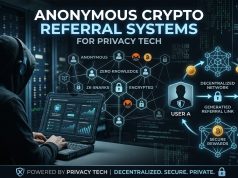
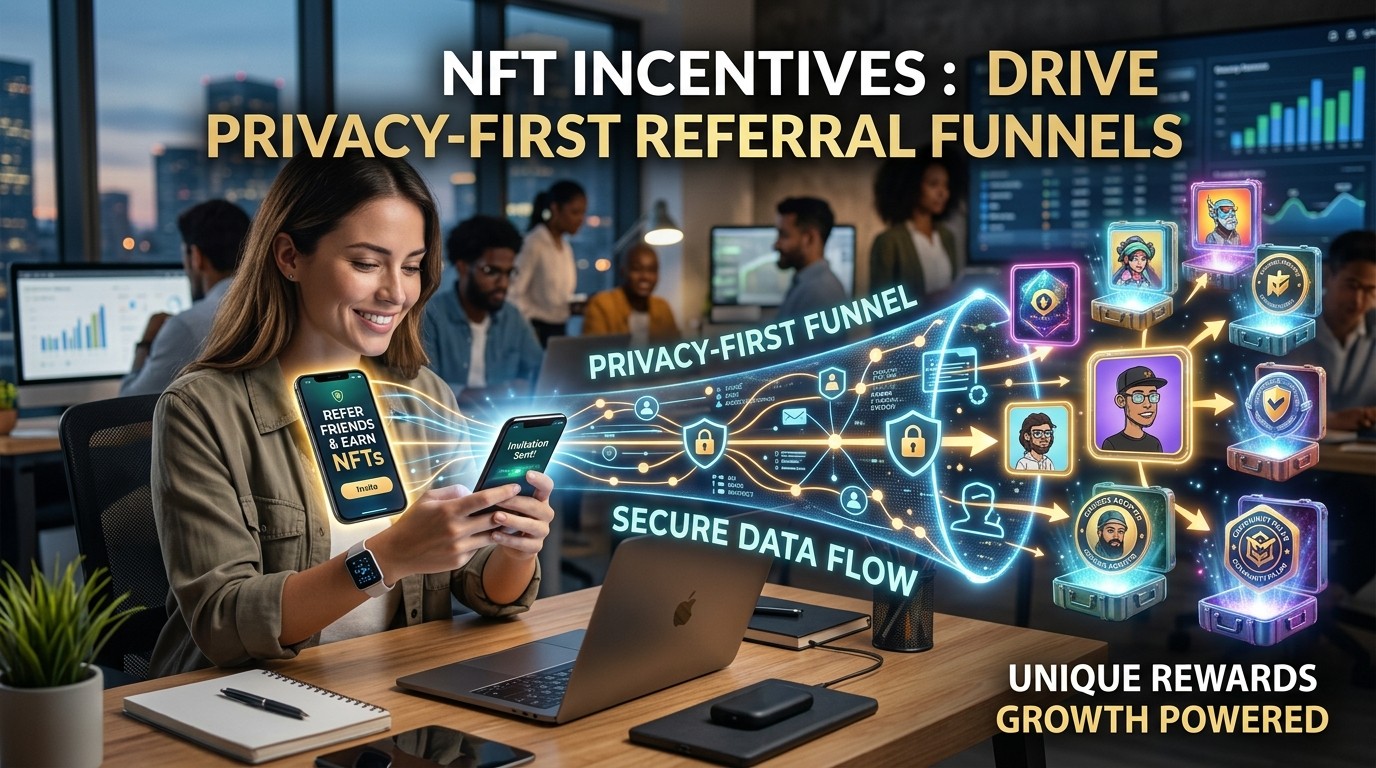
NFT Incentives can turn referrals into privacy-first growth engines by combining digital ownership, exclusive access, loyalty, measurable advocacy, selective disclosure, and meaningful customer rewards.
Referral marketing succeeds because people naturally place more trust in recommendations from people they know than in many forms of traditional advertising. At the same time, consumers are becoming increasingly aware of how businesses collect identity information, browsing behavior, contact details, purchase histories, and referral relationships. That combination creates a valuable opportunity for brands exploring privacy-conscious customer acquisition.
NFT Incentives can connect referral activity with digital ownership, membership, recognition, access, loyalty, and customer advocacy. Rather than treating a referral reward as another discount code, businesses can use a unique digital asset as a representation of contribution or achievement.
The appeal of NFT Incentives is not simply that the reward lives on a blockchain. The stronger opportunity comes from programmability. A referral can unlock a membership credential, a premium service, a private community, an authenticated product record, a digital collectible, or a progression-based loyalty benefit.
Privacy changes the architecture as well.
Traditional referral systems may rely on names, email addresses, phone numbers, cookies, tracking pixels, device identifiers, and extensive behavioral records. Privacy-first systems can instead use wallet addresses, pseudonymous identifiers, cryptographic credentials, claim codes, or selective disclosure.
NFT Incentives can therefore sit at the intersection of referral marketing, blockchain technology, privacy engineering, customer loyalty, and community growth.
The objective is not to make every referral completely anonymous. The objective is to reduce unnecessary information exposure while maintaining reliable attribution, fraud protection, user consent, and measurable commercial outcomes.
A successful NFT Incentives strategy starts with the customer and business problem, not the token.
What Are NFT Incentives?
NFT Incentives are unique blockchain-based rewards or benefits used to encourage a specific customer action.
That action might include:
- Referring a qualified customer
- Completing onboarding
- Making a purchase
- Joining a membership
- Attending an event
- Reaching a loyalty milestone
- Contributing to a community
- Sharing a product
- Completing an educational activity
- Reaching an advocacy tier
The NFT can function as a collectible, access credential, membership pass, certificate, recognition badge, digital product passport, or utility key.
Strong NFT Incentives are therefore designed around what the user receives after the qualifying action.
A reward that has no useful function can produce temporary curiosity but weak long-term engagement. A reward that unlocks something valuable can continue motivating customers after the original referral has happened.
Why NFT Incentives Are Relevant to Referral Marketing
Traditional referral systems often follow a familiar pattern:
Customer → Referral Link → New Signup → Qualified Conversion → Discount or Cash Reward
NFT Incentives can introduce another layer:
Customer → Private Invitation → Qualified Conversion → NFT Achievement → Utility → Continued Advocacy
The difference is psychological.
A coupon is normally consumed.
A digital credential can represent an achievement.
A discount reduces price.
An NFT can create identity.
A cash payment ends the interaction.
An NFT can continue providing access or recognition.
This does not mean NFT Incentives are automatically superior to conventional rewards. The appropriate option depends on the business model and customer expectations.
However, they create a broader design space.
The Psychology Behind NFT Incentives
Understanding human behavior is critical when designing NFT Incentives.
Trust
People are often more receptive to recommendations from someone they already know.
Reciprocity
A customer may feel motivated to contribute when the brand recognizes their contribution.
Status
Exclusive rewards can signal achievement or membership.
Belonging
Community-linked NFTs can create a stronger sense of identity.
Achievement
Milestone-based rewards encourage progression.
Scarcity
Limited rewards can increase perceived importance when scarcity is genuine.
NFT Incentives can combine all six psychological elements.
A customer who receives a special digital item after successfully referring a friend may perceive the reward as more meaningful than an ordinary promotional code, particularly when the NFT unlocks an actual benefit.
NFT Incentives and Privacy-First Marketing

Privacy-first marketing is based on collecting and using data proportionally.
The goal is not necessarily zero data.
The goal is necessary data.
A referral system may need to know whether a referral happened and whether the referred customer completed a qualifying action. It may not need to know every detail about that customer.
NFT Incentives can support this approach by associating rewards with wallet addresses, cryptographic credentials, or pseudonymous identifiers.
However, businesses should avoid claiming that wallet-based systems automatically provide complete anonymity. Blockchain transactions can be publicly visible and may sometimes be linked with external information.
The more accurate promise is controlled disclosure.
Privacy vs Anonymity
Privacy means controlling information exposure.
Anonymity generally means preventing attribution to a person’s real identity.
Pseudonymity means activity is associated with an identifier rather than a directly visible legal name.
Many blockchain applications operate in a pseudonymous environment.
A wallet can identify an account without immediately identifying the individual behind it.
NFT Incentives can work within this architecture, but marketers should explain the limitations.
A credible privacy message might say:
“Referral attribution does not require publishing your real name.”
That is much more precise than:
“Your referral activity is completely anonymous forever.”
How NFT Incentives Work in a Referral Funnel
A practical funnel can contain seven stages.
Stage 1: Customer Discovery
An existing customer learns that referring someone can unlock a benefit.
Stage 2: Private Invitation
The customer receives a personal referral credential, code, QR code, or link.
Stage 3: Referral Attribution
The system recognizes that a new participant came through the referral.
Stage 4: Qualification
The referred user completes a predefined action.
Stage 5: Verification
The platform confirms that the referral is genuine.
Stage 6: NFT Issuance
NFT Incentives are issued or unlocked.
Stage 7: Advocacy
The rewarded user becomes eligible to refer others.
This creates a loop.
The important part is that the NFT should reinforce the customer relationship instead of becoming the entire reason for participating.
Designing NFT Incentives Before Choosing the Technology
One of the most common mistakes is starting with blockchain technology.
A better approach begins with business objectives.
Define the Goal
Are you trying to increase:
Customer acquisition?
Qualified referrals?
Retention?
Membership?
Product usage?
Event attendance?
Customer advocacy?
Define the Qualification Event
What exactly counts as a successful referral?
A registration?
A purchase?
A subscription?
A retained customer?
Define the Reward
What will the customer receive?
Define the Privacy Requirement
Which information must remain private?
Define the Measurement System
Which business metrics will determine success?
Once these questions are answered, NFT Incentives can be designed to support the funnel.
What Makes an NFT Reward Valuable?
The strongest NFT Incentives usually have at least one meaningful utility.
Access Utility
The NFT unlocks an exclusive area or event.
Service Utility
The NFT provides enhanced customer support.
Commerce Utility
The NFT gives access to defined product benefits.
Recognition Utility
The NFT represents an achievement.
Membership Utility
The NFT proves membership in a community.
Authentication Utility
The NFT verifies ownership or authenticity.
A reward without utility can still work as a collectible, but utility often makes the customer relationship more durable.
NFT Incentives vs Traditional Referral Codes
Traditional referral codes are simple and efficient.
For example:
REF2026A
The problem is that the code has little emotional meaning.
An NFT can represent what happened.
For example:
“You successfully introduced three qualified customers and unlocked Gold Advocate status.”
The NFT can visually and digitally represent that achievement.
This creates a distinction:
The code is attribution infrastructure.
The NFT is relationship infrastructure.
That is one of the strongest conceptual applications of NFT Incentives.
NFT Incentives as Digital Membership
Membership is an especially useful application.
Imagine a business issues an NFT after a successful referral.
The NFT grants:
- Premium support
- Early access
- Exclusive content
- Private events
- Special product offers
- Partner benefits
The customer now has an ongoing reason to remain involved.
Instead of a referral reward being consumed immediately, the NFT becomes part of the customer’s membership journey.
This is where NFT Incentives can transition from campaign mechanics into retention infrastructure.
Tiered NFT Incentives
Tiered systems can encourage progression.
Bronze Tier
One qualified referral.
Silver Tier
Three qualified referrals.
Gold Tier
Ten qualified referrals.
Platinum Tier
Twenty-five qualified referrals.
Each level can have a distinct NFT or upgraded NFT state.
The psychology comes from progress.
Users can see that each meaningful contribution moves them toward a higher status.
The system should reward genuine conversions rather than simply encouraging users to send unlimited invitations.
Milestone NFT Incentives
Milestones can be based on more than referral count.
Examples include:
First successful referral.
First repeat referral.
First premium customer referral.
One-year advocacy milestone.
Community contribution milestone.
Product-launch participation.
Event attendance plus referral.
These milestone-based NFT Incentives can make the customer journey feel more personalized.
Scarcity in NFT Incentives
Scarcity is powerful because limited things can feel more significant.
A business can create scarcity through:
Limited Quantity
Only a defined number of rewards exist.
Limited Time
The reward is connected to a specific campaign.
Achievement-Based Scarcity
Only users reaching a specific milestone qualify.
Event-Based Scarcity
Only participants in a particular event receive the NFT.
Achievement-based scarcity is often especially relevant because it connects the reward with genuine customer contribution.
Artificial scarcity should be avoided.
If every campaign claims to be “ultra-rare,” the term loses credibility.
NFT Incentives and Wallet-Based Attribution
Wallets can provide user-controlled identifiers.
A referral credential could be associated with the referrer’s wallet.
When a new user arrives, the referral relationship can be linked to the appropriate credential.
NFT Incentives can then be distributed to the qualifying wallet.
This can reduce dependence on email-only attribution.
However, wallet addresses can be publicly visible.
Therefore, businesses should evaluate whether the referral graph itself could reveal sensitive information.
Privacy-Preserving Referral Links
Referral links can expose data through parameters.
A traditional URL might contain:
- Customer ID
- Affiliate ID
- Campaign ID
- Tracking ID
- Session information
A privacy-oriented system can instead use random or cryptographically generated identifiers.
NFT Incentives can then be connected to a referral claim without embedding a person’s name or unnecessary personal information inside the link.
This is a small architectural decision that can create a meaningful privacy improvement.
Selective Disclosure
Selective disclosure is one of the most valuable concepts for privacy-first referral systems.
Imagine the platform needs to know:
The user is eligible.
The referral is legitimate.
The referred customer completed the required action.
The reward has not already been claimed.
The platform may not need:
The user’s complete identity.
Their entire browsing history.
Their unrelated transaction activity.
Their full social graph.
NFT Incentives become more privacy-friendly when qualification depends on only the necessary information.
Zero-Knowledge Proofs
Zero-knowledge proofs can support advanced privacy architectures by allowing one party to prove a statement without revealing all of the underlying information.
For example, a user could theoretically prove eligibility for a reward without exposing every private attribute that led to that eligibility.
This can create sophisticated NFT Incentives systems.
However, cryptography introduces complexity.
Businesses should not use zero-knowledge technology merely because it sounds innovative.
The technology should solve a real privacy problem and remain secure, understandable, auditable, and maintainable.
NFT Incentives and Sybil Resistance
Privacy creates an important challenge.
One human can potentially create many wallet addresses.
If the referral program awards an NFT for every new wallet, the system can become vulnerable to abuse.
A sybil attacker might generate hundreds of wallets and attempt to claim repeated rewards.
Therefore, NFT Incentives need qualification mechanisms.
Possible approaches include:
- Purchase validation
- Minimum activity requirements
- Reputation
- Rate limits
- Holding periods
- Eligibility credentials
- Behavioral anomaly detection
- Additional verification when necessary
The exact method should match the value and risk of the campaign.
Referral Fraud Prevention
Referral fraud can include:
Self-referrals.
Duplicate accounts.
Automated signups.
Fake purchases.
Reward farming.
Collusive referrals.
Stolen credentials.
Manipulated attribution.
NFT Incentives do not eliminate these problems.
In fact, a valuable NFT can create a stronger incentive to attack the program.
Businesses should therefore model the reward economics and abuse scenarios before launching.
Reward Conditions
The qualifying condition should be meaningful.
Weak condition:
“Receive an NFT for opening an account.”
Better condition:
“Receive an NFT after the referred customer completes their first qualifying purchase.”
Stronger condition:
“Receive an NFT after the referred customer remains active for 30 days.”
The stronger examples align the reward with customer value.
NFT Incentives should ideally pay for useful behavior rather than superficial activity.
Reward Timing
Reward timing influences behavior.
Immediate rewards create fast satisfaction.
Delayed rewards can reduce low-quality acquisition.
Milestone rewards can encourage long-term activity.
For example, a SaaS business may issue one NFT after a referred user becomes a paying customer and another after 90 days of retention.
This approach links NFT Incentives with customer quality.
NFT Incentives and Customer Acquisition
Referral programs can reduce dependence on paid advertising by turning existing customers into acquisition channels.
NFT Incentives add a memorable reward layer to that system.
The funnel becomes:
Existing Customer → Recommendation → New Customer → Qualified Conversion → Digital Recognition
This can be especially effective when the NFT provides ongoing utility.
The customer does not simply earn something.
They enter another layer of the brand ecosystem.
NFT Incentives and Retention
Acquisition is only one side of growth.
Retention determines whether the newly acquired customer generates long-term value.
NFT Incentives can contribute to retention by unlocking benefits over time.
For example:
Referral NFT → Premium membership.
Six-month milestone NFT → Advanced service.
Annual milestone → Exclusive collection.
This creates continuing reasons for customers to stay connected.
NFT Incentives and Gamification
Gamification can make a referral program more engaging.
Useful mechanics include:
- Levels
- Achievements
- Collections
- Milestones
- Seasonal campaigns
- Unlockable benefits
- Contribution badges
A customer may want to complete the next milestone simply because progress is visible.
The important principle is to gamify meaningful actions.
Do not design a system where users are rewarded for spamming invitations.
NFT Incentives and Leaderboards
Leaderboards can increase motivation.
However, public rankings can reveal participant behavior.
A privacy-first alternative could show anonymous positions or private rankings.
For example:
“You are currently #12.”
Or:
“You need two more qualified referrals to enter the next tier.”
This provides motivation without publicly exposing every participant.
NFT Incentives for Physical Products
NFT rewards can also support referral campaigns connected to physical products.
Imagine a premium product company that issues a digital ownership certificate.
A qualified referrer could receive a limited referral NFT that unlocks early access to the next collection.
This creates an ecosystem where physical ownership and digital participation complement each other.
Businesses working with Physical Assets to NFTs can use referral campaigns as an additional layer for community engagement, authenticated ownership, and customer advocacy.
The NFT reward does not need to replace the physical ownership documentation.
It can sit alongside it.
NFT Incentives and Tokenized Financial Products
Blockchain ecosystems can contain NFTs and tokenized financial instruments at the same time.
That creates an important distinction.
A membership NFT may reward customer advocacy.
A tokenized financial instrument may represent a defined investment interest.
A marketer designing NFT Incentives should not assume that the reward automatically has the same legal characteristics as a financial token.
Anyone researching Tokenized Securities vs NFTs should examine the underlying rights, economics, and legal structure of each token separately.
NFT Incentives for Private Communities
Private communities are a natural environment for digital rewards.
A referral NFT can act as:
- A membership credential
- An access key
- A recognition badge
- An achievement record
- A premium status indicator
The community becomes part of the reward.
This makes the referral feel less like a sales transaction and more like a contribution to a shared ecosystem.
NFT Incentives for Invite-Only Programs
A highly selective referral program can use digital credentials to manage access.
Instead of distributing a public discount code, a business may provide a controlled invitation.
Successful participants receive an NFT that unlocks another level of access.
This model can create a stronger sense of exclusivity.
However, the exclusivity should reflect a genuine eligibility process.
A campaign should not claim to be private if anyone can freely enter.
NFT Incentives for Premium Customers
Premium customers often care about:
- Discretion
- Access
- Recognition
- Convenience
- Service
- Trust
- Personal relationships
A generic percentage discount may not create enough emotional value.
NFT Incentives can instead provide status-based recognition.
For example:
“Your referral unlocked Founding Advocate status.”
The NFT can then provide benefits appropriate to that status.
The emotional reward becomes part of the customer relationship.
NFT Incentives and High-Value Advocacy
Customer advocacy can be especially powerful when recommendations come from respected customers.
A premium brand may want its best customers to introduce carefully selected peers rather than encourage mass-market social sharing.
A digital reward can recognize that contribution privately.
This philosophy can complement strategies designed to Turn Elite HNW Clients Into Brand Evangelists, where relationship quality, discretion, and trust can be more important than referral volume.
NFT Incentives and Luxury Brands
Luxury brands sell identity as well as products.
The customer may value:
Status.
Exclusivity.
Craftsmanship.
Provenance.
Access.
Community.
NFT Incentives can mirror those values.
A referral reward might be a limited digital piece that grants access to a private product preview.
Another reward could certify participation in a private collector community.
The NFT becomes an extension of the brand experience.
Privacy-First Referral Funnels
A privacy-first funnel should collect only the information necessary for the referral.
For example:
Public Layer
Campaign existence.
General reward description.
General eligibility requirements.
Private Layer
Individual customer information.
Fraud-review signals.
Support records.
Required compliance information.
Verification Layer
Cryptographic proof.
Referral credential.
Transaction confirmation.
Reward Layer
NFT ownership.
Utility status.
Achievement state.
This layered model can significantly reduce unnecessary exposure.
NFT Incentives and Data Minimization
Data minimization means collecting less information.
For a referral system, ask:
Do we need the user’s phone number?
Do we need their full address?
Do we need every social account?
Do we need all browsing activity?
Do we need their complete transaction history?
If the answer is no, that information should not become part of the referral process unnecessarily.
NFT Incentives can work with minimal data if the system is designed carefully.
NFT Incentives and Customer Consent
Consent should be clear.
The customer should understand:
What information is used.
Why it is used.
Who can see it.
What triggers the reward.
How the reward works.
Whether participation is optional.
The more transparent the process, the easier it becomes to establish trust.
Privacy should be part of the customer experience rather than hidden in legal text alone.
Public vs Private Referral Data
Not every referral event needs to be publicly visible.
A platform could publicly show aggregate campaign statistics while keeping participant identities private.
For example:
“1,842 qualified referrals completed.”
That is useful information.
Publishing:
“Wallet X referred Wallet Y at 3:17 PM”
may provide little marketing value while creating unnecessary exposure.
NFT Incentives should therefore be designed around the minimum public information needed.
NFT Incentives and Off-Chain Infrastructure
Blockchain does not need to store every referral record.
Sensitive information can remain in protected databases.
The blockchain can record:
- Reward issuance
- Claim status
- Ownership
- Cryptographic references
- Selected verification events
The private system can store:
- Customer support data
- Fraud signals
- Compliance records
- Internal campaign information
This hybrid model can offer a better balance between privacy, flexibility, and transparency.
NFT Incentives and Smart Contracts
Smart contracts can automate defined reward logic.
For example:
“When the qualifying condition is verified, issue the referral NFT.”
This can reduce manual administration.
Smart contracts can also make rules transparent when contract logic is publicly inspectable.
However, smart contracts cannot independently understand every real-world event.
A backend or oracle may still be necessary to confirm:
Purchases.
Customer retention.
Eligibility.
Fraud investigation.
Compliance status.
NFT Incentives should therefore use smart contracts as automation infrastructure, not as a replacement for the entire business system.
NFT Incentives and Referral Credentials
A referral credential can represent participation in a campaign.
The credential can be:
- Randomized
- Cryptographically signed
- Time-limited
- Campaign-specific
- Single-use
- Wallet-associated
This can provide better control than static affiliate codes.
A credential can prove that a referral invitation was legitimately generated.
Dynamic NFT Incentives
Dynamic NFTs can change based on user activity.
For example:
One referral → Bronze artwork.
Three referrals → Silver artwork.
Ten referrals → Gold artwork.
Twenty-five referrals → Platinum artwork.
The underlying NFT can update instead of issuing a completely new asset every time.
This can create a sense of progression.
Transferable NFT Incentives
Some rewards can be transferable.
This is appropriate when the NFT is intended to have independent collectible or membership value.
However, transferability can create problems when the benefit is intended for the original participant.
A private membership might not make sense if the member can freely sell access to an unknown person.
Therefore, transferability should be decided according to the utility.
Non-Transferable NFT Incentives
Some rewards are better treated as achievements.
Examples include:
- Referral milestones
- Community contribution
- Certification
- Reputation
- Participation
A non-transferable NFT can represent:
“I achieved this.”
rather than:
“I own this and can sell it.”
This can reduce speculative behavior.
NFT Incentives and Secondary Markets
If a reward is transferable, it may acquire secondary-market value.
That can create benefits, but it also introduces complexity.
Potential benefits include:
- Increased perceived value
- Collecting behavior
- Community activity
- Marketplace visibility
Potential challenges include:
- Speculation
- Price volatility
- Utility transfer
- Fraud
- Market manipulation
- Customer confusion
The business should ask whether a secondary market supports the purpose of the reward.
NFT Incentives and Brand Storytelling
Digital rewards can become chapters in a customer’s relationship with the brand.
For example:
First Referral = “Contributor.”
Fifth Referral = “Community Builder.”
Tenth Referral = “Brand Advocate.”
Twenty-fifth Referral = “Founding Ambassador.”
Each NFT can represent the next stage.
This transforms customer acquisition into a story.
The customer is not merely collecting rewards.
They are building a visible or private record of participation.
NFT Incentives and Customer Identity
NFTs can become part of digital identity.
A customer may choose to display certain achievements publicly.
Another customer may prefer to keep them private.
A privacy-first architecture should allow both where practical.
The customer should control whether an achievement is visible.
This creates an important shift:
The brand issues the reward.
The user controls how the reward is presented.
NFT Incentives and Reputation
Reputation is valuable in communities.
A customer who consistently introduces quality participants can become a trusted contributor.
An NFT can represent a reputation milestone.
However, reputation data can also become sensitive.
A platform should consider whether public reputation can expose relationships, commercial behavior, or personal preferences.
Privacy-preserving reputation systems can allow proof of status without publishing an entire history.
NFT Incentives for Web3 Communities
Blockchain communities are particularly familiar with digital ownership.
NFT rewards can therefore integrate naturally with:
- DAO communities
- Protocol communities
- NFT collections
- Gaming ecosystems
- Web3 memberships
- Developer communities
A successful program still needs clear qualification rules.
Crypto-native users may be highly responsive to rewards, but they can also be highly sophisticated at identifying weak token economics.
NFT Incentives for Privacy Products
Privacy-focused products have an unusual marketing challenge.
Their customers value confidentiality.
A traditional referral system may conflict with the product’s positioning if it collects extensive personal information.
NFT Incentives can potentially fit better when attribution is based on pseudonymous credentials or wallet-controlled identity.
For example, a privacy application could allow users to refer another participant using a private credential.
The referral is measured.
The user’s legal identity does not need to become part of the public campaign.
NFT Incentives for Wallet Products
Wallet providers can use referral rewards for:
- Premium features
- Partner offers
- Educational programs
- Product upgrades
- Community access
A wallet-based referral program could distribute an NFT after a successful activation.
The reward might unlock additional functionality.
The wallet is already part of the user’s digital identity ecosystem, making NFT-based rewards easier to integrate.
NFT Incentives for Membership Businesses
Membership businesses can use NFTs to represent:
- Membership duration
- Referral status
- Loyalty level
- Access tier
- Special events
- Contribution status
This can reduce the psychological distance between loyalty programs and digital ownership.
Instead of earning anonymous database points, users receive an identifiable representation of their membership achievement.
NFT Incentives for SaaS Companies
SaaS businesses can make rewards conditional on customer quality.
For example:
Referral qualifies when the new customer becomes a paying subscriber.
An NFT is issued.
After 90 days of active use, the NFT upgrades.
After five successful referrals, a new tier unlocks.
This creates an acquisition-and-retention loop.
NFT Incentives for E-Commerce
E-commerce businesses can connect referral rewards with physical products.
Example:
Customer A refers Customer B.
Customer B places a qualifying order.
Customer A receives a limited NFT.
The NFT unlocks early access to a future collection.
The customer now has an additional reason to remain engaged.
This model can be particularly useful for brands with strong communities.
NFT Incentives for Events
Events can combine referrals with digital credentials.
For example:
Refer one verified attendee.
Receive a referral NFT.
Attend the event.
Unlock another NFT.
Refer five qualified participants.
Receive an upgraded event credential.
This combines acquisition, attendance, and loyalty.
NFT Incentives for Creator Communities
Creators can use NFT-based referral rewards to recognize supporters.
A creator may issue NFTs for:
- Bringing new subscribers
- Supporting a launch
- Joining a membership
- Attending events
- Promoting educational content
This creates a contribution record around the creator’s ecosystem.
NFT Incentives and Reward Economics
Every referral system needs sustainable economics.
A simple formula is:
Referral Contribution = Customer Lifetime Value − Acquisition Cost − Reward Cost − Program Cost
Suppose a referred customer generates $600 in lifetime value.
Traditional acquisition would cost $150.
The NFT costs $20.
Program operations cost $30.
The contribution remaining after referral costs is:
$600 − $150 − $20 − $30 = $400
The exact values vary by business.
The important lesson is that NFT Incentives should create more customer value than they cost.
NFT Incentives and Customer Lifetime Value
A referral customer is more valuable when they:
Purchase repeatedly.
Remain subscribed.
Use premium services.
Refer additional customers.
Engage with the community.
A strong NFT program should therefore optimize for lifetime value rather than referral quantity.
Ten highly engaged customers can be more valuable than one hundred low-quality signups.
Measuring NFT Incentives
Businesses should measure both marketing and token performance.
Referral Conversion Rate
Percentage of referred prospects who qualify.
Qualified Referral Volume
Number of genuine conversions.
Cost Per Qualified Referral
Total program expense divided by qualified referrals.
Customer Lifetime Value
Long-term revenue from referred customers.
Retention
How long referred users remain active.
Reward Engagement
How frequently users interact with their NFTs.
Fraud Rate
Percentage of referrals rejected for abuse.
Utility Usage
How often NFT benefits are actually used.
These metrics provide a much better picture than counting mints.
Avoid Vanity Metrics
A campaign can mint 100,000 NFTs and still fail.
A campaign can attract thousands of wallets but generate very few customers.
Useful metrics are tied to business outcomes.
Focus on:
Revenue.
Retention.
Qualified customer growth.
Referral quality.
Community participation.
Customer advocacy.
NFT ownership is a mechanism.
Business value is the outcome.
Privacy Metrics
Privacy should also be measurable.
Businesses can track:
Data Reduction
How many unnecessary data fields were removed?
Identity Exposure
How much participant information is publicly visible?
Consent
How many users voluntarily participate after understanding the process?
Retention
How much personal information is retained and for how long?
Incident Impact
How much data could be exposed if a system were compromised?
This makes privacy a measurable operational objective.
NFT Incentives and Compliance
Privacy-oriented referral systems still need to respect applicable laws and regulations.
Depending on the product and jurisdiction, the business may need to consider:
- Consumer protection
- Privacy law
- Marketing rules
- Financial regulations
- Anti-money-laundering requirements
- Taxation
- Advertising disclosures
The use of NFTs does not automatically remove these obligations.
A token reward connected to a simple membership campaign may have a very different legal profile from a reward connected to a financial product.
Legal review should therefore focus on the actual structure.
NFT Incentives and Financial Products
Extra caution is appropriate when referral rewards relate to investments.
A program should not imply guaranteed returns simply because a participant receives a token.
Businesses should clearly distinguish:
Marketing incentives.
Membership benefits.
Digital collectibles.
Financial interests.
This distinction protects both customers and companies from misunderstanding.
NFT Incentives and Intellectual Property
Ownership of an NFT does not automatically mean ownership of the underlying copyright.
A reward could provide:
Personal display rights.
Commercial-use rights.
A limited license.
No additional intellectual-property rights.
The applicable terms should be clearly explained.
This becomes particularly important when NFT Incentives use branded artwork.
NFT Incentives and Security
A reward system can become an attractive target when NFTs have real value.
Security practices should include:
- Smart-contract testing
- Code review
- Permission management
- Secure key storage
- Monitoring
- Phishing protection
- Claim verification
- Incident response
Businesses should also protect the referral backend.
An attacker who manipulates attribution could steal both rewards and customer acquisition credit.
NFT Incentives and Failure Scenarios
Plan for failure before launch.
Lost Wallet
Can the customer recover the reward?
Fraudulent Referral
How is the reward reversed?
Contract Failure
Can issuance be paused?
Marketplace Closure
Does the NFT retain its utility?
Campaign Closure
Does the customer keep the reward?
Customer Dispute
How does support verify what happened?
Well-designed NFT Incentives have explicit answers to these questions.
NFT Incentives and Customer Support
Privacy should not make support impossible.
If a customer says:
“I qualified but did not receive my NFT,”
the support team needs enough information to investigate.
The solution is controlled access.
Support employees may need to see:
Referral status.
Qualification result.
Reward transaction.
Relevant account information.
They may not need to see unrelated personal information.
Role-based access can support this balance.
NFT Incentives and Data Retention
Businesses should define how long referral data remains available.
Campaign analytics may be retained for business reporting.
Sensitive identity records may require different retention rules.
Public blockchain data may be effectively permanent.
This makes the initial design particularly important.
Do not put information on-chain simply because it is technically possible.
NFT Incentives and Public Transparency
Transparency can increase trust.
A business could publish:
Reward rules.
Qualification conditions.
Campaign duration.
Supply limits.
Utility descriptions.
Smart-contract addresses.
General performance statistics.
At the same time, participant identities can remain private.
This balance creates transparency about the program without unnecessarily exposing customers.
NFT Incentives and Reputation Systems
Imagine a customer has successfully introduced ten qualified participants.
The platform could issue an achievement NFT.
The customer can use that credential to access premium community opportunities.
Over time, the NFT becomes evidence of trusted contribution.
This changes referral marketing from a purely transactional system into a reputation mechanism.
NFT Incentives and Portable Credentials
Portable credentials could allow customers to prove achievements across compatible applications.
For example:
“Verified community contributor.”
“Qualified advocate.”
“Premium member.”
The customer could selectively reveal the credential.
This could eventually create referral ecosystems where users own their contribution history instead of every platform maintaining separate databases.
NFT Incentives and Interoperability
Modern blockchain users can interact with many chains and applications.
A reward that works only inside one isolated system may have limited long-term value.
Businesses should therefore consider:
Wallet compatibility.
Blockchain compatibility.
Marketplace support.
Credential portability.
Identity interoperability.
The more portable the benefit, the more valuable the digital ownership concept can become.
Multi-Chain NFT Incentives
A referral program operating across several blockchain networks faces additional complexity.
A customer may have more than one wallet.
The system needs to determine whether those wallets belong to the same participant without unnecessarily linking them publicly.
Possible approaches involve privacy-preserving credentials and user-controlled identity.
However, cross-chain identity is technically and operationally complex.
The business should solve the problem only when multi-chain activity is genuinely important.
NFT Incentives and Walletless Experiences
Not every customer wants to manage a blockchain wallet.
Businesses targeting mainstream customers can simplify the onboarding process.
A reward can initially appear inside the company’s interface.
Customers can later connect or control the underlying asset.
This can reduce friction.
The objective is to make blockchain functionality useful without forcing every customer to become a crypto expert.
NFT Incentives and Email-to-Wallet Journeys
A hybrid referral funnel can combine familiar onboarding with digital ownership.
For example:
Customer receives an invitation by email.
Customer completes a qualifying action.
The platform creates or connects a wallet.
The referral NFT is issued.
The customer can later take control of the asset.
This approach may make NFT Incentives easier for mainstream users.
NFT Incentives and Premium Service
An NFT can unlock a service tier.
For example:
Referral NFT → Priority support.
Higher-tier NFT → Dedicated account management.
Premium NFT → Invitation-only events.
This shifts the reward away from monetary value and toward service value.
Premium customers often value convenience and access, making utility-based rewards especially relevant.
NFT Incentives and Community Recognition
People like being recognized for valuable contributions.
A customer can feel more connected to a community when the brand acknowledges their impact.
A referral NFT can act as a digital trophy.
The customer can choose whether to display it publicly.
The brand can associate it with genuine contribution.
This creates social value without requiring public exposure of the entire referral history.
NFT Incentives and Private Referral Communities
A brand can create a private community where members earn access through qualified referrals.
NFTs function as digital credentials.
Members can access private events or content.
The community becomes more valuable as qualified members join.
This creates a network effect.
However, the system needs safeguards to prevent uncontrolled growth.
Quality should remain more important than volume.
NFT Incentives and High-Value Networks
High-value networks require different referral psychology.
A customer may be reluctant to publicly advertise that they use a premium financial, luxury, or advisory service.
A private referral system may therefore fit better.
The invitation remains discreet.
The reward recognizes contribution.
The customer’s identity does not become a public marketing asset.
This can make the referral experience more consistent with premium positioning.
NFT Incentives and Brand Loyalty Loops
A strong referral system creates a loop:
Customer receives value.
Customer recommends product.
New customer joins.
Referrer receives NFT.
NFT unlocks more value.
Referrer becomes more loyal.
Referrer recommends again.
This is stronger than a one-time campaign because every stage supports the next.
NFT Incentives and Long-Term Engagement
The strongest programs think beyond the first reward.
For example:
Referral 1 → Digital badge.
Referral 3 → Premium content.
Referral 5 → Private event.
Referral 10 → Executive community.
Referral 25 → Special recognition.
The rewards create a ladder.
Each step gives customers another reason to participate.
NFT Incentives and Seasonal Campaigns
Seasonal campaigns can introduce freshness.
Examples include:
Launch Edition.
Holiday Edition.
Anniversary Edition.
Founder’s Campaign.
Summer Referral Challenge.
Community Week.
Each campaign can feature distinct NFT artwork.
This creates collecting behavior while allowing the business to measure campaign-specific acquisition.
NFT Incentives and Collectibility
Collectibility can strengthen engagement.
Customers may want to complete a set.
For example:
Spring NFT.
Summer NFT.
Autumn NFT.
Winter NFT.
Collectors who complete all four may unlock a special benefit.
This combines referral activity with gamification and loyalty.
NFT Incentives and Customer Segmentation
Privacy-aware segmentation can focus on behavior rather than sensitive personal attributes.
For example:
Qualified Advocate.
Premium Member.
Repeat Referrer.
Community Contributor.
Long-Term Customer.
These categories describe actions rather than sensitive identity information.
NFT credentials can represent these states.
NFT Incentives and Ethical Marketing
Privacy does not automatically make a referral program ethical.
Businesses should still avoid:
- Fake scarcity
- Hidden incentives
- Manipulative urgency
- Deceptive claims
- Artificial engagement
- Misleading financial promises
A customer should know why they are receiving a reward and what it does.
Transparency supports long-term trust.
NFT Incentives and Sustainable Growth
A referral system should produce sustainable economics.
The goal is not:
“Get as many NFTs minted as possible.”
The goal is:
“Generate valuable customers and stronger relationships.”
This distinction changes how the program is designed.
Rewards should encourage behavior that improves the business.
Analytics should measure contribution.
Privacy should reduce unnecessary exposure.
Utility should reinforce loyalty.
NFT Incentives Implementation Roadmap
Phase 1: Research
Understand customer motivations, acquisition costs, referral behavior, and privacy expectations.
Phase 2: Funnel Design
Define invitation, attribution, qualification, reward, and advocacy stages.
Phase 3: Reward Design
Choose the NFT’s utility, scarcity, visual identity, and transfer rules.
Phase 4: Privacy Architecture
Identify what data is necessary and what can be eliminated.
Phase 5: Fraud Controls
Build sybil detection, rate limits, qualification rules, and dispute handling.
Phase 6: Technical Development
Build smart contracts, referral infrastructure, wallet support, and analytics.
Phase 7: Closed Pilot
Test with a controlled group.
Phase 8: Security and Privacy Review
Review the system before broader deployment.
Phase 9: Measurement
Monitor acquisition, retention, fraud, reward cost, and utility engagement.
Phase 10: Scale
Expand only after the system demonstrates sustainable economics.
Example: E-Commerce NFT Referral Funnel
Imagine a premium fashion brand.
Customer A receives a referral invitation.
Customer B purchases a qualifying product.
The platform validates the transaction.
Customer A receives a limited NFT.
The NFT unlocks early access to the next collection.
Customer A has now gained a continuing reason to engage with the brand.
The reward is not simply an incentive.
It is a loyalty asset.
Example: SaaS NFT Referral Funnel
A software company could issue NFT Incentives after a referred user becomes a paying customer.
At 30 days:
Bronze Advocate NFT.
At 90 days:
Silver Advocate NFT.
At ten referrals:
Gold Advocate NFT.
Gold members receive premium support and beta access.
The reward structure connects acquisition, retention, status, and service.
Example: Private Membership
A professional community could give members an invitation credential.
A referred person passes eligibility checks.
The referrer earns an NFT.
The NFT unlocks a private event.
This creates a direct connection between contribution and access.
Example: Luxury Customer Advocacy
A luxury brand could issue a digital advocate credential to customers who successfully introduce qualified clients.
The reward could unlock:
Private previews.
Personalized appointments.
Early product access.
Exclusive events.
The purpose is relationship building rather than mass-market discounting.
Common Mistakes
Mistake 1: Rewarding Every Signup
Low-quality activity becomes expensive.
Mistake 2: Making the Reward Purely Speculative
Customers may lose interest once speculation disappears.
Mistake 3: Collecting Excessive Data
The system contradicts its privacy-first promise.
Mistake 4: Ignoring Sybil Attacks
One participant can potentially create multiple identities.
Mistake 5: Using Fake Scarcity
Constant “limited editions” reduce credibility.
Mistake 6: Making the Claim Process Difficult
Users abandon rewards they cannot easily access.
Mistake 7: Ignoring Legal Requirements
Privacy does not eliminate legitimate verification obligations.
Mistake 8: Measuring NFT Volume Instead of Customer Value
More NFTs do not automatically mean better growth.
Mistake 9: Forgetting Utility
A beautiful reward without practical value can quickly become irrelevant.
Mistake 10: Exposing Referral Relationships Publicly
Privacy can be weakened through metadata even when real names are hidden.
How to Optimize NFT Incentives
Optimization should happen at multiple levels.
Optimize the Offer
Make the reward relevant.
Optimize the Qualification
Reward meaningful customer actions.
Optimize the Privacy
Remove unnecessary data collection.
Optimize the UX
Reduce wallet and claim friction.
Optimize the Economics
Keep the reward cost below the value generated.
Optimize the Utility
Give the NFT an ongoing purpose.
Optimize the Fraud Layer
Make exploitation more difficult.
Optimize Measurement
Track customer value instead of vanity metrics.
A/B Testing NFT Incentives
Businesses can test:
Different artwork.
Different utility.
Different referral thresholds.
Different reward timing.
Different invitation messaging.
Different claim interfaces.
For example:
Version A gives a collectible NFT.
Version B gives an NFT that unlocks premium support.
The business can measure:
Referral conversion.
Reward claim rate.
Retention.
Customer lifetime value.
Utility engagement.
The better-performing version should be determined from actual data rather than assumptions.
NFT Incentives and Message Framing
The wording around the reward affects perception.
Weak message:
“Refer friends and earn an NFT.”
Stronger message:
“Introduce a qualified customer and unlock private member access.”
The second message communicates outcome.
The NFT becomes part of the benefit rather than the entire proposition.
This is particularly important when targeting customers who are not deeply interested in blockchain technology.
NFT Incentives and Emotional Rewards
Not every reward needs financial value.
Recognition can be powerful.
An achievement certificate can make a customer feel valued.
A private invitation can make them feel trusted.
A membership credential can create belonging.
NFT Incentives can combine these emotional benefits with digital ownership.
NFT Incentives and Customer Empowerment
Privacy-first systems can give customers more control over their digital identity.
Customers can potentially choose:
What they reveal.
Where they use the credential.
Whether they display the NFT publicly.
Whether they participate anonymously or pseudonymously where permitted.
This user-control layer can increase trust.
NFT Incentives and Future Referral Ecosystems
The longer-term opportunity is broader than today’s referral programs.
Customers could eventually hold portable digital credentials representing:
Membership.
Contribution.
Reputation.
Advocacy.
Eligibility.
Loyalty.
These credentials could interact with multiple applications.
The customer becomes the owner of the relationship evidence rather than the company maintaining every detail inside a centralized database.
The Future of Privacy-First Referral Marketing

Referral marketing may gradually move from:
Track everything.
to:
Prove what matters.
That means collecting fewer personal details while still verifying useful actions.
Digital identity systems, cryptographic credentials, programmable rewards, and blockchain assets can all contribute to that transition.
NFT Incentives can become one component of this broader architecture.
The most important evolution is not “replace coupons with NFTs.”
It is:
“Build customer growth around consent, verification, ownership, and utility.”
NFT Incentives: Final Strategic Framework
Before launching a referral program, ask:
What customer behavior are we rewarding?
Why does that behavior matter?
What does the NFT actually provide?
Can customers understand the benefit immediately?
How much personal data is genuinely necessary?
How will sybil abuse be prevented?
How will referral fraud be handled?
What happens when a wallet is lost?
What happens when a campaign ends?
What happens to the NFT’s utility?
How will success be measured?
If those questions have clear answers, the program has a strong foundation.
NFT Incentives should serve the customer journey rather than replace it.
The token is a tool.
Privacy is a design principle.
Referral marketing is the acquisition mechanism.
Utility is the retention mechanism.
Trust is the foundation.
Final Takeaway
NFT Incentives can transform referral marketing from a simple discount-driven tactic into a richer digital relationship.
They can represent contribution.
They can create status.
They can unlock access.
They can support membership.
They can authenticate participation.
They can encourage customer advocacy.
They can work with privacy-preserving identity.
They can become portable digital credentials.
But the value of NFT Incentives does not come from the acronym “NFT.”
It comes from what happens after the customer receives the reward.
A strong program gives users a meaningful benefit, minimizes unnecessary data collection, prevents fraudulent behavior, maintains clear rules, and measures genuine commercial outcomes.
Privacy-first referral marketing should not attempt to hide everything.
It should expose only what is necessary.
The best programs therefore balance:
Privacy.
Utility.
Trust.
Security.
Economics.
Customer experience.
Compliance.
When these elements are combined thoughtfully, referral programs can become more than acquisition campaigns. They can become long-term systems for recognition, membership, loyalty, and community participation.
Conclusion
NFT Incentives can provide a powerful framework for building privacy-first referral funnels when they are connected to meaningful customer value rather than speculation alone. Businesses can use NFT-based rewards for recognition, membership, premium access, authentication, loyalty, and advocacy while reducing unnecessary reliance on traditional identity tracking. The most effective programs reward qualified actions, protect participant information, resist sybil abuse, provide clear utility, and measure customer lifetime value instead of raw NFT volume. Privacy should focus on proportional disclosure rather than unrealistic promises of total anonymity. With thoughtful economics, simple user experiences, strong security, and transparent rules, NFT Incentives can evolve from promotional rewards into durable digital relationship infrastructure.
Frequently Asked Questions (FAQ)
1. What are NFT Incentives?
NFT Incentives are unique blockchain-based rewards used to encourage actions such as referrals, purchases, memberships, loyalty milestones, event participation, or community contributions.
2. How do NFT Incentives support referral marketing?
They can reward qualified referrals with digital assets that provide recognition, access, membership, authentication, exclusive experiences, or other practical benefits.
3. Are NFT Incentives automatically private?
No. An NFT transaction can be visible on a public blockchain. Privacy depends on the architecture used for identity, attribution, metadata, credentials, and data storage.
4. Can NFT Incentives work without collecting customer names?
In some use cases, yes. Wallet-based identifiers, pseudonymous credentials, referral codes, and cryptographic verification can reduce the need for names during attribution. Legal requirements may still require identity verification in certain contexts.
5. How can businesses prevent fake NFT referrals?
Businesses can use meaningful qualification events, purchase validation, reputation signals, rate limits, holding periods, fraud detection, and additional verification where appropriate.
6. Should every successful referral receive a different NFT?
Not necessarily. Businesses can use one dynamic NFT, tiered NFTs, milestone NFTs, or other structures depending on the customer journey and reward strategy.
7. What type of utility can NFT Incentives provide?
Utility can include memberships, premium support, private events, exclusive content, early product access, discounts, authentication, recognition, or access to specialized communities.
8. Can NFT Incentives improve customer retention?
Yes. When the NFT provides ongoing value, it can give customers continuing reasons to remain engaged with the brand after completing the original referral.
9. Are NFT referral rewards required to be transferable?
No. Some rewards are better made transferable when they function as collectibles or memberships, while achievement and reputation rewards may be better suited to restricted or non-transferable designs.
10. What makes NFT Incentives successful?
Successful NFT Incentives combine meaningful utility, qualified referral conditions, privacy-conscious data practices, fraud prevention, simple UX, sustainable economics, clear communication, security, and measurable business outcomes.