
Referral marketing helps e-commerce brands drive repeat purchases by rewarding loyal customers for referrals. With smart incentives and seamless integration, it boosts retention, lifetime value, and sustainable growth.
In a world where acquiring new customers is becoming more expensive and consumer attention is highly fragmented, businesses need more than just attractive products. They need strategies that drive e-commerce growth by not just getting one purchase, but many. One of the most powerful tools in the toolkit of product marketing is referral marketing—encouraging current customers to bring in new ones, while also nudging themselves to purchase again.
In this post, we’ll explore why referral marketing is a growth hack especially suited to e-commerce, how to structure a referral program that boosts repeat purchases, best practices, pitfalls, and real examples. If you’re doing e-commerce marketing, this can become one of your most cost-effective levers.
What Is Referral Marketing & Why It Works for E-commerce
Referral marketing is a strategy whereby existing customers are rewarded for referring new customers to the business. Unlike cold acquisition channels, referrals leverage trust—people are more likely to buy when someone they know (or respect) recommends a product. For e-commerce, that means:
- Lower cost per acquisition, since you only reward successful referrals (you don’t pay unless a purchase happens).
- Higher quality leads: referred customers often have higher intent and convert more reliably.
- Stronger customer retention: customers who refer tend to feel more connected to a brand, making them more likely to come back.
As e-commerce businesses look to scale and improve lifetime value (LTV), referral marketing becomes a promising growth hack: it helps with acquisition and repeat purchases when done well.
How Referral Marketing Drives Repeat Purchases
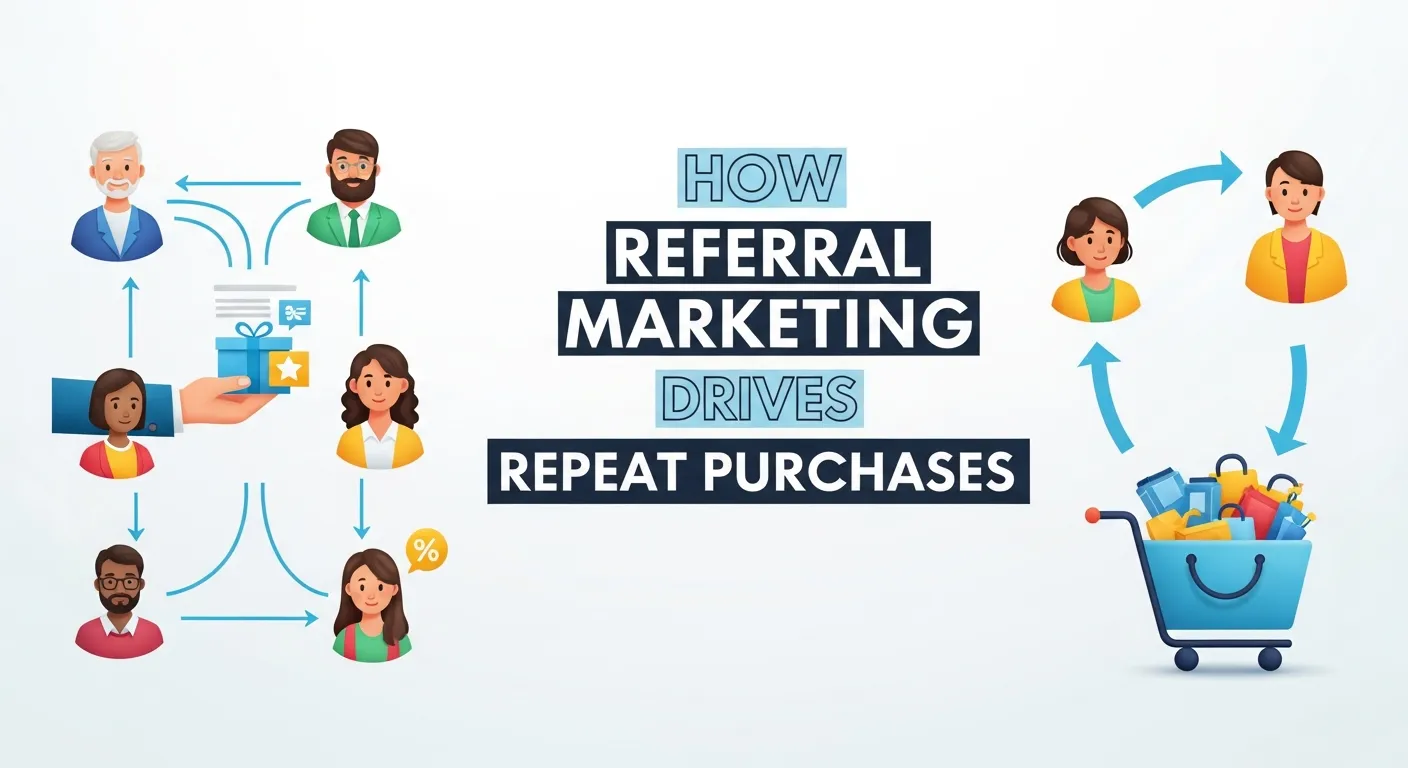
Referral marketing isn’t just about acquiring new customers—it can also push existing customers to buy again. Here’s how:
- Dual‑Sided Incentives that Require Follow‑Up Purchases
If rewards are structured so that referrers only get their bonus after they make a subsequent purchase, that encourages repeat behavior. Also, if the referral reward (for the referrer) is distributed across more than one purchase, it adds motivation to come back. - Store Credit, Loyalty Points & Tiered Rewards
Giving repeat customers credit, points, or access to higher tiers in a referral program makes them more likely to keep purchasing to unlock better rewards. This intersects nicely with loyalty programs. - Limited‑Time Offers & Urgency
Using referral bonus offers with expiration, or tying them to product launches or seasonal moments, can drive quicker action. People don’t want to miss out. - Product Upsells or Cross‑sells via Referrals
Once someone refers a friend, you can follow up with content or offers that relate to the original or complementary products. This keeps them engaged and more likely to purchase again. This is part of a product marketing strategy when integrated with referral programs. - Visibility and Promotion at the Right Touchpoints
Reminding customers of the referral program right after purchase, in post-purchase emails, via thank-you pages, in packaging inserts, or via their account dashboard keeps the program top of mind. If people forget about the referral option, they can’t use it.
Building a Referral Program That Increases Repeat Purchases
To build a referral marketing program that really drives repeat purchases (not just initial ones), you need structure, alignment, and smart incentives. Here’s a step‑by‑step guide for e-commerce businesses looking to tap into this growth hack.
Step 1: Define Clear Goals & Metrics
Before you design rewards and campaigns, figure out what success looks like:
- How many repeat purchases do you want to generate via referral?
- Increase in LTV or repeat rate for referring customers vs non-referring customers.
- Average order value (AOV) for referred vs non‑referred.
- Cost of incentives vs profit from referred repeat purchases.
Step 2: Know Your Customers & Segments
Because not all customers are equally likely to refer or purchase again, segment your audience:
- Identify your best customers: those who have made several purchases already, high spenders, or are highly engaged.
- Recognize those who recently made a first purchase (great time for referral prompts).
- Understand what rewards/incentives those segments value.
This is where product marketing crosses over: knowing product fit, usage, satisfaction, and then building referral offers that align with that.
Step 3: Choose the Right Incentive Structure
There are many ways to reward, but the ones that tend to work best for repeat purchases share common traits:
- Two‑sided rewards: Both referrer and new customer get something, ideally with the referrer’s reward tied to a repeat purchase or ongoing behavior.
- Store credit or points over cash for the referrer side—store credit ensures people return.
- Tiered rewards: Bigger rewards or special perks once a certain number of referrals or purchases are achieved.
- Limited-time bonuses to spur initial momentum.
Step 4: Reduce Friction & Promote the Program
Even the best rewards won’t help if the referral process is clunky or invisible.
- Make sharing easy: unique referral links, share buttons for email, social media, and messaging.
- Transparent tracking and notifications: letting customers see how many referrals they’ve made, how close they are to rewards.
- Prompt customers at high‑engagement moments (after purchase, after leaving a positive review, after interacting with support) to refer.
Step 5: Integrate with Other E-commerce Marketing Channels
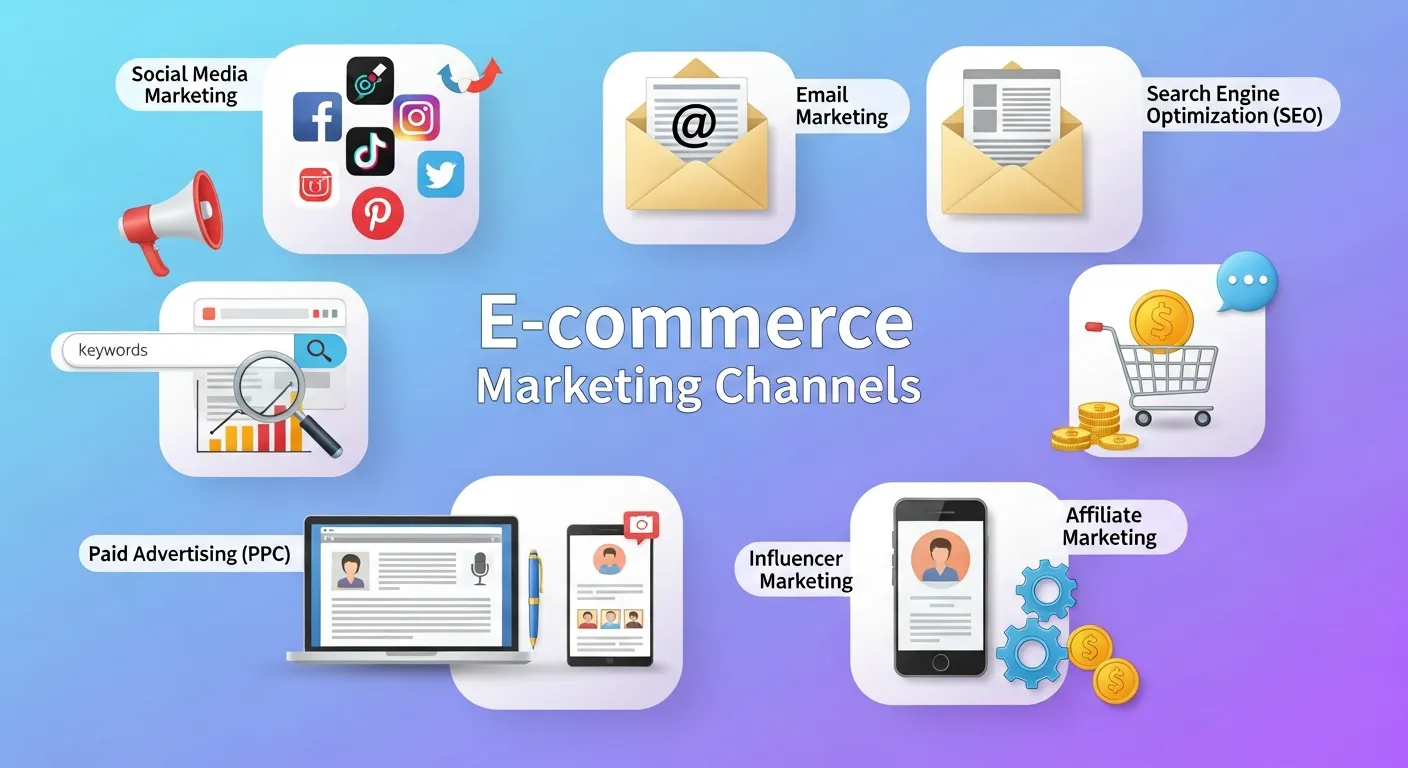
Referral marketing shouldn’t stand alone—it works best when woven into your overall e-commerce marketing efforts and product lifecycle.
- Email campaigns: post-purchase, welcome emails, newsletters.
- Loyalty programs: align referral rewards with loyalty tiers.
- Social media: encourage sharing and UGC from referred customers.
- Product launches: give early access to referrers or extra incentives.
Step 6: Measure, Learn, and Iterate
Track results, test variations, and refine constantly:
- A/B test different rewards, messaging, and timing.
- Monitor repeat purchase behavior for referred customers vs non‑referred.
- Analyze which incentives or channels bring in the highest quality referrals.
- Beware of fraud or misuse; ensure referred purchases are valid.
Why Referral Marketing Is Essential for Long-Term E-commerce Growth
- Referral marketing reduces customer acquisition costs by rewarding only successful referrals, making it more cost-effective than paid advertising.
- Referral marketing creates a self-reinforcing growth loop, where existing customers bring in high-intent new customers who are more likely to convert and repurchase.
- Referral marketing increases repeat purchases and customer lifetime value (LTV) by offering incentives like store credit, loyalty points, and future discounts.
- Referral marketing aligns with modern buying behavior, as consumers trust recommendations from friends and peers more than traditional ads.
- Referral marketing integrates seamlessly into the customer journey, through post-purchase emails, loyalty programs, order confirmations, and packaging inserts.
- Referral marketing delivers higher-quality customers, who convert faster, spend more, and stay loyal longer than non-referred customers.
- Referral marketing drives built-in retention, encouraging customers to return and use their rewards on future purchases.
- Referral marketing scales without increasing ad spend, allowing e-commerce brands to grow sustainably as their customer base expands.
- Referral marketing supports long-term brand advocacy, turning satisfied customers into repeat buyers and brand ambassadors.
- Referral marketing offers one of the highest ROI channels when combined with strong product-market fit and excellent customer experience.
Best Practices & Common Pitfalls
To make sure your referral marketing works to increase repeat purchases (and doesn’t just cost money), here are best practices and what to watch out for.
Best Practices
- Align incentives with profit margins: Don’t promise discounts so big that you lose margin. Consider store credit or gifts rather than deep discounts.
- Keep it simple and transparent: Customers should understand easily: “Refer a friend, they get X off; you get Y when they make a purchase.”
- Make rewards feel special: Personalized offers, limited‑edition perks, exclusive access, etc., make people more motivated to refer.
- Leverage social proof: Show stats (“X people have referred friends”) or testimonials to build trust and normalize participation.
- Encourage repeat referrers: Make the program a journey—once customers refer once, incentivize them to refer more, possibly with increasing rewards.
Common Pitfalls
- Over‑discounting: Rewards that are too generous can erode margins without delivering enough repeat purchases to compensate.
- Ignoring customer experience: If someone has a bad experience with your product or service, they won’t refer others—even if the incentives are great. Reputation matters.
- Poor onboarding/awareness: Many referral programs fail because customers don’t know about them. If you hide them or make them hard to find, they won’t be used.
- Complicated rules: If the referral program is too confusing, with many steps or caveats, customers won’t bother.
- Not tracking or attributing properly: Without good analytics, you won’t know which referrals are good, which rewards are effective, or whether the program is profitable.
Real‑World Examples of Referral Marketing in E-commerce
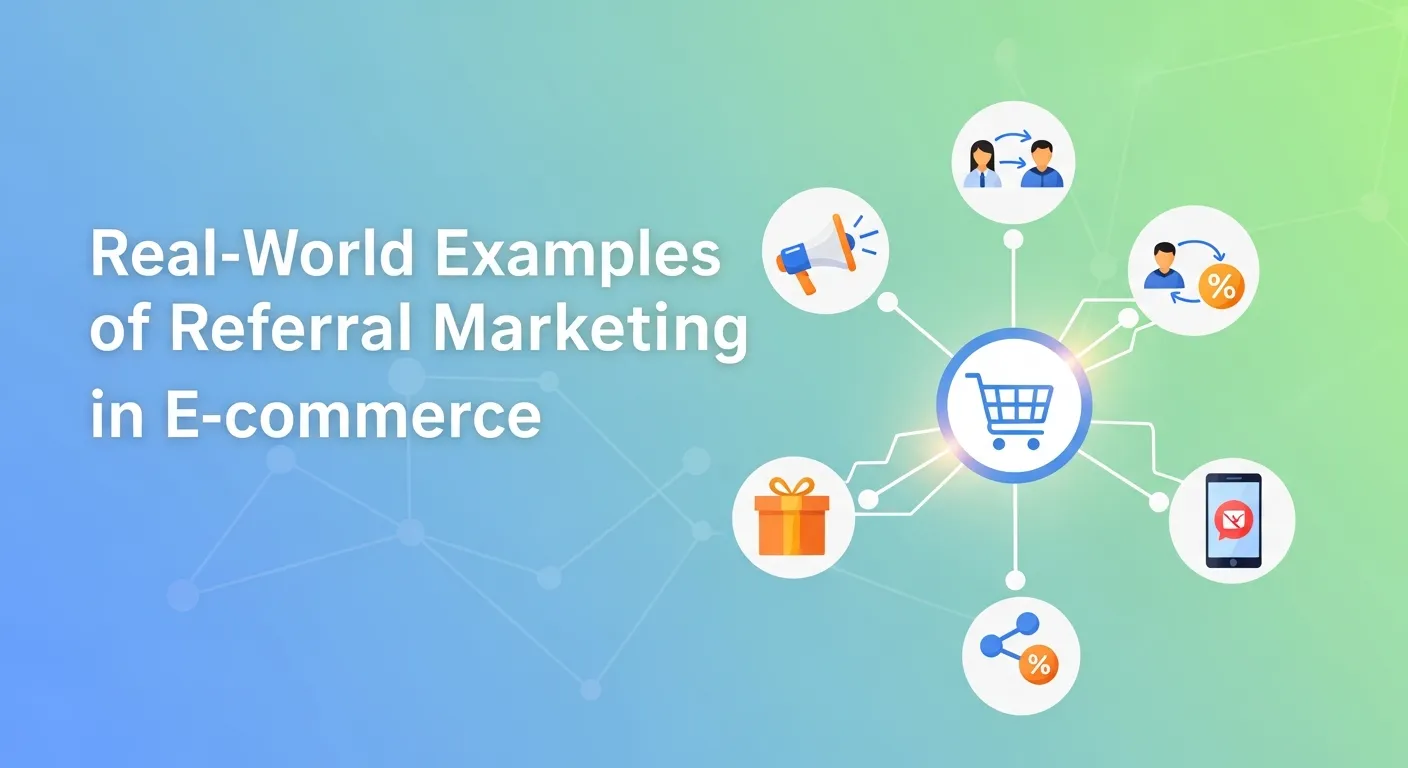
Seeing real data helps make things concrete. Here are a few e-commerce brands doing referral marketing well:
- Bombas: Offers a refer link that gives new customers 25% off, and gives referring customers store credit. This dual‑sided offer helps in acquiring new customers while encouraging repeat purchases from referrers.
- Brooklinen: Their referral program gives existing customers points redeemable for store credit; new customers get a discount on their first order. This helps both acquire new and retain existing customers.
- Mention Me & Moss Bros: In their campaigns, referred customers spend more (higher AOV), and former customers who refer tend to repurchase more.
- MeUndies: “Give 20% and get $20” model where both sides get benefit—the friend gets a discount on their first order, the referrer gets a reward for the next. This kind of offer makes people more likely to come back to use their reward.
Step‑By‑Step Implementation Plan
Here’s a sample 8‑week implementation plan for launching a referral program focused on increasing e-commerce growth via repeat purchases.
| Week | Activities |
|---|---|
| Week 1 | Audit past customer behavior: segment for frequent buyers, highest spenders. Define goals: repeat rate, cost per referral, and margin. |
| Week 2 | Design reward structure: what the referrer gets, what the referred gets; possibly tiers/repeat purchase triggers. |
| Week 3 | Build/refine tracking and sharing tools: unique referral links, dashboards, and landing pages. Ensure mobile-friendliness. |
| Week 4 | Prepare creative assets: emails, banners, social media mentions, and packaging inserts. Promote the referral program with a “soft launch.” |
| Week 5 | Launch the referral program publicly. Use email, social, post-purchase prompts, etc. Begin tracking data. |
| Week 6 | Collect feedback (customer support, survey). A/B test reward types or messaging. |
| Week 7 | Analyze the repeat purchase behavior of referred customers. Compare LTV, AOV vs non‑referred. |
| Week 8 | Optimize: tweak rewards, simplify rules, clean up UX, adjust promotional channels. Then plan for long‑term scaling. |
How Referral Marketing Fits Into E-commerce Growth Strategy & Product Marketing
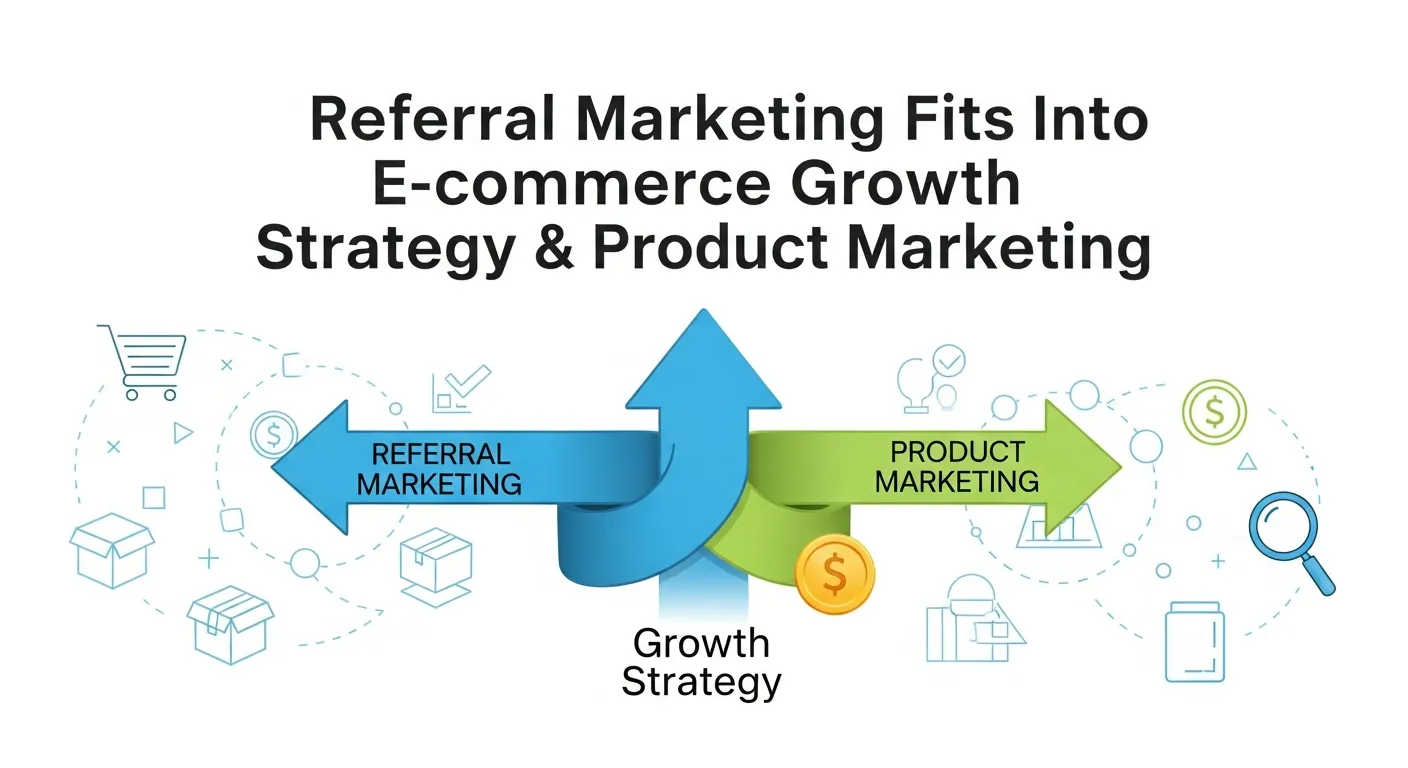
To maximize impact, referral marketing should be woven into your broader e-commerce marketing and product marketing strategies, not treated as an add‑on.
- In product marketing, when launching new features or products, give referrers early access or extra incentives. New purchases from referrals help validate features and generate social proof.
- In e-commerce marketing, combine referral efforts with retention campaigns (email drip for repeat buyers), loyalty programs, content marketing, and paid media. Referral marketing often has a high ROI because of trust and lower acquisition costs.
- Use customer insights from referrals to understand what messages or products people share. That can inform product development, positioning, packaging, and messaging.
FAQ: Referral Marketing for E-commerce & Repeat Purchases
1. What is referral marketing, and how does it work for e-commerce businesses?
Referral marketing is a strategy where existing customers recommend a brand to friends and earn rewards when those referrals make a purchase. In e-commerce, it works through unique referral links or codes that track successful referrals and trigger incentives.
2. How does referral marketing help increase repeat purchases in e-commerce?
Referral marketing encourages repeat purchases by rewarding customers with store credit, discounts, or points that must be redeemed on future orders, motivating them to return and buy again.
3. Is referral marketing more effective than traditional customer acquisition channels?
Yes, referral marketing is often more effective because it leverages trust. Referred customers convert faster, cost less to acquire, and are more likely to make repeat purchases than customers from paid ads.
4. What are the best referral marketing incentives to encourage repeat purchases?
The best referral marketing incentives include store credit, loyalty points, tiered rewards, free shipping, or exclusive access—rewards that require a future purchase to unlock value.
5. How can small e-commerce businesses implement referral marketing successfully?
Small e-commerce businesses can start referral marketing with simple incentives, automated referral links, and post-purchase promotions, scaling the program as repeat purchases and referrals grow.
6. When is the best time to promote referral marketing to existing customers?
The best time to promote referral marketing is after a positive experience—such as right after purchase, after product delivery, or following a positive review—when customer satisfaction is highest.
7. How do you track the performance of a referral marketing program in e-commerce?
Referral marketing performance is tracked using metrics like referral conversion rate, repeat purchase rate, customer lifetime value (LTV), average order value (AOV), and cost per referral.
8. Can referral marketing improve customer lifetime value (LTV)?
Yes, referral marketing improves LTV by driving both new customer acquisition and repeat purchases from referrers, increasing long-term revenue per customer.
9. What common mistakes should be avoided in referral marketing campaigns?
Common referral marketing mistakes include over-discounting, unclear rules, poor promotion, ignoring customer experience, and failing to tie rewards to repeat purchases.
10. How do you prevent fraud and abuse in referral marketing programs?
To prevent abuse in referral marketing, set minimum purchase requirements, limit referrals per user, monitor suspicious activity, and use reliable tracking and verification tools.
Conclusion
Referral marketing has become a powerful and sustainable growth strategy for e-commerce businesses looking to increase repeat purchases and customer lifetime value. By leveraging trust, rewarding loyal customers, and integrating referral programs into the customer journey, brands can acquire high-quality customers while driving built-in retention. When structured with the right incentives, clear goals, and seamless promotion, referral marketing goes beyond one-time acquisition and creates a long-term growth loop. As acquisition costs continue to rise, e-commerce brands that invest in referral marketing will be better positioned to scale efficiently, strengthen loyalty, and achieve consistent, long-term growth.
Learn more about: Why Every Startup Needs A Referral Program